Minimalist Storage Solutions: The Art of Visual Silence
Minimalism isn’t just about owning less; it’s about seeing less.
You can declutter your home all weekend, but if every shelf is full of “pretty” baskets and every device has a visible cable, your brain will still register chaos. That’s where minimalist storage solutions come in: not just hiding things, but calming the room.
In this guide, we are going to treat your home like a visual soundscape.
- We will reduce visual noise (all the tiny details your eye trips over).
- We will use hidden storage furniture for the living room that looks like architecture, not furniture.
- And we will focus on visual noise reduction techniques you can reuse in any room, for years.
By the end, you will know exactly why your space still feels “busy” and what to do about it.
The “Closed Storage” Mandate
Let’s start with something a bit unpopular:
Clear bins and open shelves are great for organizing.
They are terrible for minimalism.
If you can see every label, lid, and logo, your brain is still doing the same amount of work as before. Minimalist storage is about reducing what your eyes have to process, not just putting things into containers.
Why Open Shelving Is the Enemy
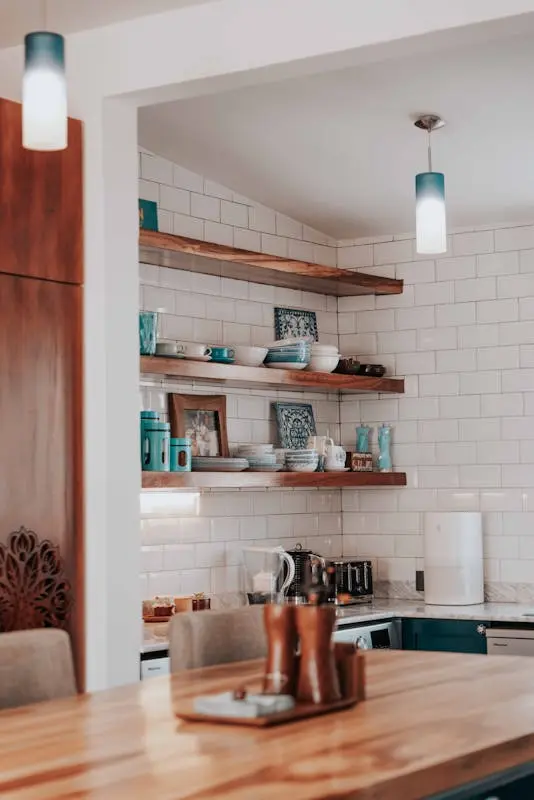
Open shelving looks beautiful in a styled photo.
In real life, it asks you to be a stylist every single day.
Psychologically, every visible object is a small “ping” of information. Ten plates, a stack of bowls, a bright cereal box, your kid’s art, a vase, a random mug from a trip… That is a lot of pings.
In my experience:
- Open shelving only works in a very disciplined home.
- It is better as a single accent than a whole wall.
- The second you are “busy,” the shelves become storage, not decor.
If you want a truly minimalist look:
- Limit open shelving to 10–20% of your storage.
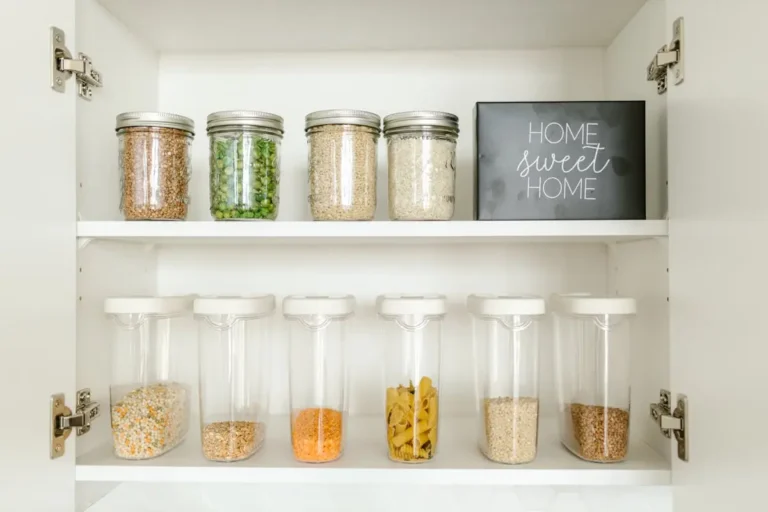
- Use it for a few calm, repeated items (white bowls, glass jars, a couple of books).
- Convert the rest to closed storage with doors.
When in doubt, I’d rather see one solid cabinet front than 15 “perfectly styled” items I have to maintain.
Opaque Containers
Here is the rule I use with clients:
If you can see it, it counts as clutter.
That means:
- Clear bins filled with colorful packaging are visual noise.
- Wire baskets full of odd objects are visual noise.
- Even “aesthetic” jars become noisy if every label is a different font or color.
For minimalist storage solutions, I recommend:
- Opaque containers in solid tones: white, warm beige, matte black, or wood.
- Matching the container color to the shelf or cabinet as closely as possible.
- Using simple, minimal labels: one word, same font, same color.
Good options:
- White or cream lidded boxes inside living room media units.
- Matte metal bins inside wardrobes.
- Wood-grain boxes on open shelving, matching the shelf tone.
If you absolutely love clear containers, keep them behind solid doors. Your things can still be tidy and visible to you when you open the cabinet, but your living room doesn’t have to broadcast every detail.
“Camouflage” Furniture (The Invisible Strategy)
Once you start closing things off, the next level is to make the storage itself recede.
Minimalism loves storage that looks like part of the wall, not a separate object.
Tone-on-Tone Storage
One of the most powerful visual noise reduction techniques is tone-on-tone color.
Instead of a white wall with a black cabinet (high contrast, high attention), you paint the cabinet to match the wall so the line between them softens.
Practical example for a living room:
- Paint your walls a warm neutral (for example, something like “White Dove” / “Swiss Coffee” family).
- Choose an IKEA Bestå, Pax, or similar flat-front system.
- Paint or wrap the doors and frame in the exact same color code as the wall.
Suddenly:
- The unit reads as a quiet “plane” rather than a bulky object.
- Your hidden storage furniture for the living room disappears into the architecture.
- You can store games, remotes, blankets, kids’ toys, and paperwork without the room feeling crowded.
If you are nervous about painting furniture, at least:
- Match the cabinet color closely to the wall.
- Avoid strong contrast (no dark unit on a light wall, unless it is a deliberate focal point).
“Handleless” Hardware
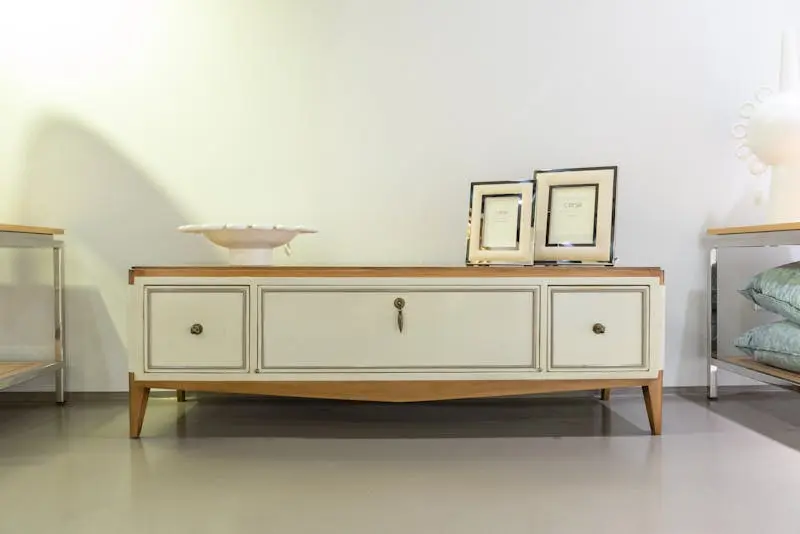
Every handle, knob, and pull is a tiny visual interruption.
On one cabinet, that is fine.
On a whole wall of storage, it becomes a field of dots your eye has to process.
For minimalist storage solutions, I prefer:
- Push-to-open mechanisms (no external handles).
- Integrated J-pulls or finger pulls at the top or side of the door.
- Very slim, linear handles in the same color as the doors if you need a handle for accessibility.
In a living room:
- A flat wall of push-to-open cabinets under the TV creates a “floating line” with no clutter.
- Books, gadgets, and wires all disappear behind one calm surface.
- Your decor can then be just a few objects on top instead of an army of boxes, consoles, and remotes.
If you already have visible handles and do not want to replace the whole kitchen or unit, you can:
- Swap busy, ornate handles for simple bar pulls in the same color as the door.
- Or fill existing handle holes and install push latches instead for a clean surface.
Multifunctional Architecture
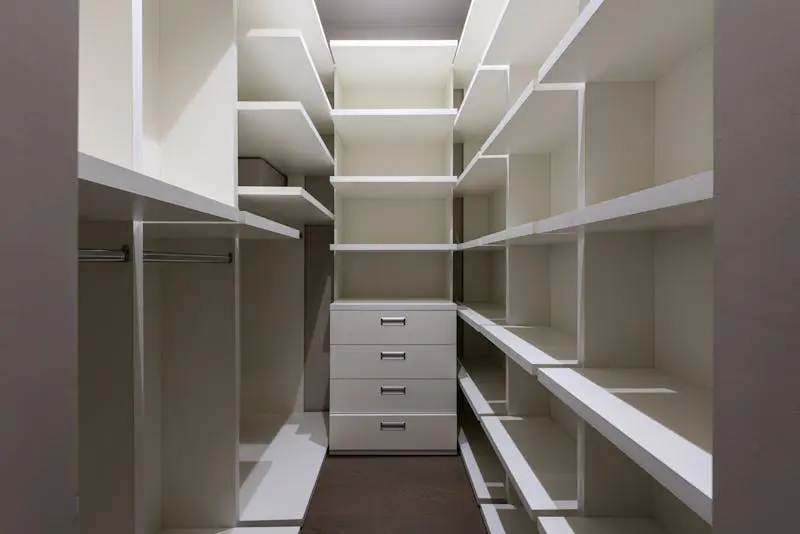
The deepest level of minimalism is when storage is built into the structure of the room.
Not a box you put into the room, but a void inside walls, floors, or platforms that you use intelligently.
This is what I often call “architectural storage.”
The “False Wall” Wardrobe
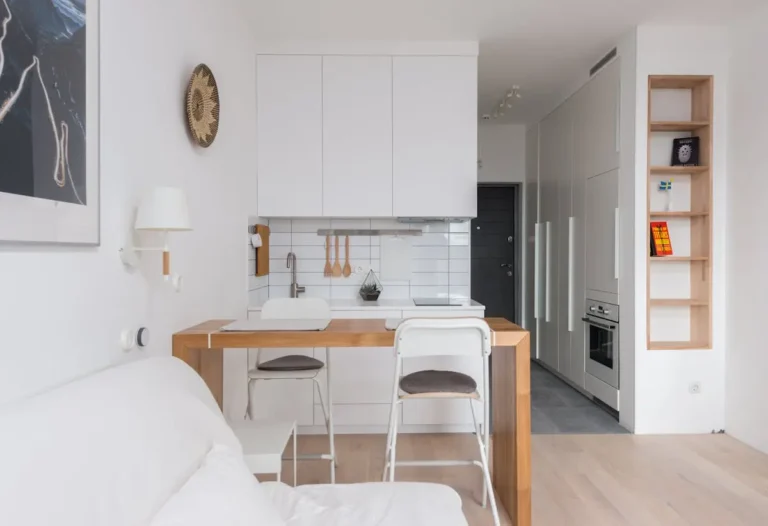
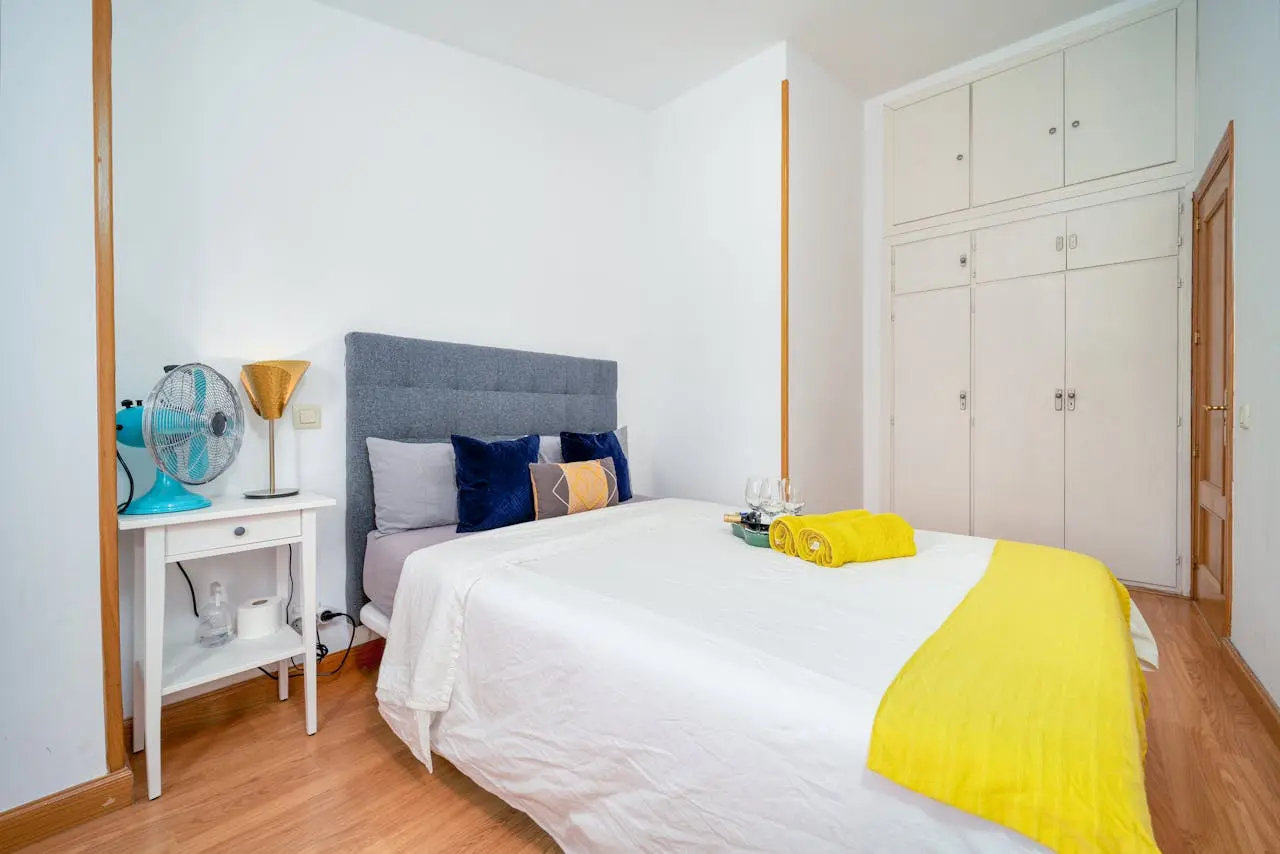
If you have a long wall in a bedroom or living room, you can turn it into a hidden wardrobe or cabinet wall that reads as a simple plane.
Concept:
- Floor-to-ceiling cupboards with flat fronts, minimal or no handles.
- Same color as the walls (tone-on-tone again).
- Integrated niches or cut-outs for display if you really want a bit of character.
Why it works:
- You gain massive storage volume.
- You remove the need for extra freestanding furniture.
- The room actually feels bigger because there is less visual fragmentation.
In a living room, this might be:
- A “false wall” of cabinets behind the sofa.
- A built-in TV wall with closed storage all around and only the screen visible.
- A shallow wardrobe for coats and bags that looks like a plain panelled wall.
If you are renting or on a tight budget, you can approximate this with:
- A set of matching wardrobes side by side.
- A filler piece and crown at the top.
- Painted or wrapped doors to match the wall.
Platform Storage
Another powerful approach is to build the storage under you, not around you.
A raised platform can:
- Hold deep drawers or lift-up storage.
- Define a zone (sleeping area, reading nook, office corner).
- Reduce the amount of visible furniture in the space.
Examples:
- A bed on a platform with drawers all around instead of separate dressers.
- A small office zone on a raised deck with under-platform storage for files, tech, and supplies.
- A window seat with deep, hinged storage under the cushion.
Tips:
- For comfort and safety, keep platform height in a usable range (around 25–45 cm depending on use).
- Integrate low, continuous lighting (LED strips) along the base if you want a “floating” effect.
- Make drawer fronts flush and handleless to keep the lines clean.
The goal is simple: storage that feels like part of the architecture instead of extra furniture crowding the floor.
Digital and Paper Minimalism
You can have the most perfect built-ins in the world, but if cables and paper piles are everywhere, the room will never feel minimalist.
Minimalist storage solutions must include your digital life.
The “Tech Hideaway”
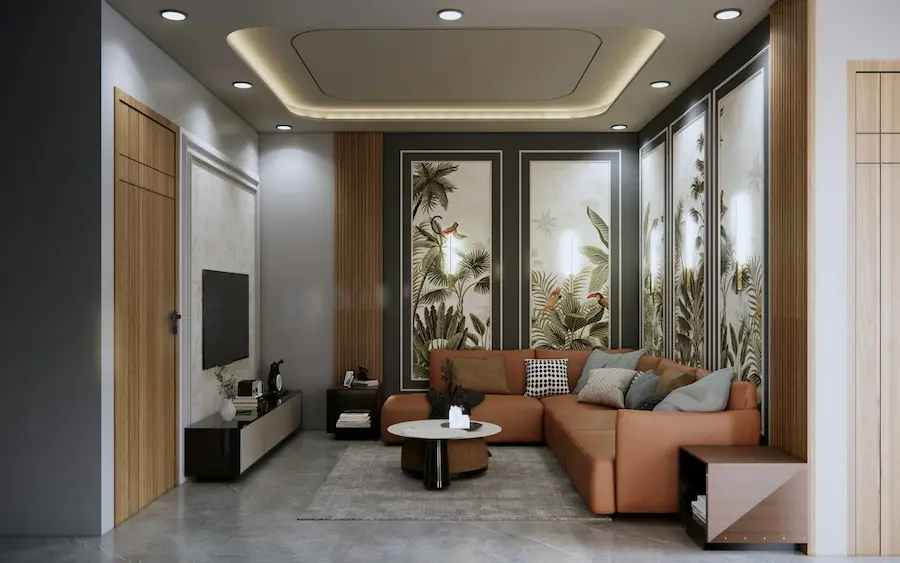
Tech clutter is one of the biggest sources of visual noise today:
- Cables hanging from outlets
- Chargers on every surface
- Routers blinking in bright colors
I recommend creating at least one “charging drawer” or tech cabinet in the living room.
How to do it:
- Choose a drawer or cabinet near where you usually sit.
- Drill a discreet hole at the back (or use an existing cable entry).
- Place a power strip inside.
- Keep only essential chargers inside that drawer, not all over the house.
Then:
- Phones, tablets, headphones, and power banks live in the drawer.
- When you close it, the visual field is clean.
- Only your lamp, maybe one book or candle, stays on the console or side table.
You can do something similar with routers and modems:
- Place them inside a ventilated cabinet or behind a slatted door that does not block signal.
- Or hide them in a decorative box with open back and bottom.
The idea is to hide the function, not remove it.
The Scanning Station
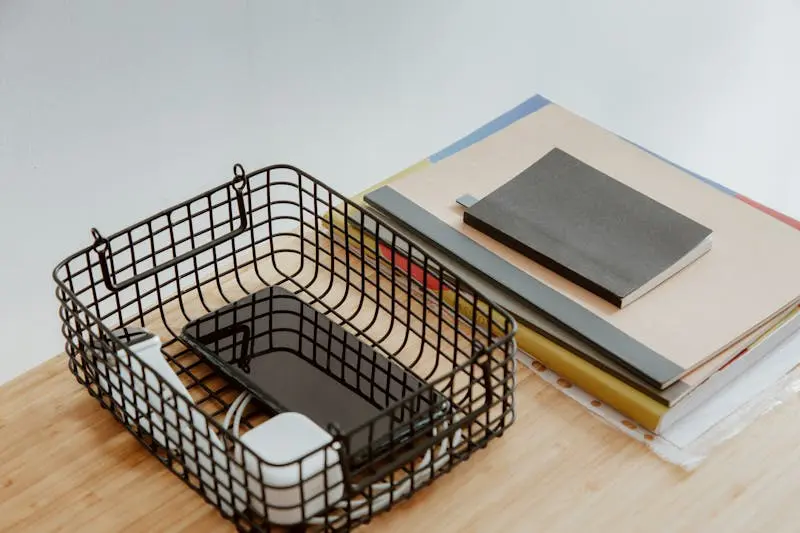
Papers breed.
Mail, receipts, kids’ artwork, manuals… They pile up on the console, the dining table, the kitchen counter.
Instead of buying a big filing cabinet (which is not very minimalist), I prefer to reduce paper at the source.
Create a small “scanning station”:
- A hidden shelf or drawer with a compact scanner or scanning app setup.
- A simple inbox: today’s mail and important papers only.
- Once a week, you scan what you need to keep and recycle the rest.
Workflow:
- Paper comes in → goes to the inbox.
- Once processed (scanned or handled), it either gets recycled or filed in one slim box for legal originals.
- Digital files live in clearly named folders (Bills, Home Docs, School, etc.).
End result: no visible piles, no heavy filing system, and no documents living forever on top of your beautiful credenza.
The “One-In, One-Out” Storage Rule
Minimalist storage solutions are not just about where you put things.
They are about how many things you allow inside the system.
If you keep adding more boxes, baskets, and bins every time you feel overwhelmed, you are not simplifying. You are just packaging.
I like a very simple rule:
Storage is finite. When the container is full, you do not buy another one; you edit what is inside.
For example:
- If your “games” cabinet is full, you choose one to donate before buying a new one.
- If your wardrobe rail is full, one garment leaves when a new one enters.
- If your tech drawer is overflowing, you get rid of the extra cables instead of getting a second drawer.
This is what creates visual silence over time.
Your living room, bedroom, and office stop expanding with more containers, and instead settle into a peaceful, stable rhythm.
FAQ: Is IKEA Minimalist?
It can be.
In my experience, IKEA becomes minimalist only when you:
- Choose simple lines like Bestå, Pax, Platsa, or Besta-style TV units.
- Add plain, flat doors without glass, heavy frames, or busy handles.
- Customize them to look built in: cover gaps, paint or wrap to match your walls, and keep hardware minimal or push-to-open.
If you fill a Bestå with glass doors, baskets, and visible objects in every color, it will look busy.
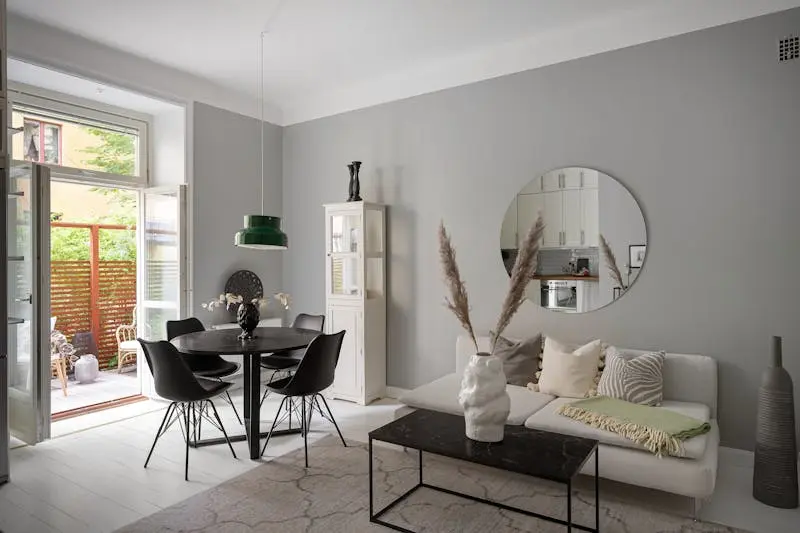
If you turn it into a quiet wall of storage with a few carefully chosen objects on top, it becomes one of the best affordable minimalist storage solutions you can get.
Remember: minimalism is not the brand of furniture.
It is what your eyes see when you walk into the room.