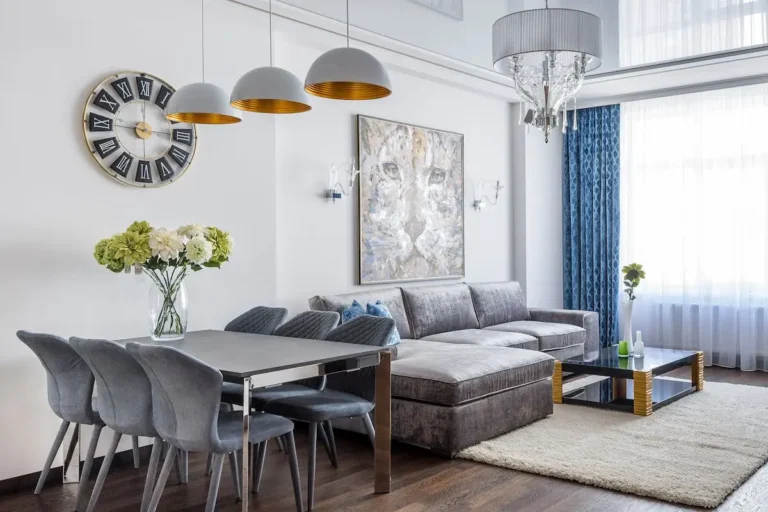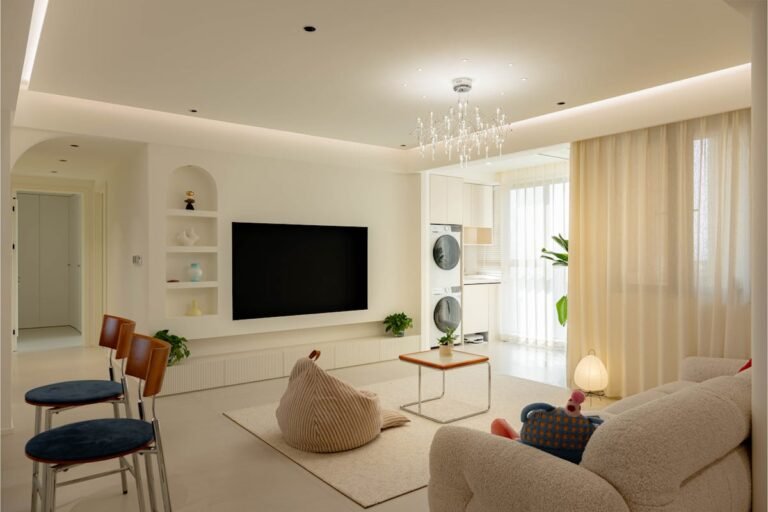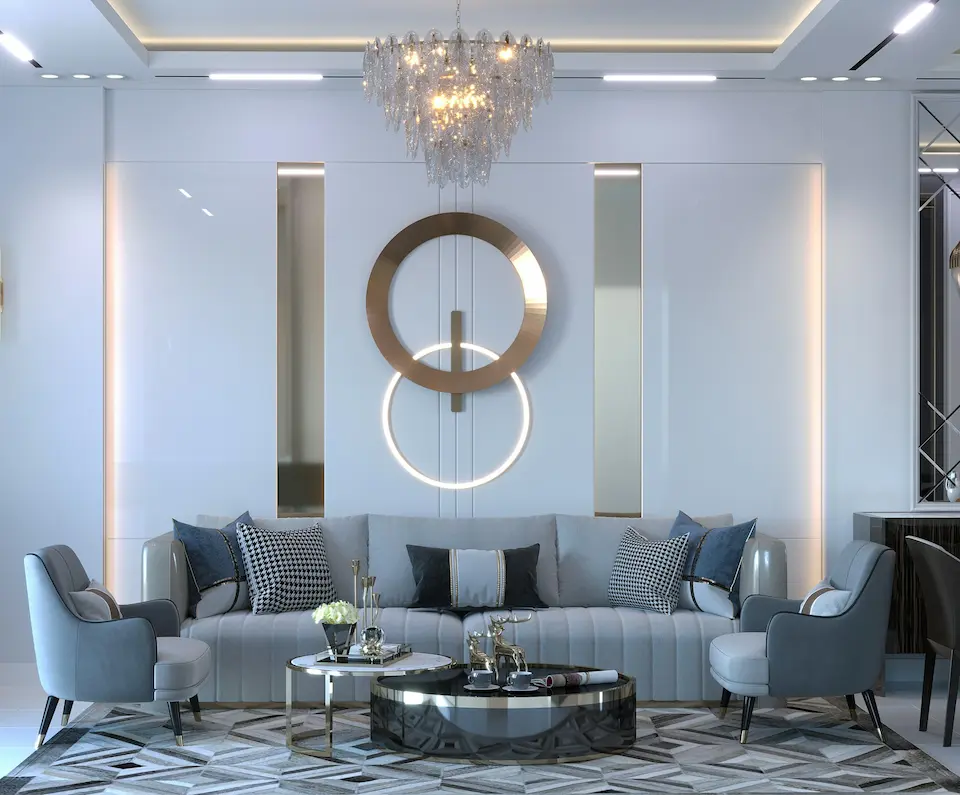
Modern Living Room Furniture for Small Apartments: Space-Saving & Stylish (2026)
In a small apartment, every piece of furniture must fight for its place. If it doesn’t serve two purposes, it’s out.
Modern living room furniture for small apartments isn’t just about picking smaller pieces. The best setups in 2026 focus on visual lightness (acrylic, glass, raised legs), modularity (sectional pieces that separate and reconfigure), and dual-functionality (storage ottomans, wall-mounted desks, modern sleeper sofas for small living rooms that actually feel comfortable).
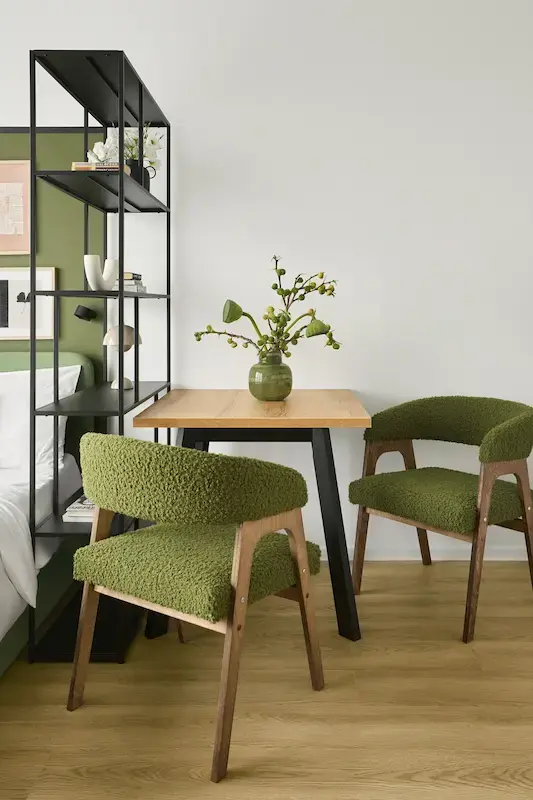
In this guide, I’ll walk you through how to choose pieces that look streamlined, feel cozy, and still fit your real life. I’ll share the furniture categories that give you the most value per centimeter, the modular sofas for small apartments that are actually worth it, and a few layout tricks that designers quietly rely on for narrow and boxy rooms.
Let’s start with the principle that makes or breaks every tiny living room: visual weight.
The “Visual Weight” Rule: How to Choose Modern Pieces
In a tight space, your furniture can be physically compact but still feel heavy. Visual weight is about how “dense” something looks to your eye.
The goal is simple: keep the room feeling open while still providing real seating and storage.
Go Transparent
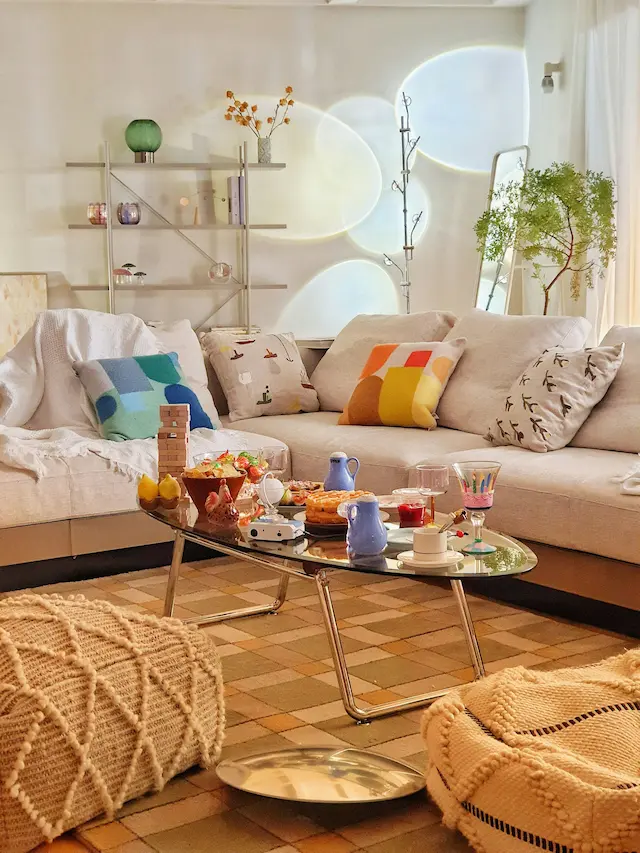
Transparent materials are your best friends in a small modern living room.
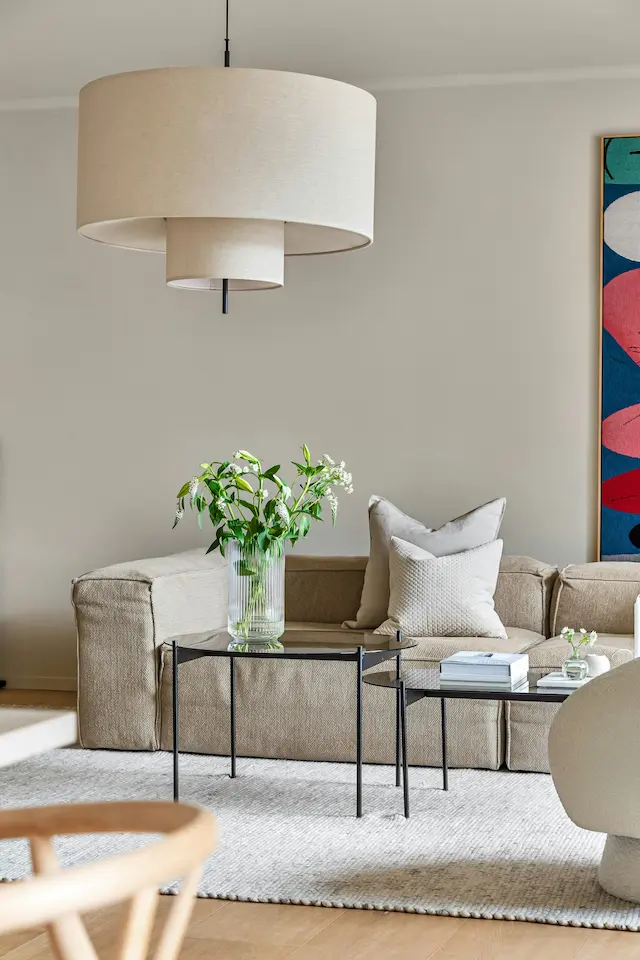
Acrylic chairs, glass coffee tables, and “ghost” side tables give you the surface area you need without blocking sightlines.
I like to use:
- An acrylic side chair instead of a bulky accent chair near a window.
- A glass or acrylic coffee table when the sofa is solid and fabric-heavy.
You see the edges, but you still see the floor underneath. That uninterrupted line of flooring is what makes the room read as bigger in photos and in real life.
Lift It Up
If your furniture sits directly on the floor, the room feels visually “blocked”.
Choosing sofas, armchairs, and media consoles on slim, visible legs lets light pass underneath and makes the space feel lighter.
In my experience:
- A sofa with legs at least 10–15 cm high feels noticeably airier than one with a skirt or chunky base.
- Pairing a raised sofa with a slim-legged armchair and a floating media unit multiplies the effect.
If you already own a sofa with a heavy base, swapping in a raised coffee table and leggy side tables still helps rebalance the room.
Low Profiles
When furniture sits below your eye line, your sightlines stay clear and the room feels more open.
For small apartments, I recommend:
- Sofas and sectionals with low backs rather than tall, bulky ones.
- Media consoles that are long and low instead of tall and narrow.
- Avoiding tall bookcases right behind your main sofa unless you really need the storage.
Think of it this way: the closer a piece is to your eye level when seated, the more “present” it feels. Keep the bulk low and let walls and windows breathe.
5 Essential Space-Saving Furniture Categories
These are the workhorses of a small modern living room. If you choose well here, everything else is just layering.
1. The “Apartment-Size” Sectional
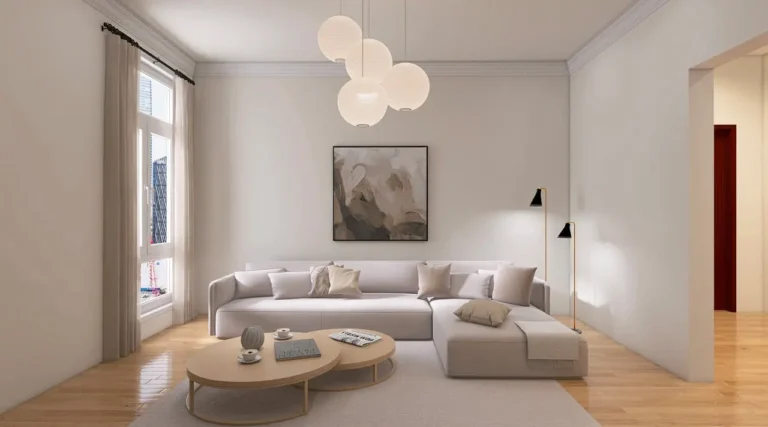
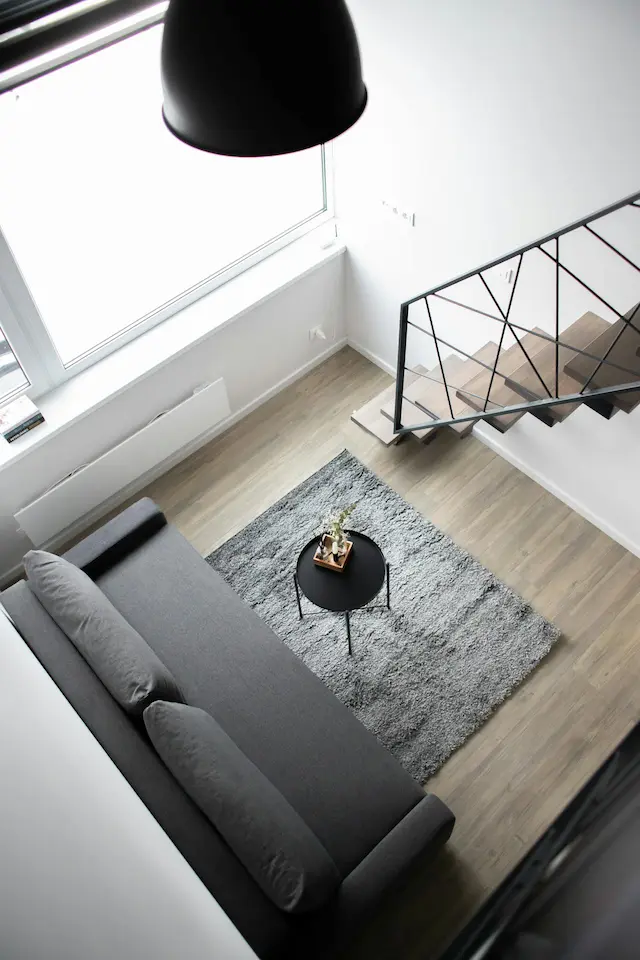
A sectional can absolutely work in a small apartment if you choose the right proportions.
Look for:
- Slim arms (chunky track arms can steal 20–30 cm of usable space).
- A total length in the 180–230 cm range for most small living rooms.
- A reversible chaise so you can switch sides if you move or change layouts.
If you often host overnight guests, this is where modern sleeper sofas for small living rooms come in. I recommend models with:
- A real mattress or at least a foam-topped mechanism, not just a fold-down back.
- Simple, clean lines so they still look like a modern sofa during the day.
For studios, a compact modular sofa for small apartments can be even smarter. You can reconfigure modules into a chaise one day, two loveseats the next, or pull a piece into a work corner.
2. Nesting Coffee Tables
Nesting tables give you “expandable” surface area without committing to a huge coffee table footprint.
They’re ideal when:
- You like to eat at the sofa sometimes.
- You need to clear the center of the room for yoga or kids to play.
I prefer sets where:
- The largest table is no more than 60–70 cm across in a small living room.
- The smaller tables can tuck fully underneath or slide to the side as mini side tables.
You get flexibility without clutter.
3. The Wall-Mounted Desk/Shelf
If your living room is also your office, floor-hogging desks are the enemy.
Instead, look for:
- A wall-mounted desk or console at about 73–76 cm high.
- A depth of 35–45 cm so it functions as both a desk and a narrow display shelf.
In my experience, a floating desk paired with a slim, leggy chair is the best compromise for small apartments. It keeps the floor open and visually cleaner than a bulky workstation.
4. Storage Ottomans
Storage ottomans are the easiest way to hide the reality of small-apartment living: blankets, cables, controllers, and random bits that never seem to find a home.
Use them as:
- A coffee table with a tray on top.
- Extra seating when guests come over.
- A landing spot near the entry if your living room doubles as a hallway.
I recommend choosing:
- A rectangular ottoman roughly half to two-thirds the length of your sofa.
- A simple, modern shape in a fabric that matches or gently contrasts your sofa so it feels integrated.
5. The Modern Murphy Bed
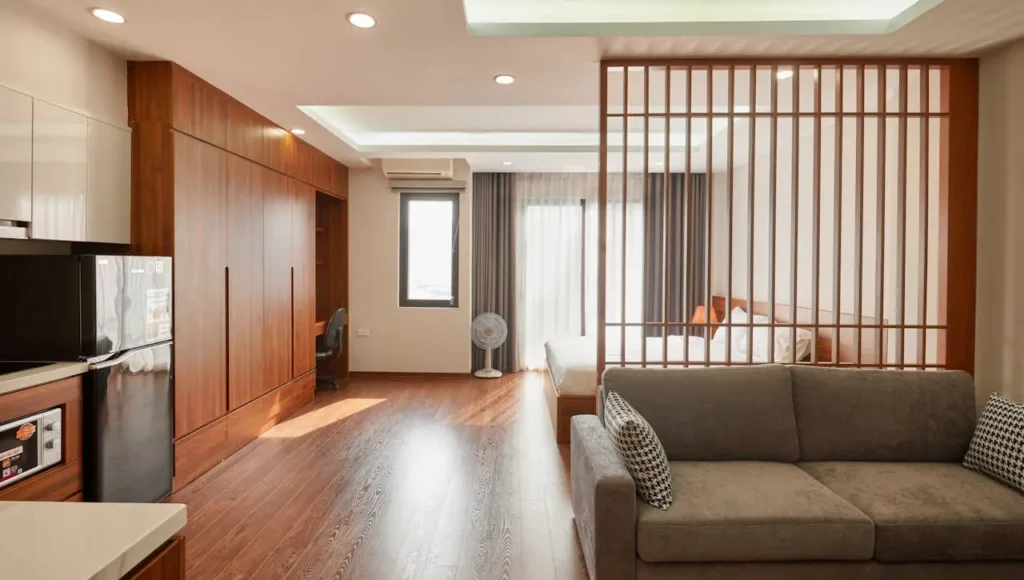
For studio apartments or one-room setups, a modern Murphy bed can give you back your living room during the day.
The best modern versions:
- Disguise themselves as a wall of simple cabinetry or shelving.
- Have a smooth, counterbalanced mechanism that you can open and close daily.
If you’re choosing between a sofa bed and a Murphy bed:
- Go Murphy if you sleep there every night and need a real mattress.
- Go sleeper sofa if you only host guests occasionally and want more seating day to day.
Either way, prioritize clean lines and neutral finishes so the piece feels like a natural part of your modern living room, not an afterthought.
Best Modern Materials for Small Spaces
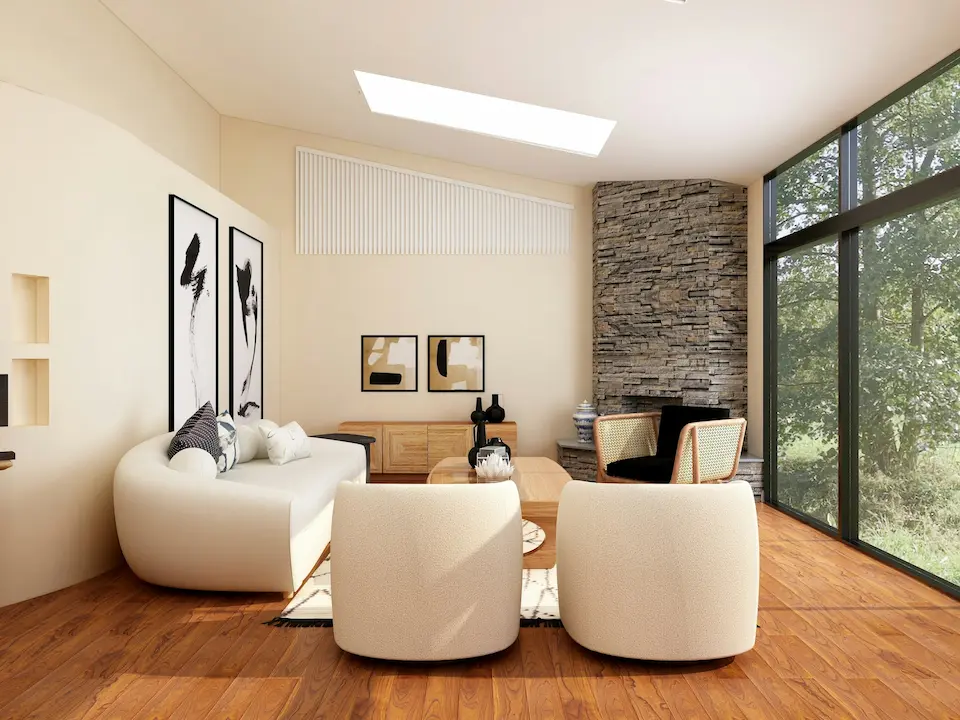
Materials matter as much as shapes when you’re working with limited square footage.
Used well, they bounce light around, keep the room calm, and support that modern, minimal feel.
- Chrome & Metal
Light-catching metals in table legs, lamp bases, and hardware reflect light and add a modern edge.
I like thin, metal frames for side tables and consoles so they feel present but not heavy. - Light Woods (Ash, Oak, Beech)
These woods are perfect for the organic modern vibe.
They keep the room feeling warm without adding visual bulk.
In small apartments, I often recommend sticking to one or two similar light wood tones to avoid visual noise. - Mirrored and High-Sheen Surfaces
A mirrored side table or console can double the sense of light in a darker corner.
Just don’t overdo it; one or two reflective pieces are usually enough.
If you already have glass tables, keep storage more matte so the room doesn’t start to feel like a showroom.
Layout Strategies for Specific Apartment Shapes
Even the best furniture will look wrong in the wrong layout. Your apartment’s shape should guide your plan.
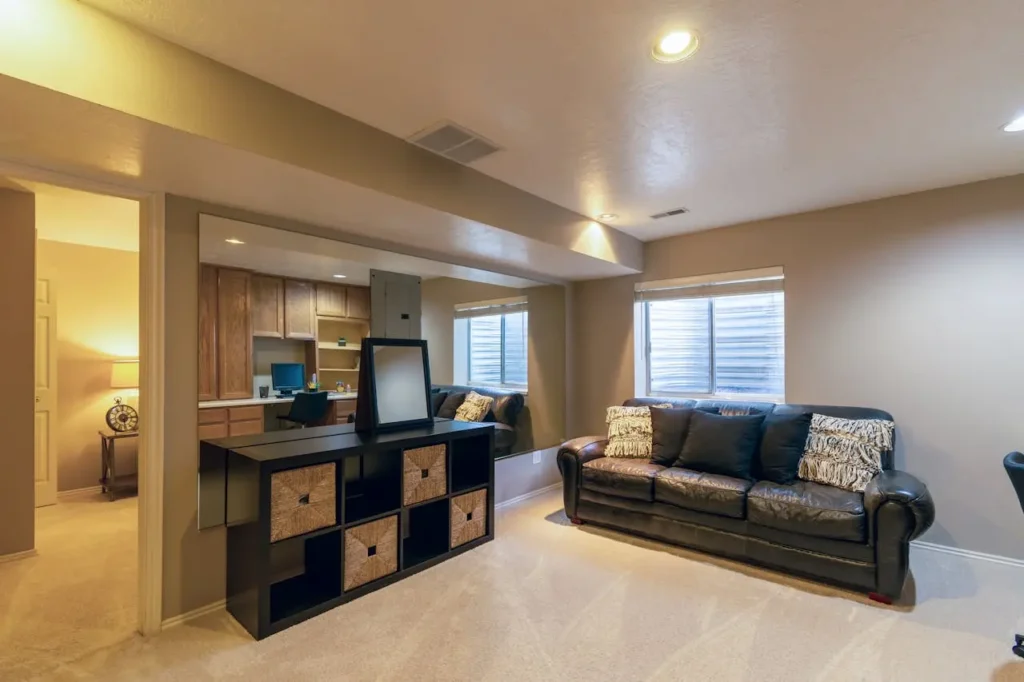
The “Bowling Alley” (Narrow/Long)
If your living room is long and narrow, pushing everything against the walls only emphasizes the shape.
Instead:
- Place your sofa on one long wall.
- Use a slim console, shallow bookcase, or narrow chairs on the opposite side to balance the room.
- Keep the coffee table narrow and consider nesting tables to avoid blocking the walkway.
The idea is to create a central, cozy seating “island” with clear paths around it.
The “Box” (Square Studio)
Square rooms can feel awkward because everything wants to crowd the center.
Rugs are your best friend here:
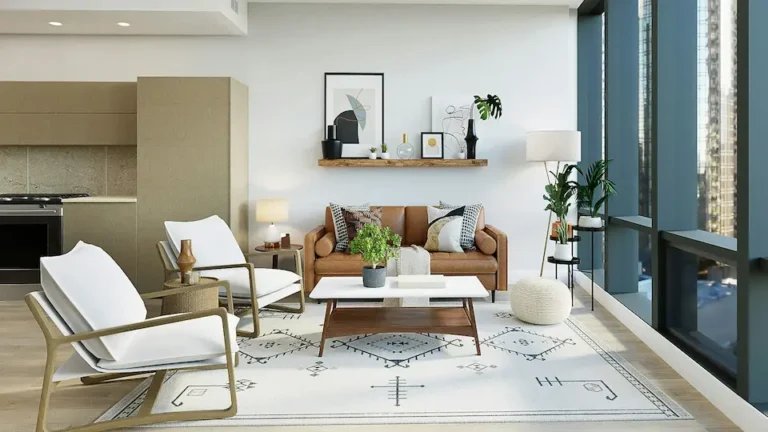
- Use a rug to define the sitting zone, with the front legs of each main seating piece on it.
- Position the sofa facing the focal point (TV, window, or feature wall), then flank with chairs or a small bench.
If your living room is also your bedroom, use:
- The sofa and rug to claim the “living zone”.
- A slightly different rug or color shift in bedding to separate the “sleep zone” visually.
The L-Shape
L-shaped apartments can feel disjointed if you’re not intentional.
I like to:
- Place the sofa at the hinge of the L, so it visually anchors both directions.
- Use a modular sofa for small apartments here, because you can add or remove a chaise depending on how you use the adjoining space.
Rugs again define zones:
- One rug for the main seating area.
- A second, smaller rug for a reading spot, desk zone, or dining nook in the other leg of the L.
“Renter-Friendly” Modern Upgrades
You can still have a polished, modern living room without drilling into every wall.
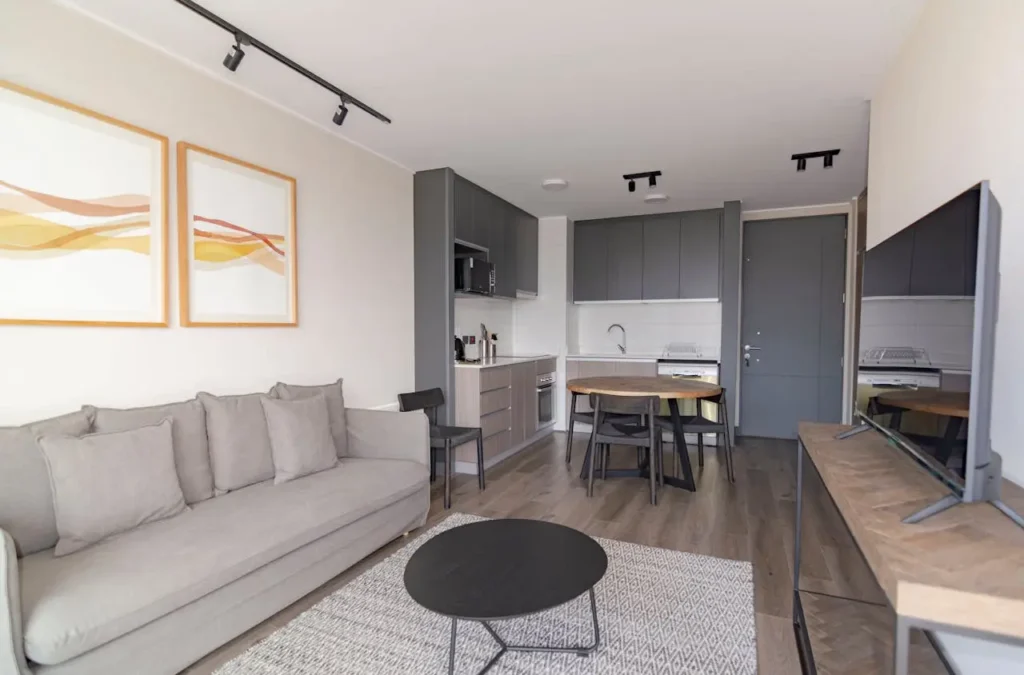
Freestanding Shelving Units (Room Dividers)
Tall, open shelving units can:
- Divide a studio into “living” and “sleeping” zones.
- Provide vertical storage without needing screws.
Look for:
- Units that are finished on both sides so they look good from every angle.
- Heights that leave at least 30–40 cm between the top of the shelf and the ceiling to avoid a boxed-in feeling.
Use baskets, closed boxes, and a few decorative pieces to keep them tidy and modern.
Plug-In Sconces
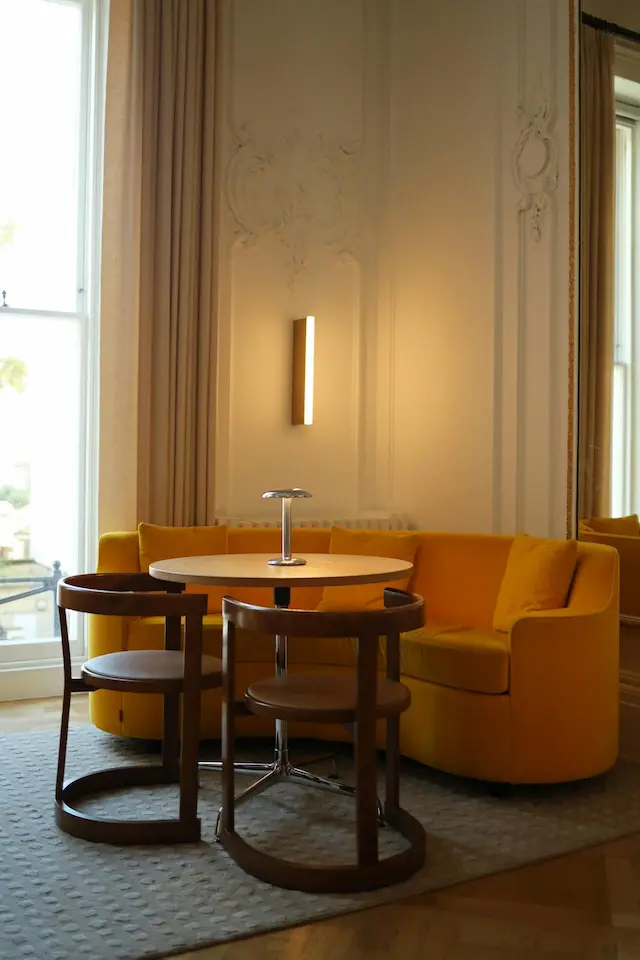
Plug-in sconces are a fantastic alternative to floor lamps in cramped spaces.
They:
- Free up floor and side table space.
- Add layered lighting and a more designed look.
Choose:
- Simple, modern shapes with clean lines.
- Cords that can run neatly down the wall; cord covers or paintable channels help them blend in.
Mount them above side tables or flanking the sofa to create a balanced, hotel-like feel without any hardwiring.
FAQ: Modern Furniture for Small Apartments
What is the best sofa size for a small apartment?
For most small living rooms, a sofa in the 170–210 cm range works well.
If your room is especially tight, I prefer:
- A compact two- or three-seater with slim arms and visible legs.
- A small apartment-size sectional with a reversible chaise if you like to lounge.
Always measure:
- Leave at least 60–80 cm of clear walkway space to move around the sofa comfortably.
Can I use dark furniture in a small apartment?
Yes, but with intention.
Dark furniture works best when:
- The walls and rug are lighter, so there’s contrast and the room doesn’t feel muddy.
- The dark pieces have raised legs or glass tops to keep them visually lighter.
If you love deeper tones, I recommend one main dark piece (like a sofa or media console) and lighter, more reflective materials around it.
How do I divide a studio apartment with furniture?
Think in zones, not walls.
You can:
- Use a sofa and rug to mark the living area and place the bed on the other side.
- Add a freestanding shelving unit or open bookcase as a room divider.
- Use a console table behind the sofa to subtly separate “living” and “sleeping” without blocking light.