Modern Living Room Interior Design: Styles, Elements & Trends (2026)
Most “modern” living rooms you see online fall into the same trap: a grey sofa, a black coffee table, and a plant in the corner… and somehow the room still feels cold and unfinished.
The problem isn’t your budget. It is the lack of a clear framework.
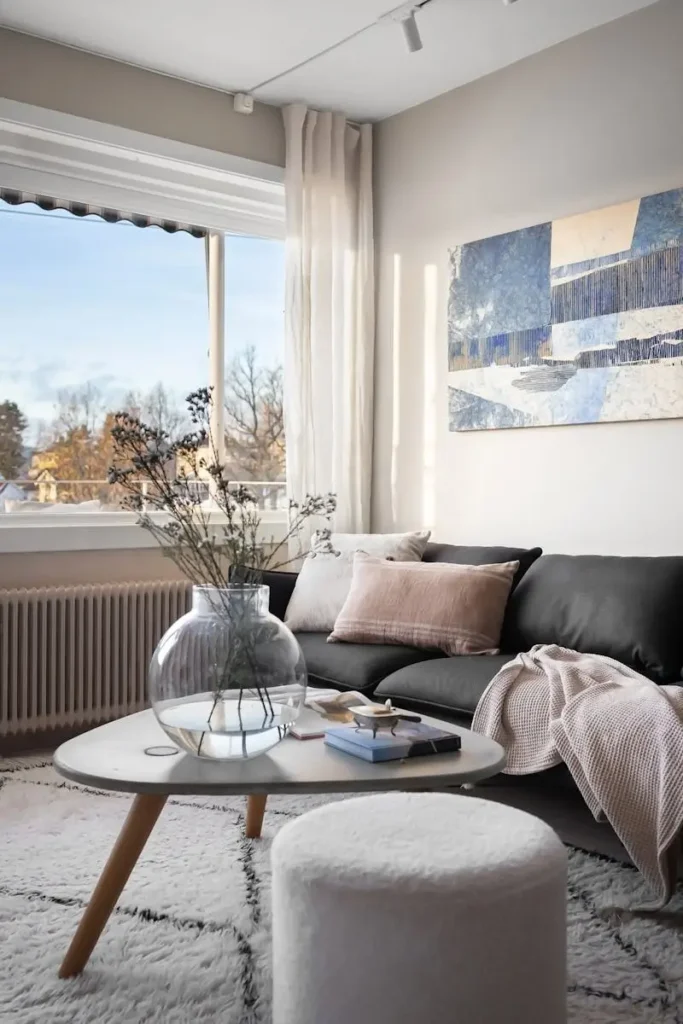
Modern living room interior design is defined by clean lines, natural materials, neutral color palettes, and a “form follows function” mindset. When you understand those rules, you can mix organic modern curves, mid-century icons, and contemporary touches without your space feeling like a furniture showroom.
In this guide, we’ll unpack the real DNA of modern design, how it differs from contemporary, the main styles under the “modern” umbrella, and exactly how to bring those modern living room color palettes and organic modern living room ideas into your own home.
Modern vs. Contemporary: Clearing the Confusion
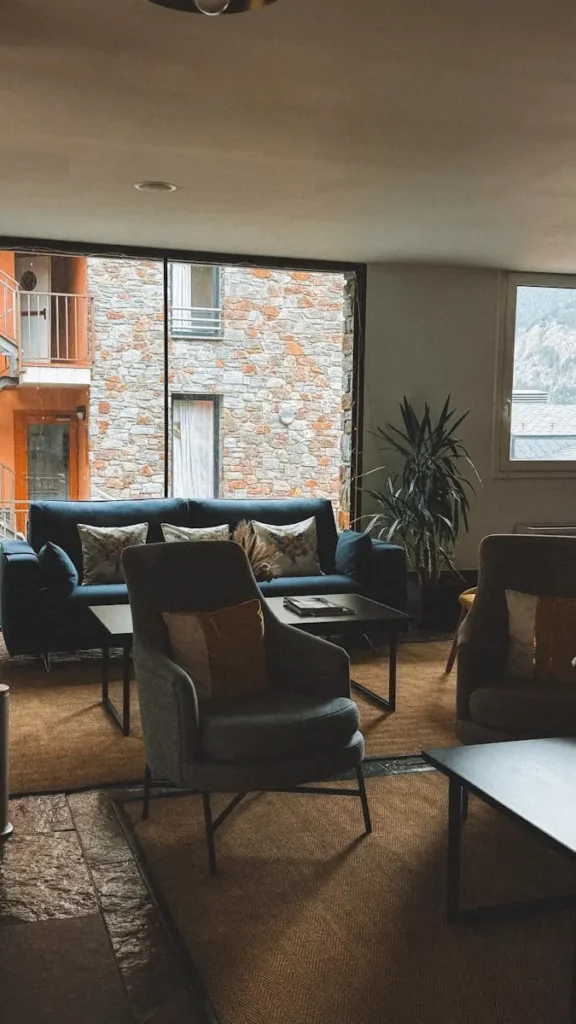
People use “modern” and “contemporary” interchangeably, but they are not the same thing. If you get this wrong, you’ll end up saving photos that don’t actually belong to the style you want.
Modern vs. Contemporary at a Glance
| Aspect | Modern Design | Contemporary Design |
|---|---|---|
| Time Period | Early–mid 20th century (roughly 1920s–1960s) | The present moment, always evolving |
| Typical Colors | Earthy neutrals: beige, camel, olive, rust, off-white | High contrast: crisp whites, charcoals, bold accents |
| Main Materials | Wood, leather, natural stone, wool | Glass, metal, mixed experimental materials |
| Forms & Lines | Clean, horizontal lines, low profiles | Mix of curves, organic shapes, and sharp angles |
| Mood | Calm, grounded, warm minimalism | Trend-driven, sometimes more dramatic |
In practice: if a living room could have existed in a beautifully designed 1950s home, it is likely modern. If it feels very “right now” with trending shapes and finishes, it is probably contemporary.
The 5 Pillars of a Modern Living Room
Think of these as your design checklist. If a room feels “off,” it is usually because one of these pillars is missing or overdone.
1. The Palette: Earthy Neutrals, Not Just White
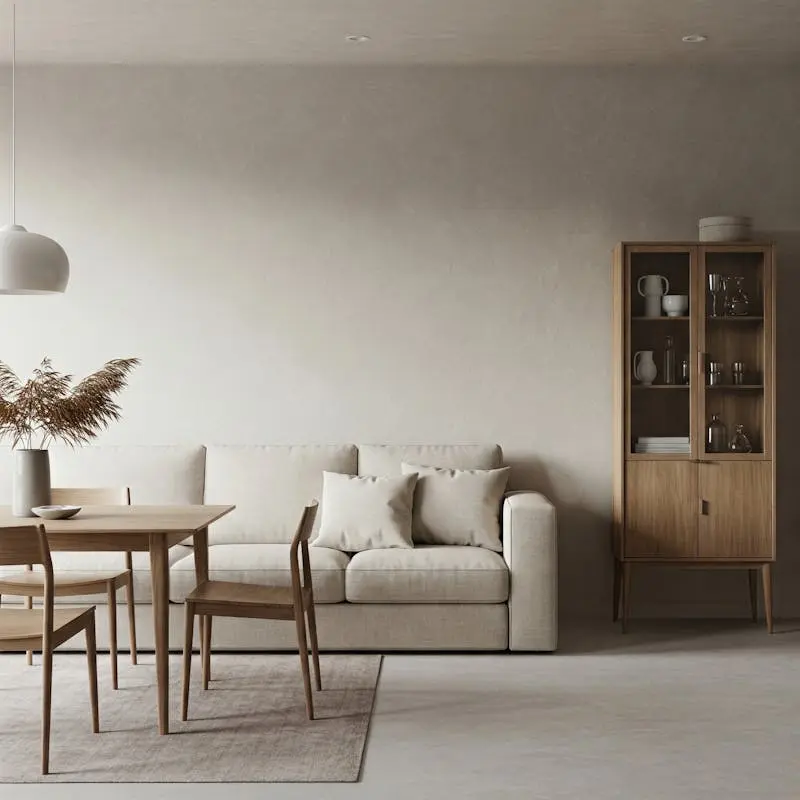
True modern living room interior design leans into warm, grounded tones, not stark white boxes.
- Core colors: warm white, stone, sand, camel, tobacco, olive, rust.
- Accent colors: inky blue, deep green, or black, used very sparingly.
In my experience, a modern living room works best when about 80% of what you see sits in a calm neutral spectrum, and the remaining 20% appears in richer tones through pillows, one accent chair, or artwork.
Practical tip:
- For walls, I often recommend a soft, warm white or light greige so wood and leather can stand out.
- Keep high-chroma colors (very bright) to a minimum; they break the calm if overused.
2. The Silhouette: Horizontal Lines and Low-Slung Furniture
Modern spaces are obsessed with horizontality. That’s why you see:
- Sofas with low backs and long, linear profiles.
- Media consoles running wall-to-wall at a low height.
- Coffee tables that sit close to the ground.
This keeps the visual “horizon line” low and relaxed. If you bring in one or two taller pieces (like a floor lamp or plant), the contrast feels intentional instead of chaotic.
In my experience, a standard modern sofa looks best when the back height is around 30–34 inches, not the big overstuffed 40+ inch styles you see in catalogues.
3. Materials: “Truth to Materials”
A core modern idea is truth to materials: let each material look like what it is instead of hiding it.
Good modern living room materials:
- Wood with visible grain (oak, walnut, teak).
- Natural leather, especially in tan or cognac.
- Wool and cotton upholstery.
- Stone tops (travertine, marble, limestone).
Try to avoid:
- Fake “distressed” finishes.
- Overly glossy veneers.
- Too much chrome in a small space (one or two pieces are enough).
I recommend choosing 3 main materials and repeating them: for example, walnut, warm white upholstery, and black metal. That repetition instantly makes the room feel designed instead of random.
4. Open Plans and Clear Lines of Sight
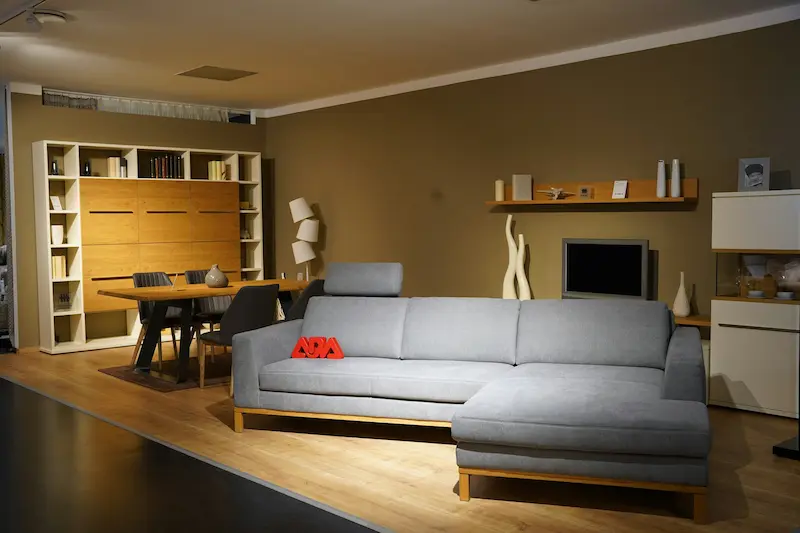
Modern living room interior design grew up alongside open-plan architecture. Even if you cannot knock down walls, you can mimic the feeling.
- Keep tall storage pieces to the perimeter of the room.
- Allow at least 30–36 inches for circulation paths.
- Avoid blocking sightlines with bulky armchairs placed in the middle of the room.
A simple rule I share with clients: when you stand at the entrance of the room, your eye should travel smoothly to the far wall without bumping into a tall, heavy object.
5. Absence of Clutter
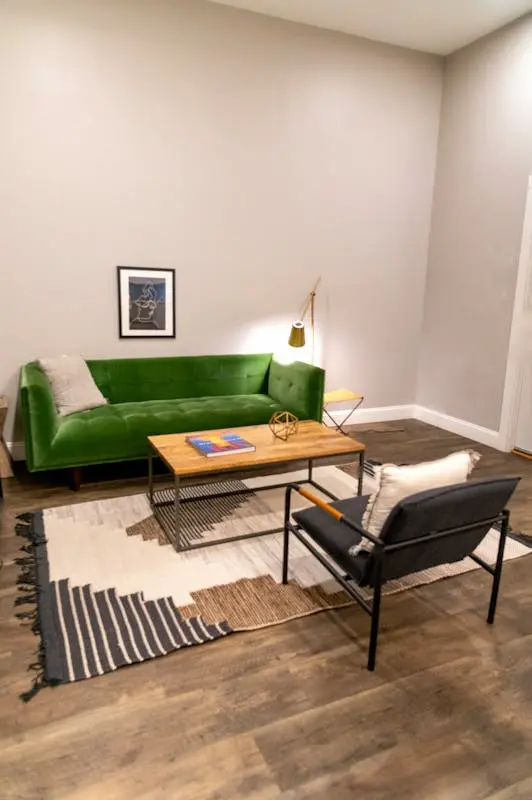
Modern design is not about owning nothing, but about editing what you see at once.
- Limit visible decor to a few larger objects instead of many small trinkets.
- Use closed storage for paperwork, chargers, and kids’ bits.
- Style surfaces with intention: a stack of books, one sculptural bowl, one lamp.
If you feel like you are constantly straightening your living room, that’s usually a sign you have too many small pieces out at the same time.
Types of Modern Design
Within modern living room interior design, there are several “dialects.” You do not have to pick one 100%, but understanding them helps you mix on purpose instead of by accident.
Mid-Century Modern
- Tapered legs, slim arms, and compact shapes.
- Woods like teak and walnut.
- Graphic art, simple geometric patterns.
If you love classic sofa shapes with wooden legs and streamlined arms, you are already leaning mid-century modern. Just be careful not to copy a catalogue; mix in one or two softer pieces so the room does not feel like a set.
Organic Modern (Very 2026)
Organic modern living room ideas are everywhere for a reason: they soften the stricter mid-century look.
Key elements:
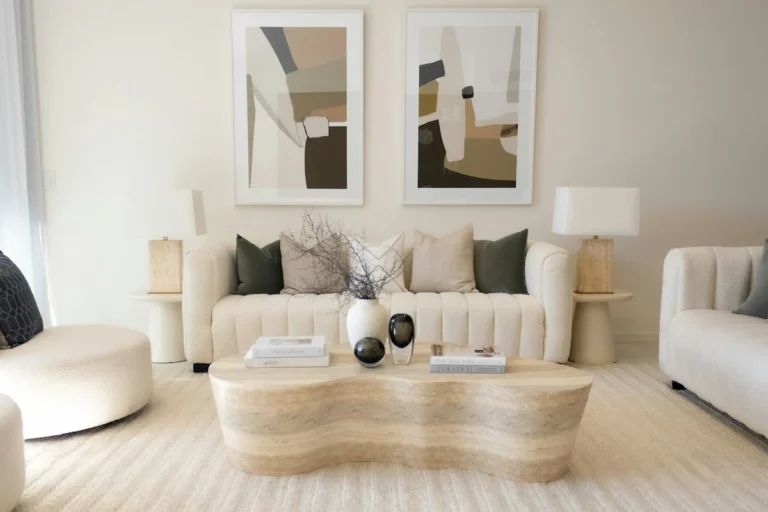
- Curved sofas and chairs.
- Bouclé, linen, and chunky weaves.
- Raw stone tables, limewashed walls, rounded edges.
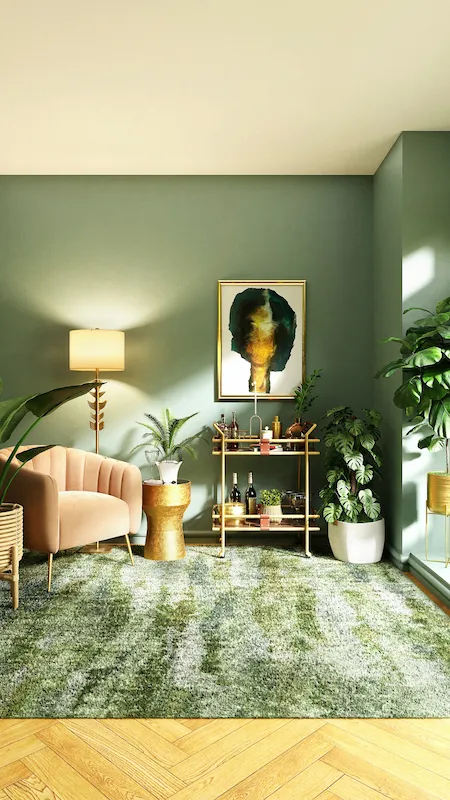
- Plenty of plants and natural light.
In my experience, this is the easiest modern sub-style to live with. It feels current but still grounded and timeless when you keep the palette neutral.
Industrial Modern
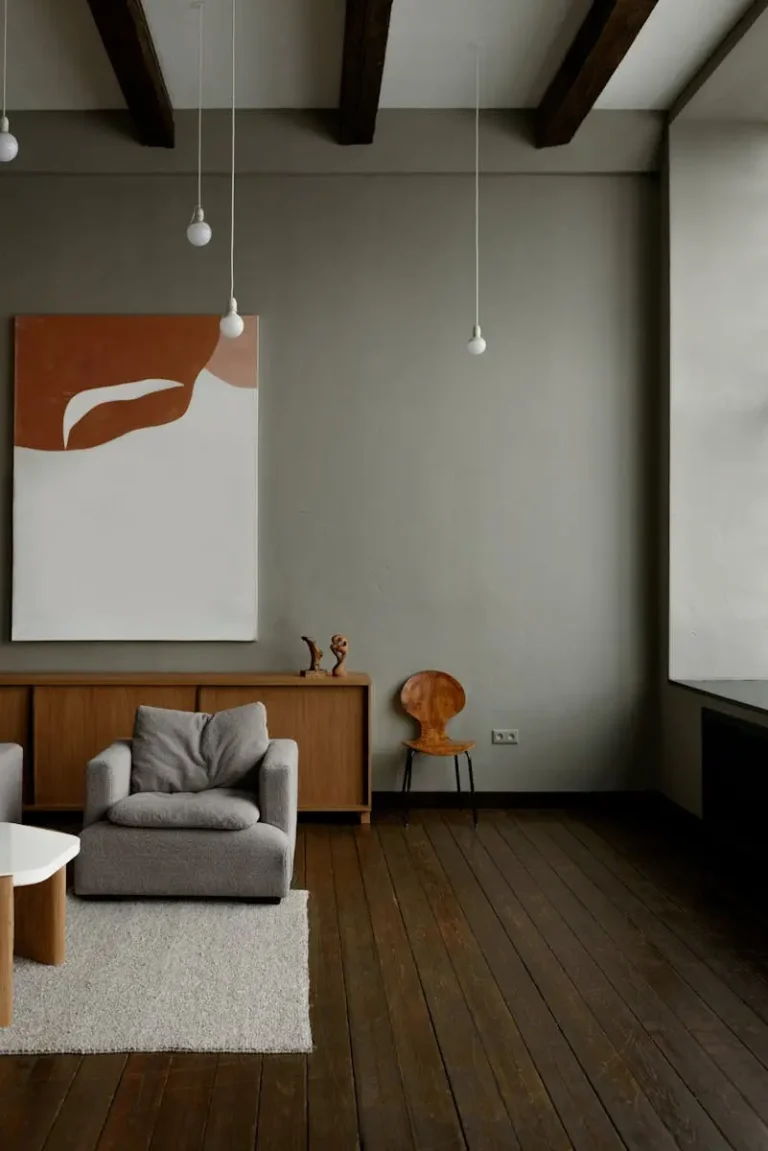
- Exposed brick, concrete, black metal.
- Leather sofas, often in tan or cognac.
- Simple, almost utilitarian lines.
You do not need an actual loft to borrow this look. A black metal floor lamp, a simple boxy sofa, and a concrete-look side table can suggest industrial modern without making the room harsh.
Scandinavian Modern
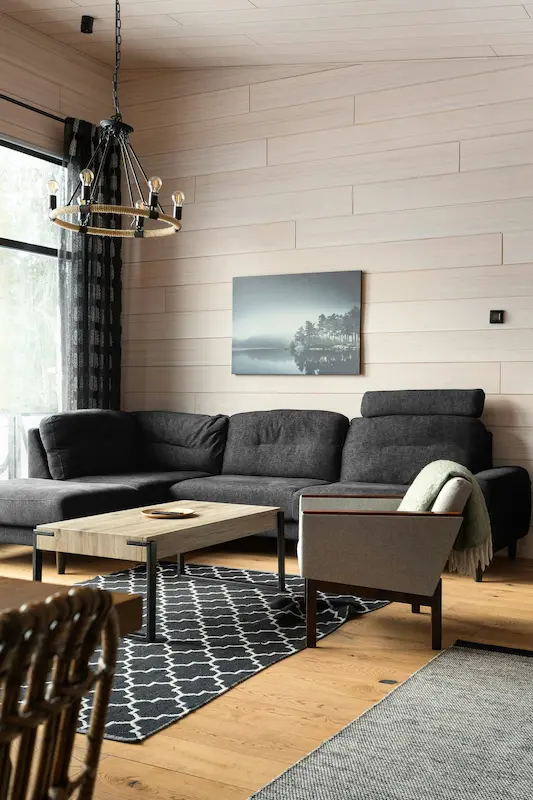
- Light woods, white walls, simple curved lines.
- Cozy textiles: wool throws, cotton, jute.
- A focus on functionality and comfort (hygge).
If you naturally gravitate towards light oak, soft greys, and lots of daylight, you are in Scandi modern territory. The trick is to keep shapes simple and surfaces uncluttered, so it feels refined rather than “college apartment with IKEA”.
Furniture Selection for the Modern Look
Now let’s talk about what actually goes into the room. You do not need iconic designer pieces, but you should borrow their proportions and logic.
The Sofa
- Look for track arms (straight, square arms) instead of rolled arms.
- Raised legs keep the piece visually light; a fully skirted sofa feels more traditional.
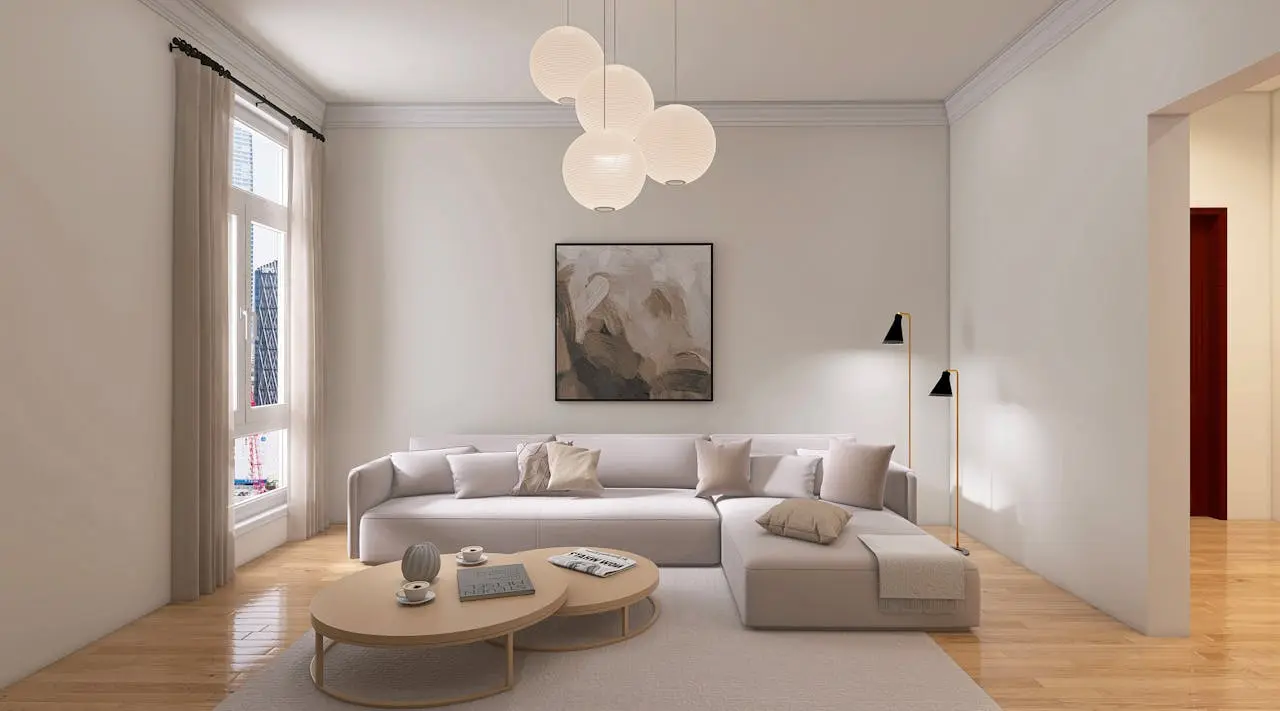
- Neutral fabric (stone, greige, oatmeal) will give you the longest life.
In my experience, it is better to invest in a high-quality, simple modern sofa and change pillows over time than to choose a trendy color or shape you will hate in two years.
The Chairs
You can absolutely nod to iconic modern pieces without buying the originals. When you see references to:
- An Eames-style lounge chair.
- A Barcelona-inspired chair.
- A Wassily-inspired sling chair.
What matters is the structure: slim frames, visible materials, and clear geometry. I prefer using one strong accent chair like this rather than four competing statement pieces.
The Tables
- Coffee tables: consider a low, rectangular or oval table in wood, stone, or glass.
- Side tables: simple pedestals or cubes.
If your sofa is soft and rounded, I recommend a more blocky or solid coffee table to counterbalance it. If your sofa is strict and linear, a round or oval table softens the room.
Storage & Media
Modern storage should visually recede:
- Wall-hung media units or long low consoles.
- Smooth fronts, minimal hardware.
- Built-in look, even if it is a freestanding unit.
Avoid overly ornate legs, heavy moulding, or busy handles. Those move you into traditional or transitional territory.
How to Avoid the “Cold” Look
One of the biggest fears with modern living room interior design is that it will feel cold or “too minimal.” You absolutely can have warmth and softness in a modern space.
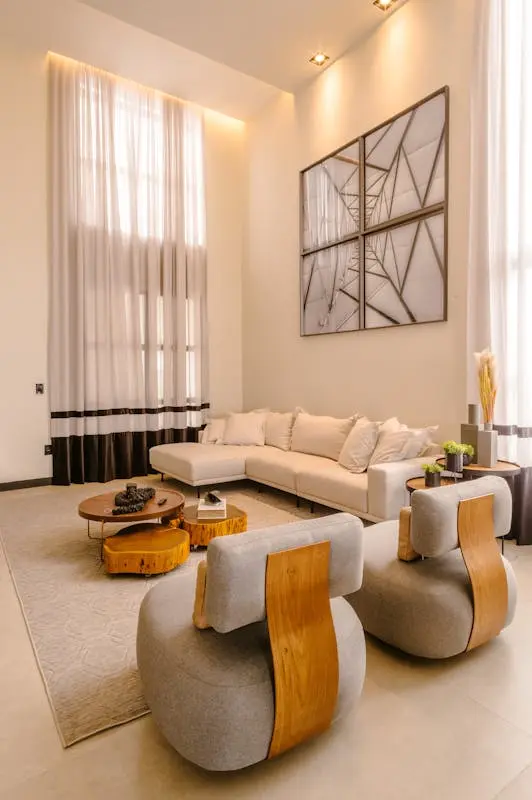
Add Texture Everywhere
If you want a modern room that still feels inviting, think in terms of tactile layers:
- A wool or jute rug underfoot.
- Linen or textured cotton curtains.
- Bouclé pillows, knitted throws, or a nubby armchair fabric.
In my experience, if you can visually count at least five different textures in the room, you are usually safe from the “clinical gallery” vibe.
Bring in Nature
Biophilic design works beautifully with modern lines.
- One or two large plants (olive tree, fiddle-leaf fig, rubber plant) are better than ten tiny pots.
- Natural light is a major design tool. Keep window treatments simple: sheer curtains or light linen panels hung high and wide.
Warm the Palette
Even if you love grey, counterbalance it with warmth:
- Use warm wood tones in your furniture or flooring.
- Layer in beige, camel, or taupe textiles.
- Choose warm white bulbs (around 2700–3000K) instead of cold blue light.
I recommend checking your room at night with only lamps on. If it still feels inviting then, your modern design is working.
FAQ Section
What are the main characteristics of a modern living room?
A modern living room is defined by:
- Clean, simple lines in furniture and architecture.
- Neutral, earthy color palettes instead of loud patterns.
- Natural materials like wood, leather, and stone.
- Minimal clutter, with decor chosen thoughtfully.
- Low, horizontal furniture and an open, airy feeling.
If your space hits most of these, you are already close to a modern look.
Can you mix modern and traditional furniture?
Yes, and it can look fantastic when done intentionally.
In my experience, the easiest way to mix is to:
- Choose modern architecture and main pieces (sofa, media unit).
- Add one or two traditional accents, like a wooden side table or an antique chest.
- Tie both styles together with a consistent color palette and shared materials (for example, walnut wood and warm white fabric).
What you want to avoid is one lonely ultra-modern piece in an entirely traditional room, or vice versa; it will feel like a mistake rather than a choice.
Is grey still modern in 2026?
Grey is still useful, but not as the only color in the room.
I recommend using softer greys and greiges as part of a layered neutral palette: pair them with warm whites, beiges, and natural wood. A flat “all-grey everything” scheme reads dated and cold. When you mix grey with organic modern elements like textured rugs, linen curtains, and plants, it becomes part of a richer, more timeless look.
If you keep these pillars in mind and build slowly—starting with your palette, sofa, and rug—you will end up with a modern living room that feels both current and deeply comfortable, not like a curated museum.