Living Room Curtain Ideas: Trends, Rules & Hanging Guide (2026)
Curtains are the eyebrows of your living room.
They frame the “face” of the space, they control expression, and when they’re wrong – too short, too skinny, hung too low – the whole room feels a bit awkward, no matter how good your sofa is.
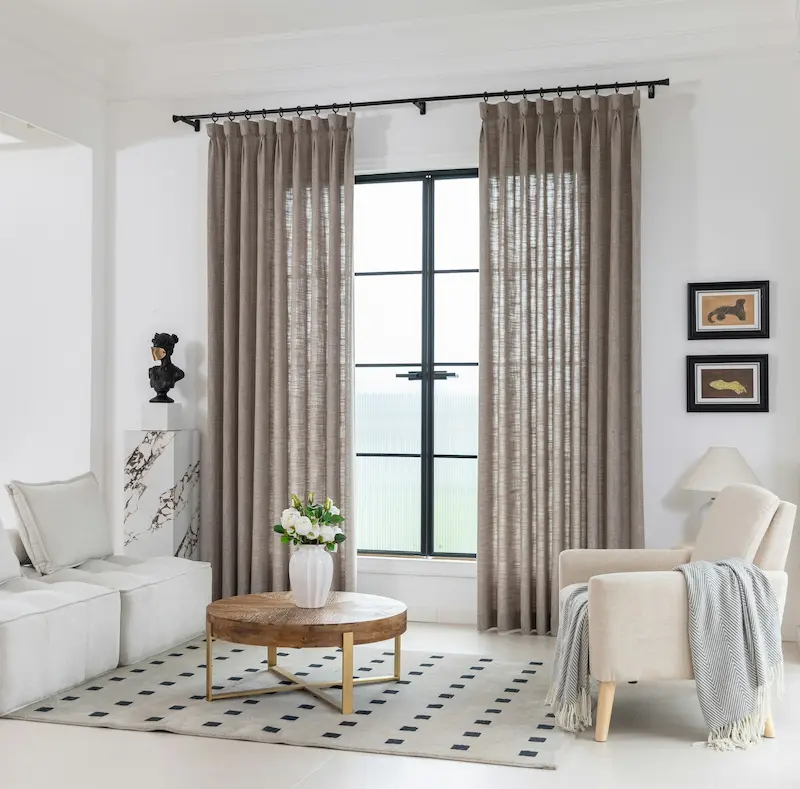
When we talk about living room curtain ideas: trends, rules & hanging guide (2026), we’re really talking about three things working together: where you hang them, what they’re made of, and how they fall. The current standard for modern living room window treatments in 2026 follows the “high and wide” rule (rods installed 4–6 inches above the window frame, sometimes even closer to the ceiling), natural fabrics like linen or cotton, and floor-kissing lengths that just graze the floor rather than puddling dramatically.
Get those three right, and even simple, inexpensive curtains can look custom.
The Golden Rules of Hanging Curtains (The Technical Hook)
This is the part most people get wrong – and fixing it is often more impactful than changing the curtains themselves.
The Height Rule
“High and wide” is the headline, but let’s make it usable.
- If you have standard 8–9 ft ceilings, hang the rod ½ to ⅔ of the distance between the top of the window frame and the ceiling.
- As a shortcut, I often recommend 4–6 inches above the frame as a minimum. If you have the room, pushing the rod to 2–3 inches below the ceiling makes the entire wall feel taller.
In my experience, the only time I keep the rod closer to the frame is when there’s crown molding I don’t want to fight with. Otherwise, lifting the eye up is almost always more flattering.
The Width Rule
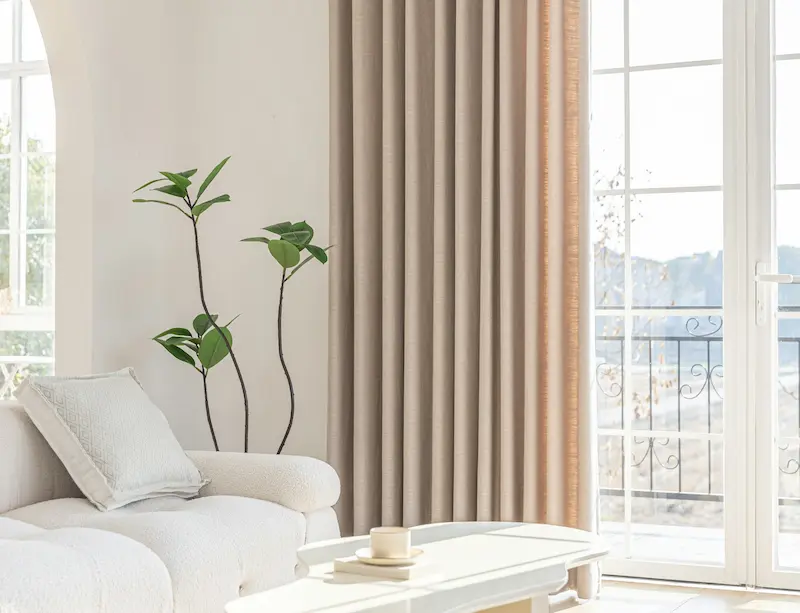
Most ready-made rods are too short and most people install them exactly at the window width. That chops the window visually.
Aim for:
- Rod width that extends 8–12 inches past the window frame on each side.
- This “stack back” allows the curtains to sit mostly off the glass when open, making your window look wider and bringing in more light.
If you have a very small window you hate, this is the fastest visual trick to “enlarge” it without doing any renovations.
The Length Rule
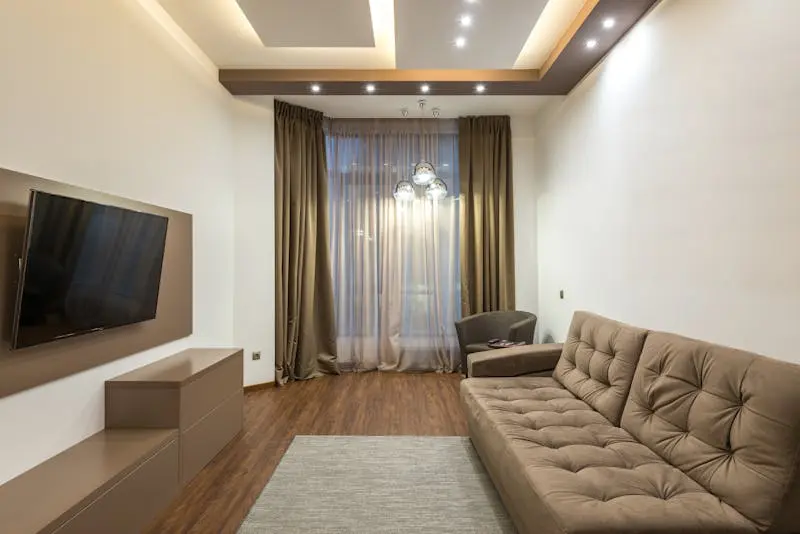
Length is where rooms either look tailored or accidentally “cheap.”
You have three main options, but for modern living room curtain ideas in 2026, I recommend one above the others:
- The Kiss (Best): Panels just touch the floor. No break, no puddle. This looks custom and clean.
- The Float: Panels hover ½–1 inch above the floor. Practical if you mop frequently or have radiators, but can read slightly informal.
- The Puddle: Extra 4–8 inches of fabric on the floor. Romantic, but in modern spaces it often looks messy and collects dust.
In my experience, the “kiss” is the sweet spot: polished yet easy to live with. Avoid “highwaters” – curtains floating 2–3 inches above the floor – unless there is a very specific functional reason.
Bonus Rule: Panel Fullness
No one talks about this enough. Your total curtain width (all panels combined) should be 2–2.5 times the width of the rod for proper fullness when closed. Thin, stretched fabric looks like a bedsheet, not a finished treatment.
Top Curtain Trends for 2026 (Beating JoyDeco)
Trends come and go, but these fit beautifully within a timeless, modern living room.
Trend 1: The “Invisible” Rod
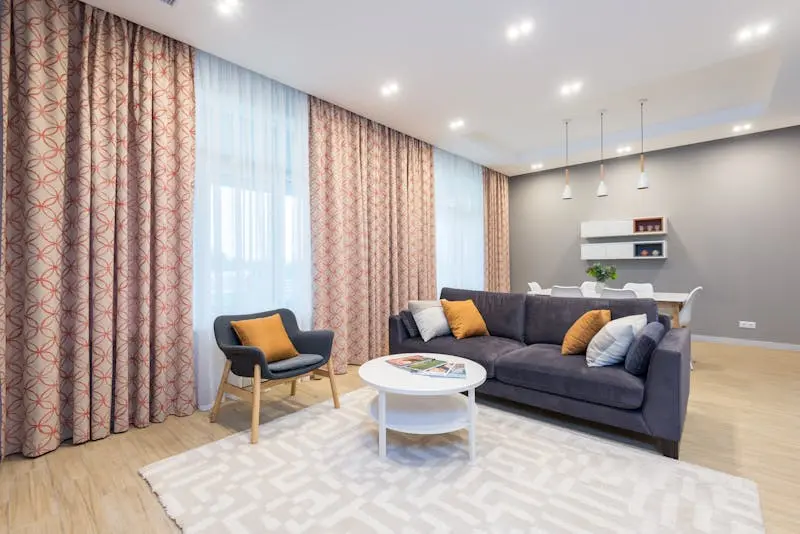
Ceiling-mounted tracks are everywhere right now – and for good reason.
- They create a continuous line of fabric, almost like a soft wall.
- Perfect for wall-to-wall windows or when you want to hide slightly uneven frames.
- They work brilliantly with ripple-fold headings (more on that below).
If you love organic modern living room ideas, a ceiling track with linen panels is one of the cleanest ways to get that “quiet luxury hotel” look.
Trend 2: Color Drenching
Instead of contrasting curtains, designers are leaning into curtains that match the wall color almost exactly.
Why it works:
- It elongates the wall and keeps the eye from “stopping” at the window.
- It feels sophisticated and calm, especially in neutral color palettes for living rooms.
If your walls are a warm greige, choose a curtain in almost the same value and undertone. I prefer going ½ shade deeper than the wall color so it still reads intentional, not accidental.
Trend 3: Ripple Fold vs. Grommet
Grommet curtains (with metal rings punched through the fabric) had their time. In a modern living room, they now feel a bit dated and casual.
Ripple fold is the current standard for elevated, modern living room window treatments in 2026:
- Fabric hangs in smooth, even S-shaped waves.
- Works best with tracks (ceiling or wall-mounted).
- Stacks very neatly, so it looks good both open and closed.
If you’re investing in custom, I strongly recommend ripple fold over grommets. For ready-made panels, look for pinch pleat or back-tab headings for a similar tailored effect.
Trend 4: Organic Textures
We’re moving away from flat, shiny fabrics and into tactile, natural-looking textures.
- Heavy linens: Slightly slubby, relaxed, perfect for organic modern or Scandi-inspired spaces.
- Bouclé blends: Soft, cozy, and visually rich without loud patterns.
- Cotton-linen mixes: The best of both worlds – drape plus durability.
In my experience, a textured neutral curtain does more for a living room than any patterned panel. Texture adds depth without visual clutter.
Choosing the Right Fabric for Function
Before you fall in love with a look, think about what the curtains actually need to do in your room. This is where function and style meet.
Sheers
Best for: daytime privacy and softening harsh light.
- Ideal if your living room faces a street or neighboring building but you still want daylight.
- Pair beautifully with a second layer of heavier drapes for night-time privacy.
- Work well in small spaces because they don’t visually overwhelm the walls.
If you are layering sheer and blackout curtains, I recommend mounting sheers on the front track and blackouts on the back so the sheer layer is what you see most of the time.
Velvet
Best for: insulation, drama, and blocking drafts.
- Thick velvet panels are excellent for older homes with drafty windows.
- They add a luxurious weight to modern spaces when kept in deep, muted tones (ink blue, espresso, dark olive).
- I don’t recommend light-colored velvets in high-traffic homes; they show marks easily.
Use velvet sparingly. In a modern setting, one strong velvet curtain wall paired with simple furniture is more powerful than velvet on every surface.
Linen
Best for: relaxed, organic modern living rooms.
- Linen drapes beautifully with a soft, natural crease.
- Filter light in a very flattering way; the room feels brighter but not exposed.
- Consider lined linen if you get intense sun – it protects the fabric and furnishings.
In my experience, linen is the most forgiving and timeless choice. If you’re unsure, start here.
Blackout
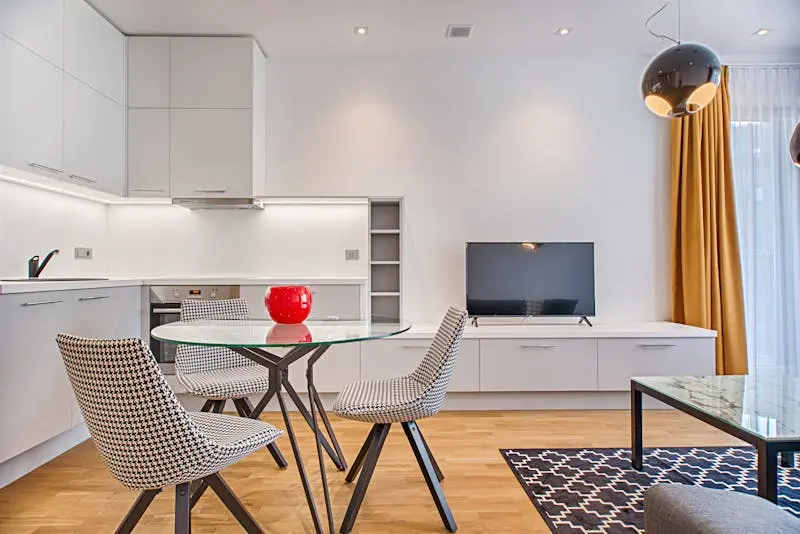
Best for: TV-heavy living rooms and west-facing windows.
- Reduce glare on screens and protect artwork and fabrics from fading.
- Great for city apartments where external light pollution is strong at night.
- You can use blackout lining behind any pretty fabric instead of choosing inherently heavy-looking blackout panels.
For a layered look, combine blackout-lined main curtains with a sheer inner layer. This setup is the perfect example of functional layering sheer and blackout curtains: airy by day, cocooned at night.
Curtains vs. Blinds vs. Shades: What to Choose?
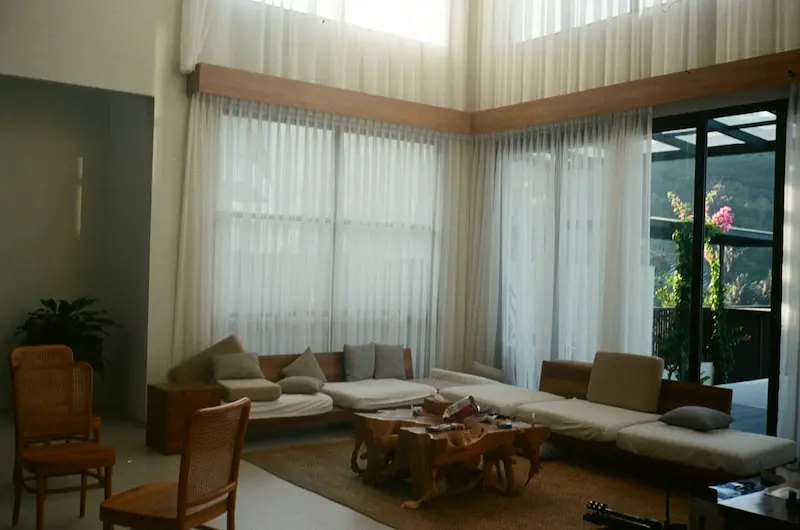
You don’t always have to choose only curtains. Often the best modern living room window treatments in 2026 are layered combinations.
Quick Comparison
| Treatment | Pros | Best For |
|---|---|---|
| Curtains | Softness, drama, insulation, sound dampening | Framing the room, adding height, warmth |
| Roman Shades | Clean lines, space-saving, tailored look | Small windows, radiators, minimalist spaces |
| Blinds | Precise light control, budget-friendly | Rental apartments, layered under curtains |
My usual recommendation:
- Use Roman shades + curtains if you want both softness and a very tidy look.
- Use blinds + curtains if you’re in a rental or on a tight budget but still want the layered, finished feeling.
Styling Ideas for Tricky Windows
Not every living room has perfectly centered, floor-to-ceiling windows. Let’s handle the awkward ones.
Bay Windows
- Use a continuous rod or ceiling track that follows the angle of the bay.
- Keep fabric light to avoid overwhelming the niche.
- If you want to keep the bay usable (for seating or a desk), consider Roman shades inside each window plus one outer layer of side panels purely for softness.
Small, Off-Center, or “Mean” Windows
If your window is tiny or placed oddly on the wall, fake a better proportion.
- Extend the rod well past the window on each side.
- Hang panels so they frame a wider area than the glass itself.
- Bring the rod up high, close to the ceiling, to create a taller visual opening.
In my experience, dressing the wall, not just the window, is the key for small living room decor ideas where the architecture isn’t doing you any favors.
Radiators Under Windows
When there’s a radiator right under the sill, full-length curtains can trap heat and look bulky.
Better options:
- Inside-mounted Roman shades that stop just above the radiator.
- Roller shades paired with tall side panels that never fully close, simply framing the window.
This way, you keep heat circulation and still get softness.
FAQ Section
Should curtains touch the floor or hover?
For a modern living room, I almost always recommend curtains that just kiss the floor. It looks custom, elegant, and proportional to today’s cleaner lines.
If you’re worried about cleaning or have pets, a slight float (½–1 inch off the floor) is acceptable – but try not to go higher unless there’s a radiator or bench in the way.
Are curtain valances out of style in 2026?
Traditional, frilly valances are largely out of style in modern spaces. They visually shorten the window and feel heavy.
If you like a finished top, consider:
- A sleek boxy pelmet in the same fabric as the curtains for a tailored look.
- Or better yet, a ceiling track that disappears and lets the fabric be the star.
How do I choose a curtain color for a grey living room?
For a grey living room, you have two strong options:
- Tone-on-tone: Choose curtains in a similar depth but slightly warmer undertone (greige, taupe). This softens the room and feels sophisticated.
- Soft contrast: Pair cool grey walls with warm neutral curtains (oatmeal, flax linen) to keep the room from feeling cold.
I don’t usually recommend bright, saturated curtain colors in a grey modern living room. They tend to fight the palette rather than enhance it. Let color come through in art, pillows, or one accent chair instead.
If you follow these rules – hang your curtains high and wide, choose the right fabric for function, and match the style to your modern living room’s architecture – your windows will finally look intentional, not like an afterthought. And once the “eyebrows” are right, the whole room starts to make sense.