Scandinavian Bathroom with Wood Accents: How to Add Warmth Without Ruining Your Joinery
If your bathroom looks clean on paper but feels cold in real life, wood is usually the missing piece. A Scandinavian bathroom with wood accents takes that clinical white tile box and turns it into something closer to a spa: calmer, softer, and far more inviting.
The catch is moisture. Use the wrong material in the wrong spot and your “Hygge” moment turns into warped doors and black mold. So the goal is not “wood everywhere,” but carefully placed wood that still feels light, Scandi, and genuinely low-maintenance.
H2: The Technical Guide – Real Wood vs “Wood Look”
You can absolutely have a Scandinavian bathroom with wood accents in a small, steamy space, but you need to be very picky about where the wood goes and what kind you use. Think of it as zoning: real wood in dry, splash-protected areas, wood-look finishes where water actually hits.
Real Wood (The “Luxury” Choice)
If you want that authentic, tactile Scandi look, real timber still wins. You just need the right species and a realistic attitude to maintenance.
- Teak:
- This is the gold standard for wet rooms for a reason.
- Naturally oily, highly resistant to rot, and used on boat decks, so it copes well with daily steam.
- I recommend teak for vanities, duckboards, and bench seats where it can dry between showers.
- Bamboo:
- Technically a grass, but it behaves like hardwood when engineered properly.
- More sustainable and usually more affordable than teak.
- Works well for accessories (stools, ladders, small shelves) and vanity fronts in “Scandinavian bathroom with wood accents” schemes where you want warmth without going very dark.
- Oak:
- The classic Scandi timber, but more sensitive than teak.
- Needs marine-grade polyurethane or a high-quality water-resistant oil finish on all faces, including the back and edges.
- In my experience, oak is perfect for vanity doors and mirror frames in a small bathroom, but I would avoid it inside shower zones.
- Maintenance reality check:
- Plan to re-oil exposed wood every 6–12 months depending on how steamy your bathroom is.
- Always pair real wood with a powerful extractor fan and a habit of leaving the door open after showers.
- If you know you will never maintain it, lean harder on wood-effect finishes instead.
Wood-Effect (The “Practical” Choice)
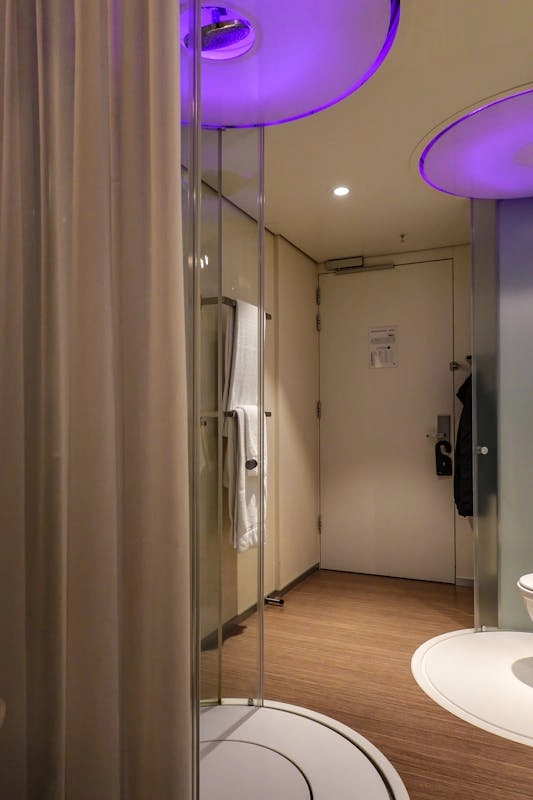
This is where you can be braver with coverage without worrying about swelling or rot.
- Wood-effect porcelain planks:
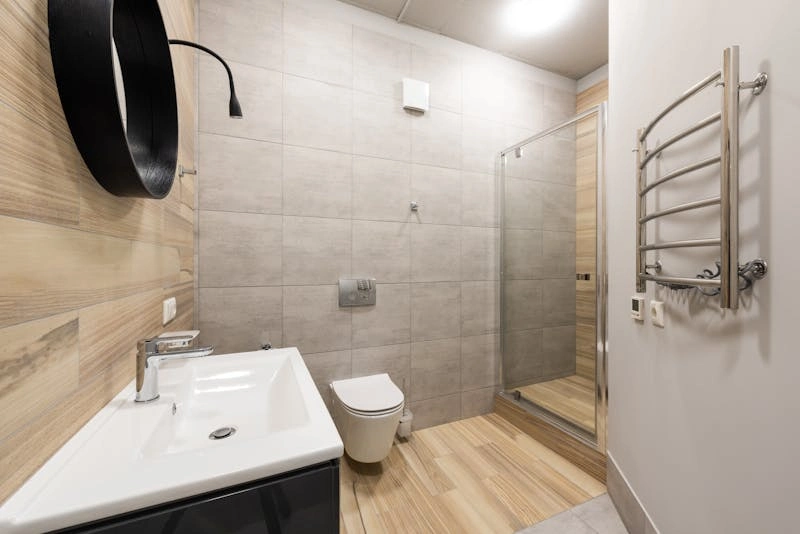
- Ideal inside the shower, behind the tub, or as a wood slat accent wall bathroom look without the risk.
- You get realistic grain, long “planks,” and the durability of tile.
- I like using them vertically behind a vanity to mimic timber slats, then switching to plain white tile for the rest of the room.
- Luxury Vinyl Tile (LVT):
- Warmer underfoot and quieter than tile, which is great in apartments.
- Fully waterproof types can run across the whole floor, even under a freestanding tub.
- Works well for renters when installed as click-lock floating floors (always check your lease first).
- Laminate and cheap “wood” foils:
- Personally, I would avoid these in bathrooms altogether.
- The edges and joints are usually the weak points and swell quickly in constant humidity.
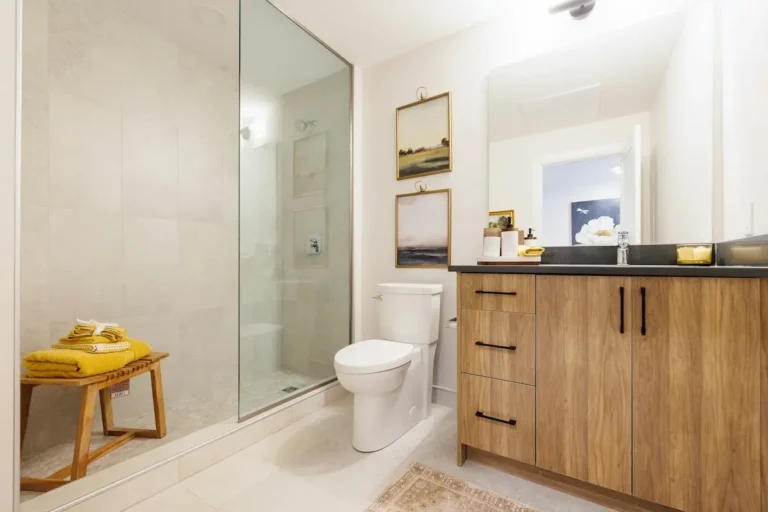
If you’re designing a Scandinavian bathroom with wood accents for a small apartment, a good rule is: real wood where your hands touch, wood-effect where your water hits.
H3: Cheat Sheet – Wood Tone Pairing
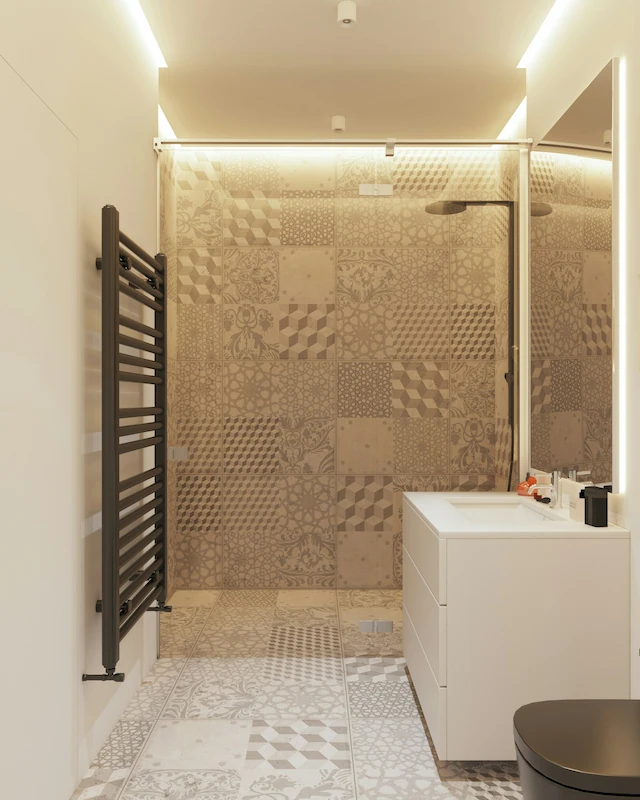
A Scandinavian bathroom lives or dies on its palette. Wood plus white can look heavenly or surprisingly busy, depending on undertones. Use this as a quick pairing guide when building a Scandi bathroom color palette with wood.
| Wood Tone | Best Companions | Overall Mood |
|---|---|---|
| Pale Ash / Birch | Matte white, soft grey, pale “stone” tile | Classic Swedish, airy and calm |
| Warm Oak | Sage green, greige, sand | Nature-inspired, spa-like |
| Dark Walnut | Matte black hardware, warm beige walls | Moody Danish / Japandi retreat |
In my experience, the safest option in a small bathroom is pale ash or oak + matte white + a whisper of sage or stone. It keeps the room feeling larger, while the wood stops it feeling like a hospital.
H2: Top 5 Ways to Add Wood Accents (Without Renovation)
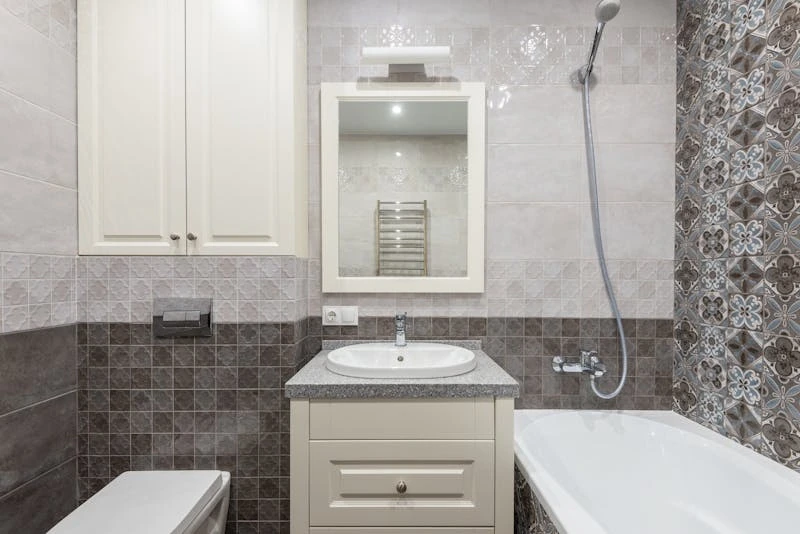
If you rent or simply don’t want to rip out tile, you can still get that Scandinavian bathroom with wood accents by layering smart, removable pieces.
1. The Slat Wall
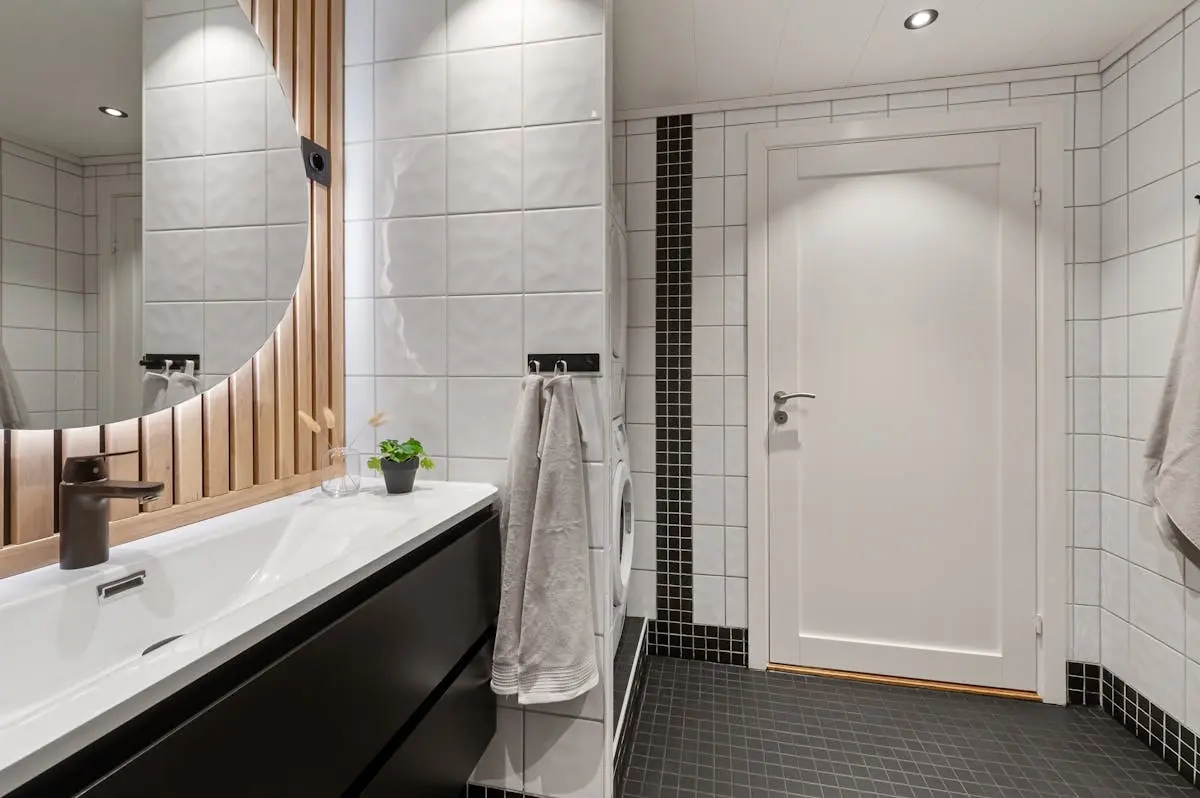
A wood slat accent wall bathroom is one of the strongest Scandi signals, and you don’t need to rebuild the room to get it.
- Use prefabricated acoustic slat panels (timber on a felt backing) behind the vanity or behind the toilet.
- Mount them only in dry zones, away from constant splashes.
- I prefer vertical slats in small bathrooms because they visually stretch the height and feel more refined than horizontal lines.
2. Floating Shelves
Shelves are the easiest way to bring in continuous wood without overwhelming the room.
- Install 1–2 chunky floating shelves above the toilet or beside the mirror.
- Stick to the same wood tone as your vanity for a cohesive, intentional look.
- Style lightly: rolled towels, a glass jar, maybe one plant. Overloading shelves is the fastest way to kill the calm Scandi mood.
3. The Teak “Duckboard” Floor
Teak or bamboo duckboards are like wooden mats that sit on top of your existing tiles.
- Use them inside a walk-in shower or directly outside the shower to give that spa under-foot feeling.
- They allow water to drain through while your feet stay warm and comfortable.
- This is one of my favourite upgrades for tiny Scandi bathroom layouts because it’s removable, renter-friendly, and instantly changes the atmosphere.
4. Bamboo Accessories
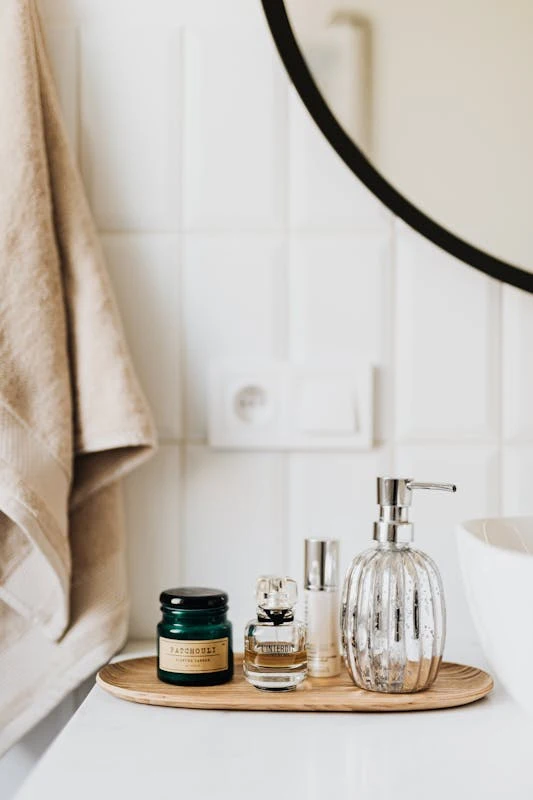
If you’re nervous about committing to bigger wood elements, start with accessories.
- Bamboo ladder rails, stools, soap dispensers, and toothbrush cups are low-risk ways to test your Scandi bathroom color palette with wood.
- Keep shapes simple and avoid mixing too many different wood tones; two at most is ideal.
- I recommend bamboo in windowless bathrooms because it handles humidity better than cheap pine.
5. The Mirror Frame
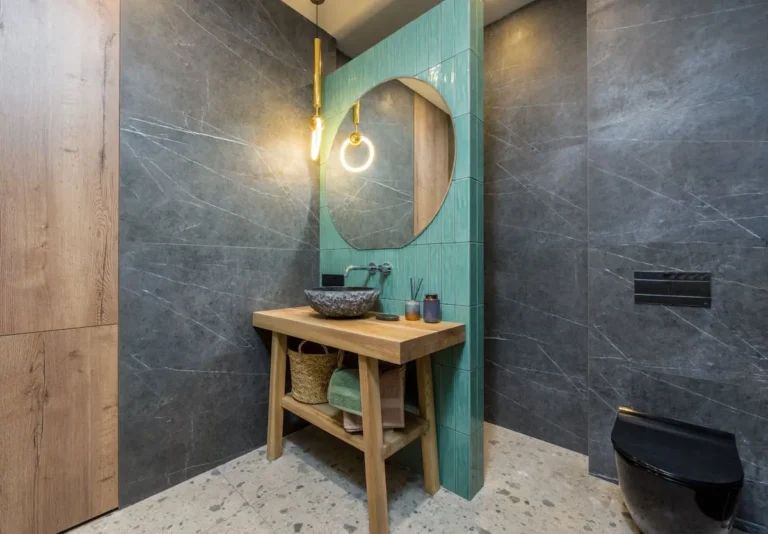
A round mirror with a slim wood frame gives a huge amount of warmth for minimal square footage.
- Choose a bent-wood framed mirror in oak, ash, or walnut, depending on your scheme.
- If storage is tight, combine the frame idea with a mirrored cabinet – many brands now sell recessed units with timber-look fronts.
- This works especially well when you already have a lot of white tile and don’t want to add more visual noise.
H2: Layout Logic – Balancing Wood and White
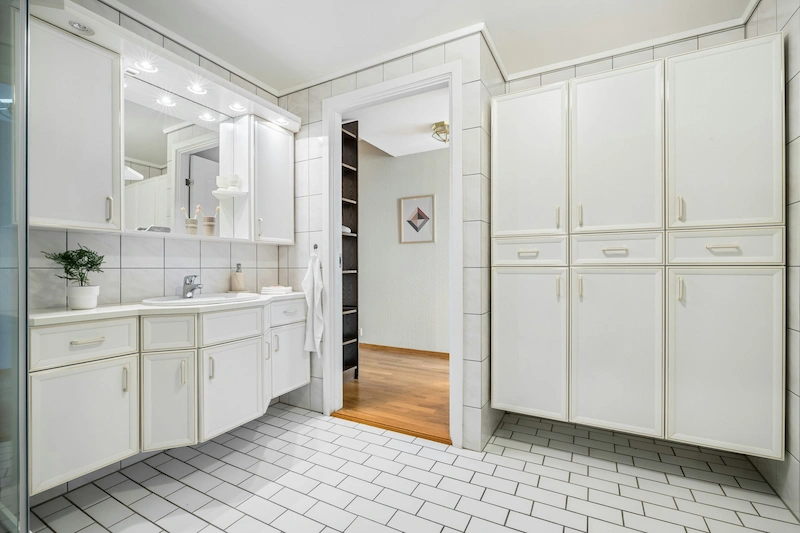
It’s very easy to get excited and suddenly realise you’ve turned your Scandinavian bathroom with wood accents into a full sauna. The difference between stylish and overdone is usually proportion.
The 70/30 Rule
As a simple guide, aim for:
- 70% light, reflective surfaces
- White or very pale tile
- Light grout
- Glass and mirrors
- 30% wood and darker accents
- Vanity fronts
- One feature wall or slat panel
- Shelves, duckboards, and accessories
In my experience, once wood creeps towards 50%, the room starts to feel heavy and you lose that clean Scandinavian clarity. The 70/30 balance keeps things calm and bright, especially in small apartments.
Zoning: Dry vs Wet
Use wood to subtly map out how the room is used.
- Dry zone (wood-friendly):
- Vanity area
- Mirror wall
- Shelves and ladder rails
- Wet zone (wood-effect only):
- Shower enclosure
- Direct tub surround
- Floor area under the shower head
If you love the idea of a wood slat accent wall bathroom inside the shower, do it with wood-effect porcelain or composite slats rather than real timber. You’ll get the same rhythm and warmth without worrying about rot.
H3: FAQ
Can you put a wood vanity in a wet room?
You can, but you have to be selective. I recommend solid teak or high-quality marine-ply with a proper waterproof finish. Avoid MDF or chipboard completely; they swell and crumble in constant humidity. Even with good materials, keep your vanity out of the direct spray zone and make sure you have strong extraction.
What is the best sealant for wood in a bathroom?
For most small Scandi bathrooms, a good water-based polyurethane gives durable protection without a heavy plastic look. If you prefer a more natural finish, tung oil or specialised bathroom oils work well, but they usually need more frequent reapplication. Whatever you choose, seal all edges and screw holes, not just the visible faces.
Does wood always mold in bathrooms?
Wood can absolutely develop mold if the room is poorly ventilated, but it doesn’t have to. I recommend combining three things: a high-CFM exhaust fan, a habit of leaving the door open after showers, and materials that can dry out fully between uses (like slatted duckboards instead of solid planks sitting in puddles). With those basics in place, a Scandinavian bathroom with wood accents stays warm, calm, and low-maintenance rather than damp and risky.