Beige & Warm Scandinavian Bathroom Designs: How To Get That Soft, Spa-Like Look
“Scandi” doesn’t have to mean cold grey and harsh white anymore. Beige & warm Scandinavian bathroom designs are all about soft light, stone, and calm, not about your space feeling like a clinical showroom.
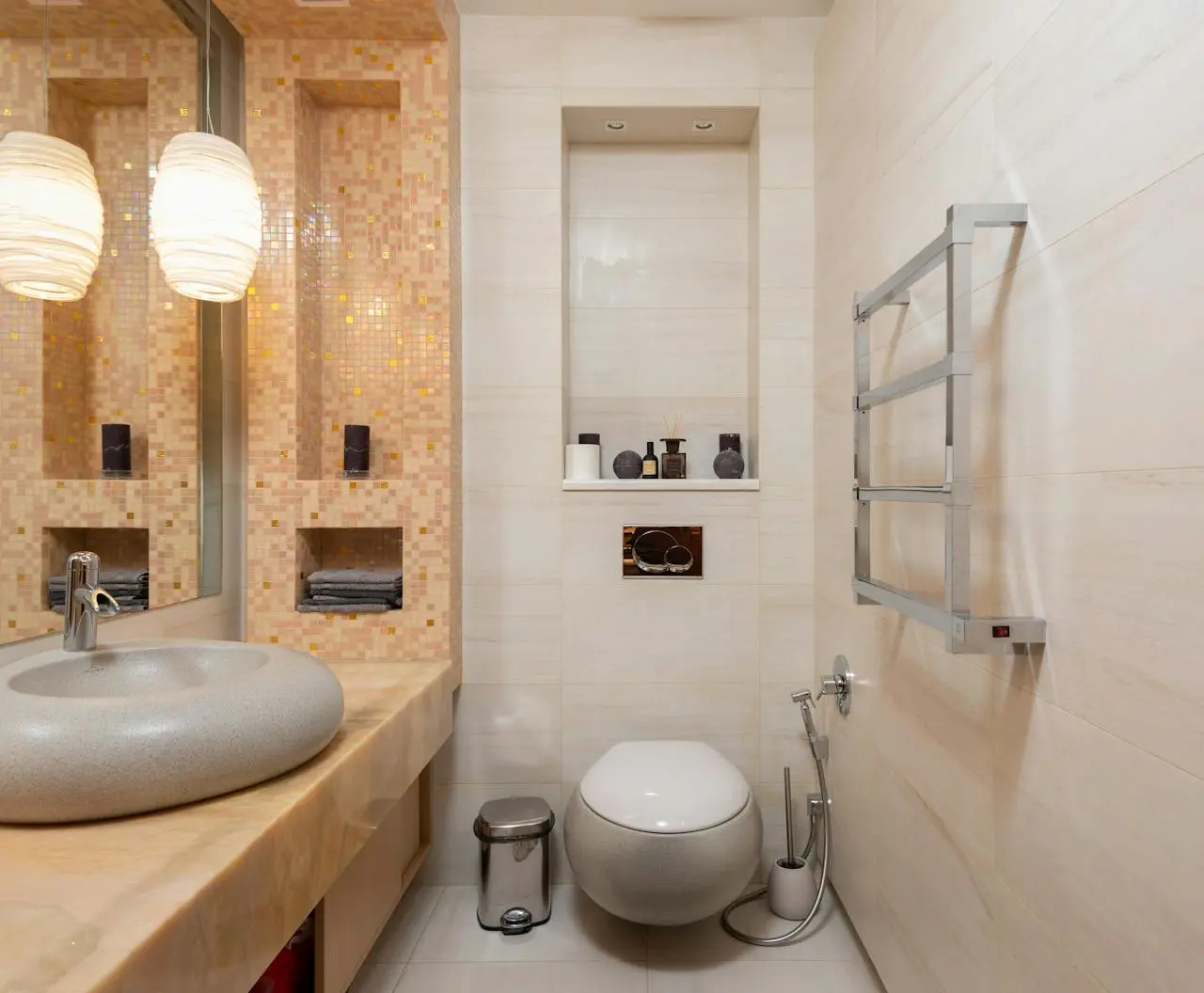
If you love the idea of a warm minimalism bathroom but you are scared of beige turning into old-school magnolia, you are in the right place. We will walk through undertones, travertine and limestone bathroom ideas, lighting rules, and the dried-botanical styling tricks that make the whole room feel like a quiet spa.
The “No-Yellow” Rule – Choosing the Right Beige
The number one fear with beige bathrooms is simple: “Is this going to look like my grandparents’ magnolia hallway?” That fear is valid, because the wrong beige will age your entire design instantly.
The good news is that modern beige is less about yellow and more about subtle undertones.
The Yellow Trap
Yellow-based beiges were everywhere in the 90s and early 2000s. Under warm lighting, they can look creamy, but in daylight or with cooler bulbs, they suddenly feel sour and dingy.
In a bathroom full of white sanitaryware and cool tiles, a strong yellow beige:
- Makes white toilets and basins look dirty.
- Clashes with chrome or brushed nickel.
- Turns your “Scandi” concept into “builder-grade rental.”
If you see a sample that reads “banana” or “butter” next to a simple sheet of white paper, put it back.
Greige – The Modern Beige
Greige is your safest option for a warm Scandinavian bathroom.
It is literally grey + beige, which means:
- It still feels warm and cozy.
- It pairs beautifully with travertine, limestone, and warm woods.
- It behaves well under different lighting temperatures, so it does not swing wildly green or yellow.
I recommend greige on:
- Upper walls
- Built-in storage fronts
- Ceilings if you want a full cocoon effect
If you already have a lot of grey in your home, greige is the perfect bridge from cooler Scandi to the new warm minimalism direction.
Pink-Undertone Beige – The Plaster Look
Beiges with a soft pink undertone can mimic plaster or clay. They are huge in warm minimalism bathrooms because they add a gentle flush without feeling like “color-color.”
They work especially well when:
- You are using limewash or textured paint.
- You pair them with beige stone like light limestone or pale travertine.
- You want the room to feel flattering on skin tones (great for vanity areas and mirrors).
Just keep the pink subtle. You want “sunset on stone,” not “baby nursery.”
Green-Undertone Beige – The Stone Neutral
Green-based beiges, often labeled “stone” or “mushroom,” may look boring on the swatch, but they come alive next to travertine, limestone, and wood.
I like them because:
- They behave like natural rock shades, so they are very forgiving.
- They pair beautifully with sage towels or olive accessories if you want tiny hints of color.
- They look calm under both daylight and warm artificial light.
If you want your bathroom to feel like a high-end spa rather than a typical beige makeover, a stone/green-based beige is often the winning choice.
Texture Is King (Tone-on-Tone)
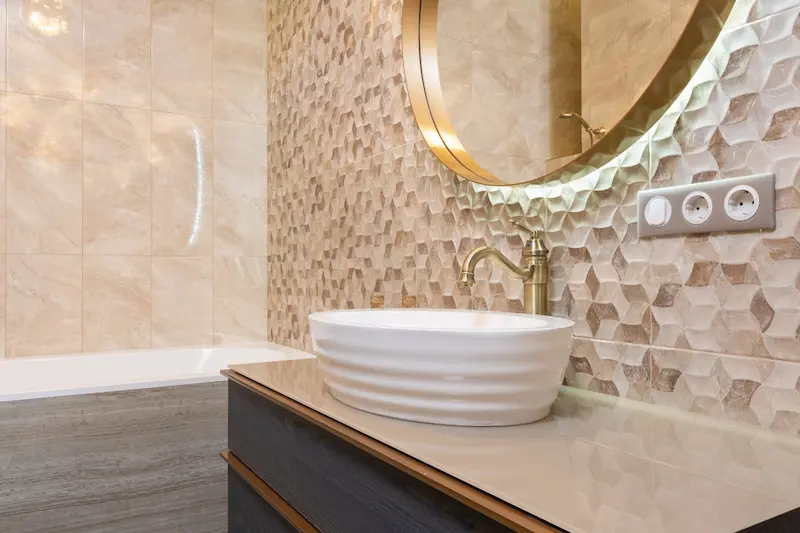
In a beige & warm Scandinavian bathroom, you will often keep everything in a tight color range: walls, floor, vanity, even textiles. That can either look unbelievably expensive or completely flat.
The difference is texture.
If the walls, floor, and vanity are all roughly the same color, you must change how they catch the light.
Walls – Limewash Paint
I strongly recommend limewash or limewash-effect paint for the walls if you can.
Why:
- It creates soft, cloudy variation, almost like stone.
- It reflects light in a diffuse way, which is very flattering on skin and finishes.
- It instantly makes a new build feel less boxy and more “handcrafted.”
If real limewash isn’t an option, go for a matte paint in a plaster-like shade and keep the walls free of busy decor so the color and subtle shadow become the focus.
Floors – Microcement Or Large-Format Matte Tiles
On the floor, you want something quiet but grounded.
Two strong options:
- Microcement: Seamless, no grout lines, and perfect for small bathrooms. It makes the room feel larger and more spa-like.
- Large-format matte porcelain tiles: In a sand or stone tone close to your wall color, but perhaps half a shade darker to anchor the space.
Avoid tiny mosaic floors in this palette unless you are very intentional. They can introduce a visual buzz that fights the calm minimalism you are chasing.
Vanity – Reeded Or Fluted Oak
For the vanity, texture matters as much as color.
A reeded or fluted oak front is ideal because:
- The vertical lines create shadow and depth without relying on strong contrast.
- It adds a crafted, furniture-like feel, instead of looking like a flat built-in box.
- It works beautifully with both travertine and limestone tops.
If your budget is lower, even a simple oak-effect laminate with a subtle grain will do more for the room than a plain, completely flat slab in the same beige as the walls.
2026 Trend – The Return Of Travertine
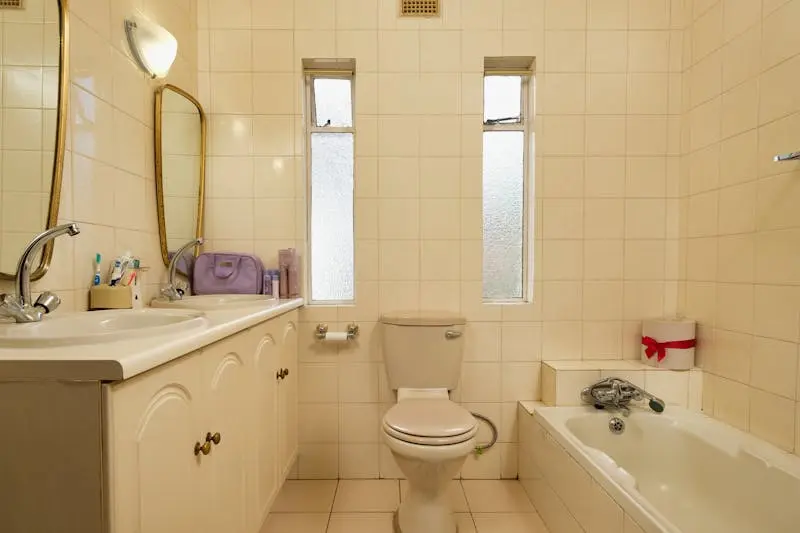
Travertine is everywhere again, and it is not an accident. Beige & warm Scandinavian bathroom designs are built for it.
Why Travertine Works So Well
Travertine is a warm, porous stone with natural holes and striations. Even when filled and honed, it never feels sterile.
In a bathroom, it:
- Adds instant character, as if the space has existed for decades, not months.
- Works with almost any warm-neutral paint on the walls.
- Looks beautiful under candlelight and warm LEDs, because the surface catches highlights and shadows.
Good places to use travertine:
- Vanity countertops
- Upstands and small splashbacks
- Shower benches or low ledges
- Narrow ledges behind a wall-hung toilet
If you are worried about maintenance, keep it out of the most aggressive splash zones and seal it properly.
Limestone – The Softer Cousin
If travertine feels too rustic for you, limestone gives a similar warmth with a smoother, more even look.
I like limestone when:
- You prefer a calm, spa-inspired aesthetic instead of visible holes and bands.
- Your bathroom is already busy with lines (slat walls, fluted details) and you want the stone to be quieter.
- You are mixing it with microcement or painted walls and want a soft transition.
Use limestone on:
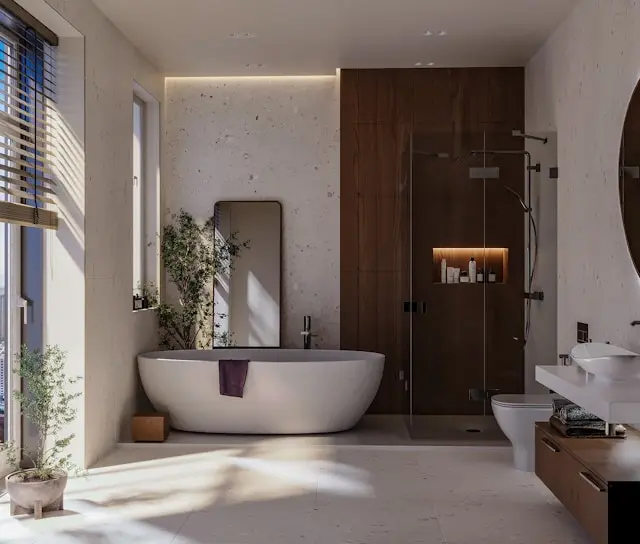
- Floors paired with limewash walls.
- Shower walls if you want that hammam-style envelopment.
- Small niches and shelves where the natural stone can become a subtle feature.
Lighting For Warmth
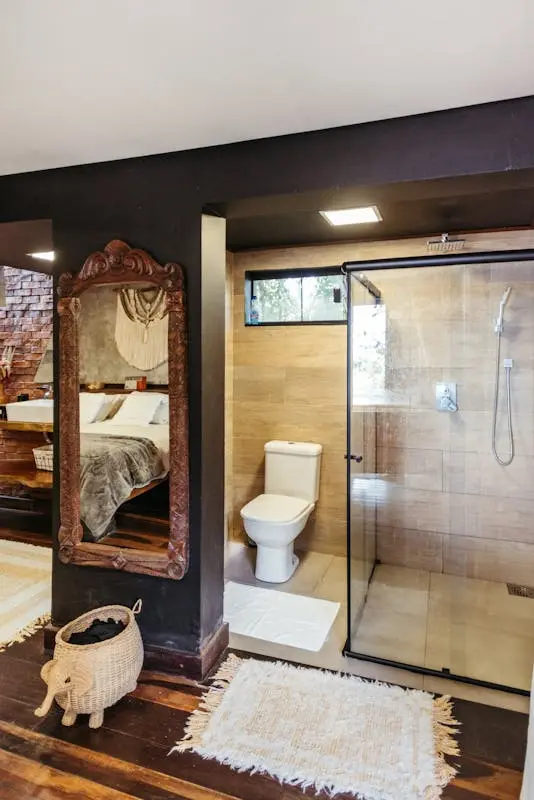
You can buy the perfect beige paint and the most beautiful travertine, and still ruin the entire scheme with the wrong bulbs. Light temperature is non-negotiable in a warm minimalism bathroom.
The Kelvin Rule
For beige & warm Scandinavian bathroom designs, stick to:
- 2700K (Warm White): This is my go-to. It makes beige look creamy, travertine look golden, and skin tones look healthy.
- 3000K: Acceptable if you prefer a slightly fresher look, especially if your stone leans more greige than yellow.
Avoid 4000K or anything marketed as “Cool White” in this context. It will:
- Emphasize any green or yellow in your beige in an unflattering way.
- Make brass look harsher and more reflective.
- Bring back that “clinical” feeling you are trying to escape.
How Light Plays With Metal
Light is not just about visibility; it is about how materials glow.
In a warm beige palette:
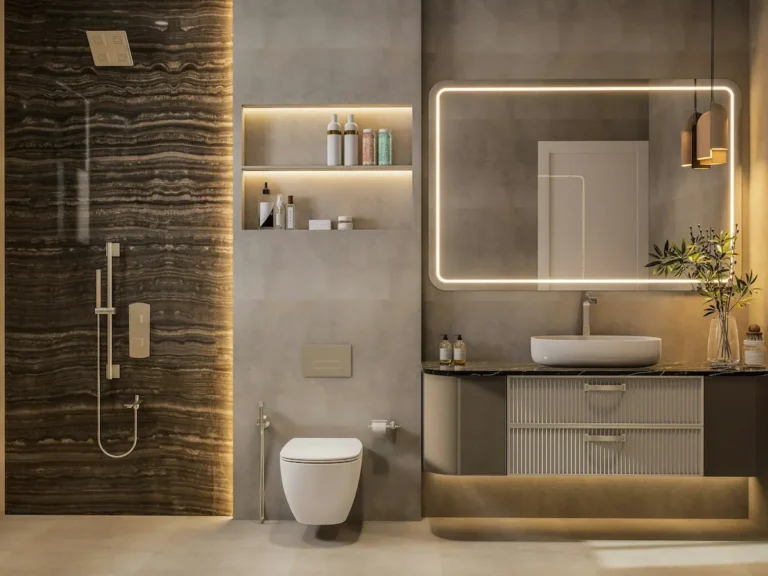
- Brushed brass or soft gold fittings bounce warm light beautifully, adding a subtle halo effect around taps and handles.
- Aged brass or bronze introduces depth and makes the space feel designed, not just newly installed.
- Chrome tends to feel a bit cold against beige; I only recommend it if you are leaning heavily into stone-grey-beige rather than true warmth.
Layer your lighting:
- Ceiling lights for general brightness.
- Wall lights or backlit mirrors around the vanity for flattering, face-level light.
- Optional LED strips under floating vanities to create a soft glow on the floor.
Decor – The “Dried Nature” Aesthetic
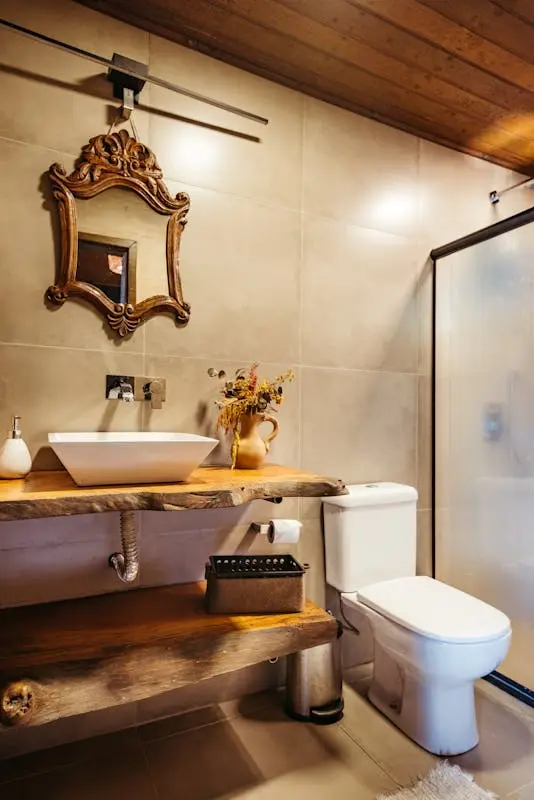
Once the hard finishes are right, the decor is where you either keep the calm or accidentally introduce chaos.
In a warm Scandinavian bathroom, I would lean heavily on dried, textural elements rather than bright green plants.
Botanicals
Fresh green plants look beautiful in many styles, but if your palette is all sand, stone, and oat, bright lime leaves can sometimes feel like they belong to a different story.
For this specific look, I recommend:
- Dried pampas grass in a simple ceramic vase.
- Dried wheat or barley for a very soft, tonal effect.
- Cotton branches if you want a sculptural, cloud-like moment.
These botanicals:
- Echo the beige palette instead of competing with it.
- Add vertical movement and softness.
- Require zero maintenance in a humid bathroom.
Textiles
Textiles are where warm minimalism can quietly shine.
Go for:
- Jute or flatweave rugs in sand or natural tones (avoid high contrast borders).
- Waffle-weave or heavy cotton towels in biscuit, tan, or stone.
- Linen shower curtains in an unbleached, natural shade rather than bright white.
Avoid shiny synthetic textiles. They fight against the organic textures of travertine, limestone, and limewash.
If you want subtle pattern, choose tone-on-tone stripes or very soft checks, not bold graphics.
FAQ – Beige & Warm Scandinavian Bathroom Designs
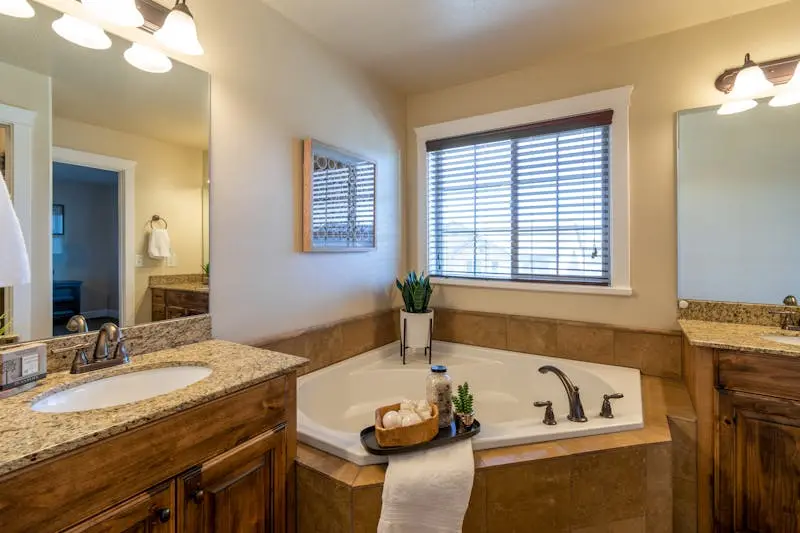
Does beige make a bathroom look old?
Beige only looks old when it leans into yellow-based magnolia territory.
If you choose modern shades like sand, stone, putty, or greige, and pair them with clean lines, warm metals, and good lighting, the effect is current and luxurious. In my experience, the combination of stone-like beige walls, a simple white oak vanity, and brushed brass fixtures looks far more expensive than a stark white/grey scheme.
What color metal goes with beige?
For beige & warm Scandinavian bathroom designs, the best metals are:
- Brushed gold or brushed brass for a soft, glowing look.
- Aged bronze if you want more depth and a slightly rustic, European feel.
I generally recommend avoiding high-shine chrome in a warm beige bathroom. It can drag the mood back toward “standard builder bathroom” instead of custom warm minimalism.
Can I mix grey and beige?
Yes, and you absolutely should if you are transitioning from older cool-Scandi decor.
Grey + beige together create greige, which:
- Bridges cold greys and newer warm tones.
- Works beautifully with travertine, limestone, and white oak.
- Keeps the room from feeling too brown or too flat.
A simple, safe formula is:
- Greige walls
- Warm beige stone (travertine or limestone) on floors or vanity tops
- Light oak wood accents
If your bathroom currently feels cold and flat, you do not have to rip everything out. Start by warming the walls, softening the lighting, and bringing in one or two beige stone elements. The rest of the room will start to follow.