Wood Bathroom Decor Ideas: How to Add Warmth Without Ruining Your Walls
Tiled bathrooms are practical. They are also, very often, cold, echoey and a bit “public restroom”. The fastest way to flip that mood into spa-like and inviting is to introduce wood – but you have to do it intelligently, or you’ll end up with warped panels and moldy corners.
Think of wood bathroom decor ideas as a balance between mood and moisture management. Done right, you get warmth, texture, and that boutique-hotel feel. Done wrong, you get swollen MDF and regret.
Let’s set the ground rules first.
The Material Guide – Real Wood vs. “Wood Look”
If you only remember one thing from this article, let it be this: Water does not care how pretty your Pinterest board is. You need the right species and the right substitutes.
Real Wood (The Luxury Choice)
Real wood is still the most beautiful option in a bathroom, but it demands respect.
Teak / Acacia
- Naturally high in oils, which makes them more resistant to water and rot.
- Ideal for: vanities, duckboard mats, shower benches, and trim in low-splash zones.
- In my experience, teak is the closest you can get to “set it and forget it” in a wet room, as long as you maintain ventilation.
White Oak
- Classic Scandinavian look: pale, soft grain, and very versatile.
- Needs proper sealing with a good water-resistant polyurethane or hardwax oil.
- I recommend re-checking the finish every 1–2 years in actively used family bathrooms; earlier if you see dull patches or darkening near splash zones.
What to avoid with real wood
- Unsealed pine or cheap softwoods as vanity tops. They dent, stain, and expand easily.
- Any exposed wood where water can pool and sit (right next to the tub with no protection, for example).
Waterproof Wood Alternatives for Bathrooms (The “Cheat Codes”)
If you want the look of wood without the stress, this is where waterproof wood alternatives for bathrooms come in.
Porcelain Wood Tile
- Textured porcelain planks that look like oak or walnut.
- Perfect for inside the shower or on floors where you want a small bathroom wood accent wall idea without worrying about steam.
- They mop like stone and don’t need sealing.
I prefer porcelain planks in narrow bathrooms: laid lengthwise, they visually stretch the room.
Luxury Vinyl Plank (LVP)
- 100% waterproof core, warm underfoot, and softer than tile.
- Ideal for family bathrooms, especially on upper floors where you want a bit of sound absorption.
- Don’t waste money on very cheap click-together LVP; go for mid-range with a good wear layer and a subtle, non-shiny finish.
Where each option works best
| Zone | Best Choice | Why |
|---|---|---|
| Inside shower / wet walls | Porcelain wood tile | Waterproof, scrub-friendly |
| Family bathroom floor | LVP or porcelain tile | Durable and low maintenance |
| Vanity front / accent wall | Real wood or pre-finished slat panels | Warmth where water doesn’t sit |
2026 Trend Watch – “Texture & Tone”
We’re moving past flat blond Scandi everything. The new direction is richer and more tactile.
The “Fluted” Effect
Fluted or reeded fronts are everywhere for a reason.
- Vertical grooves on vanity doors and drawer fronts create shadow lines that instantly add depth.
- In a small bathroom, that repetition makes the vanity look like intentional architecture, not just a box for storage.
- I recommend fluted fronts in a medium tone (oak, walnut) rather than ultra-pale wood; the texture reads better.
From Blonde Scandi to Moody Japandi
The old formula: white tile + light oak + black tapware. Still lovely, but it can feel overused.
The update:
- Walnut, smoked oak, or espresso tones for vanities and accent walls.
- Paired with warm beige, greige, or stone-colored tiles instead of stark white.
- The result is calmer, more grounded, and feels closer to a spa than a clinic.
If your bathroom has no natural light, I prefer a mid-tone wood rather than very dark; it gives warmth without turning the room into a cave.
Slatted Walls and Acoustic Panels
If you’re hunting for small bathroom wood accent wall ideas, slat panels are your friend.
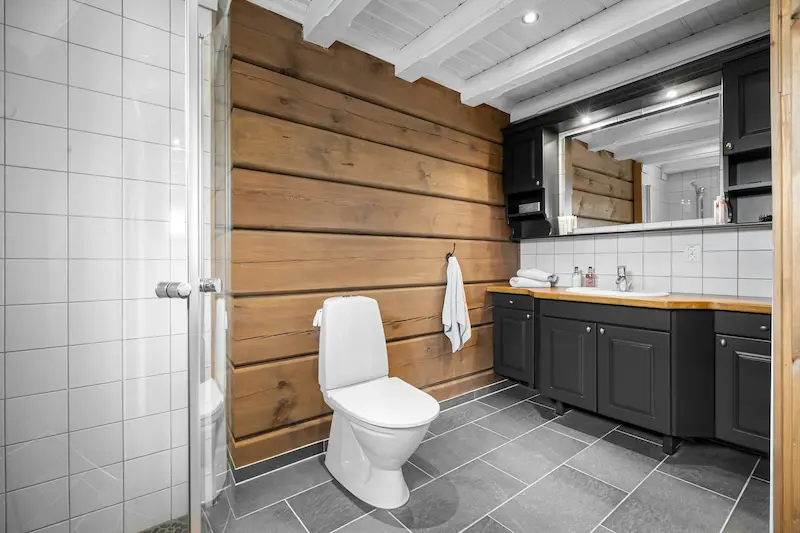
- Slatted wood (or wood-look) panels behind the vanity or toilet create a strong focal point.
- They can be real wood, veneer, or acoustic-style strips on a dark backing.
- Keep them out of direct splash zones, or choose moisture-rated versions.
One accent wall is enough. If you cover every surface in slats, the room starts to feel like a sauna changing room rather than a bathroom.
Small Bathroom Hacks (The Utility Angle)
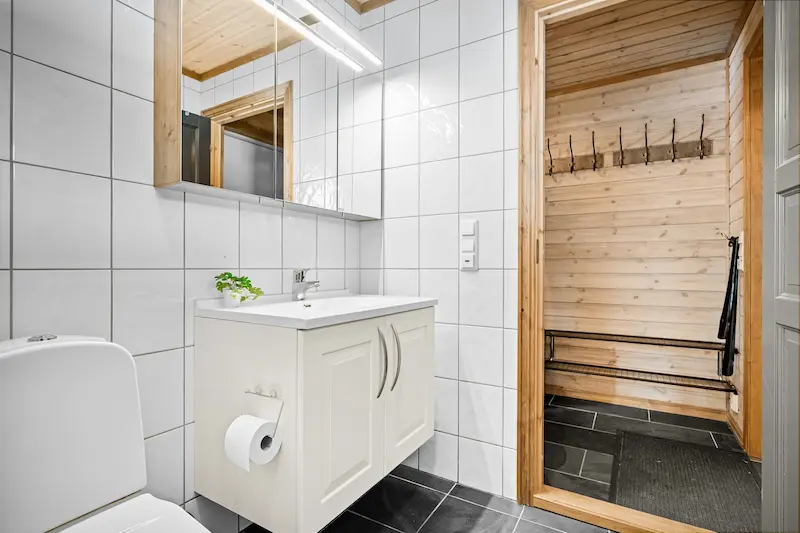
Wood in a small bathroom has to work twice as hard: it should add warmth and help with proportions.
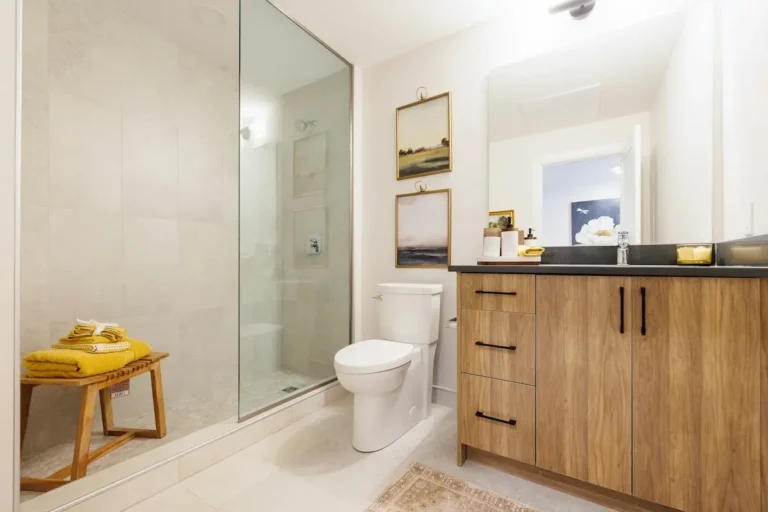
Floating Wood Vanities
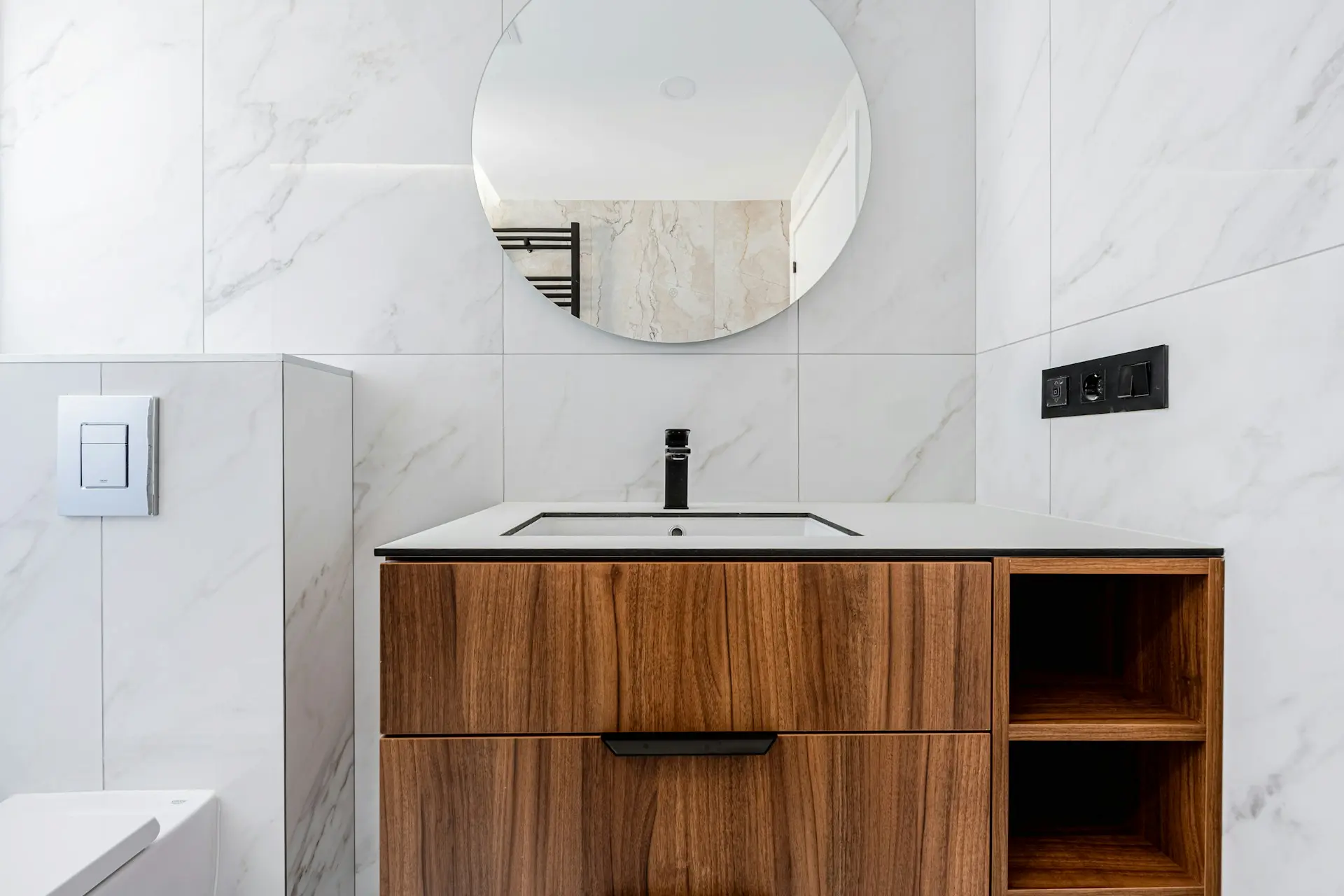
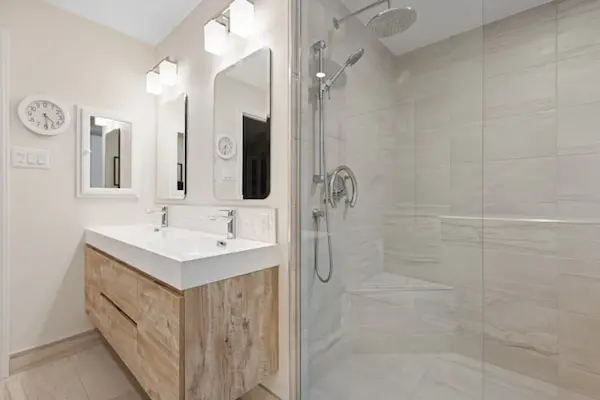
A wall-hung wood vanity is one of the best small-space hacks.
- Seeing the floor run underneath makes the room feel visually bigger, often by 20% or so in perceived scale.
- It also gives a natural spot for an LED strip, which creates a floating effect and soft night lighting.
- In my experience, a 45–50cm deep floating vanity is the sweet spot for tiny bathrooms: still useful, but not intrusive.
The “Ledge” Solution
Most bathrooms have ugly pipes or awkward transitions. A thin wood ledge can solve all of that.
- Build a shallow, continuous shelf behind the toilet and sink to hide pipework and provide a landing zone for soap, diffusers, or a small plant.
- Keep it narrow (10–15cm deep) so it doesn’t feel bulky.
- Use well-sealed wood or wood-effect materials in splash zones.
This trick is especially useful in rental-friendly designs if you can place a removable ledge (resting on brackets) instead of building a full stud wall.
Vertical Storage with Wood Tallboys
Instead of a big, chunky cabinet on the floor:
- Choose a tall, narrow, wood-front cabinet that either floats or has slender legs.
- The height draws the eye up, balancing out the low, horizontal line of the vanity.
- I recommend doors rather than open shelving here; wood plus visible clutter cancels out the calm.
Low-Risk Wood Accents (DIY & Renter Friendly)
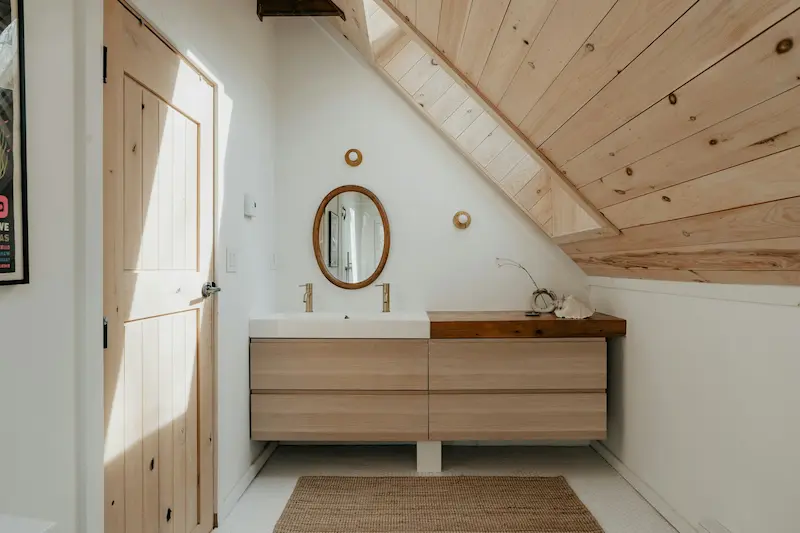
If you’re not renovating, you can still bring in wood bathroom decor ideas with zero demolition.
The Cedar or Teak Bath Mat
Fabric bath mats get soggy and smelly. A wooden duckboard-style mat is smarter.
- Slatted cedar or teak allows water to drain through and air to circulate.
- It smells subtly like a spa when it’s damp.
- You can lift it to clean underneath, which is usually where grime lives.
I recommend this as the first wood swap if you’re nervous about committing.
The Bathtub Tray
This looks “extra” but is incredibly practical.
- A simple plank-style tray that rests across the tub in cedar, teak, or bamboo.
- Holds a book, candle, or phone stand and makes even a basic acrylic tub feel more intentional.
- Just make sure the tray is slightly wider than the tub’s inner span so it sits securely.
Don’t waste money on very fussy trays with metal parts in cheap finishes; steam will age them badly. Go for simple, solid wood.
Framing the Builder-Grade Mirror
If you have one of those unframed, glued-on mirrors, this DIY can transform it.
- Use thin cedar or pine planks (properly sealed) to create a simple border around the existing mirror.
- Attach using strong adhesive or discreet brackets that don’t damage rental walls excessively.
- Stain or oil the wood to match your other accents.
For under the cost of a new mirror, you get warmth at eye level, which is where it matters most.
FAQ
Does wood mold in bathrooms?
It can, if ventilation is poor. Wood itself is not the enemy; trapped moisture is. I always recommend:
- A good-quality extractor fan sized correctly for the room.
- Leaving the fan running after showers.
- Sealing any real wood and keeping an eye on corners and joints.
If your bathroom is naturally humid and poorly ventilated, focus on waterproof wood alternatives for bathrooms (porcelain, LVP) and keep real wood to accessories that can be removed and dried.
Can I mix wood tones in a bathroom?
Yes, but be intentional.
- Keep the undertone consistent: all warm (honey, caramel, walnut) or all cool (ash, greyed oak).
- Choose one dominant wood (usually the vanity) and let everything else be quieter or very close in tone.
- In a small bathroom, I prefer a maximum of two wood tones to avoid visual noise.
If you’re unsure, match your main wood tone to your floor or vanity, and let accessories be very close or clearly lighter/darker, not “almost but not quite”.
Is shiplap okay in a bathroom?
It can be, with the right material and orientation.
- For wet zones, use PVC or moisture-resistant faux shiplap, not standard MDF or raw pine.
- If you go with real wood, install it vertically so any stray moisture runs down rather than sitting on horizontal ledges.
- Always pair it with good ventilation and a moisture-resistant paint or sealer.
In my experience, using shiplap on a single wall away from direct splashes, combined with tile in the shower, gives you the cozy look without the long-term headache.
If you treat wood in the bathroom as both a technical and aesthetic decision, it stops being scary. Start with low-risk accents, graduate to vanities and ledges, and use waterproof “cheats” where the water is relentless. That’s how you get a space that feels like a calm spa, not a cold washroom – and that warmth is exactly what most bathrooms are missing.