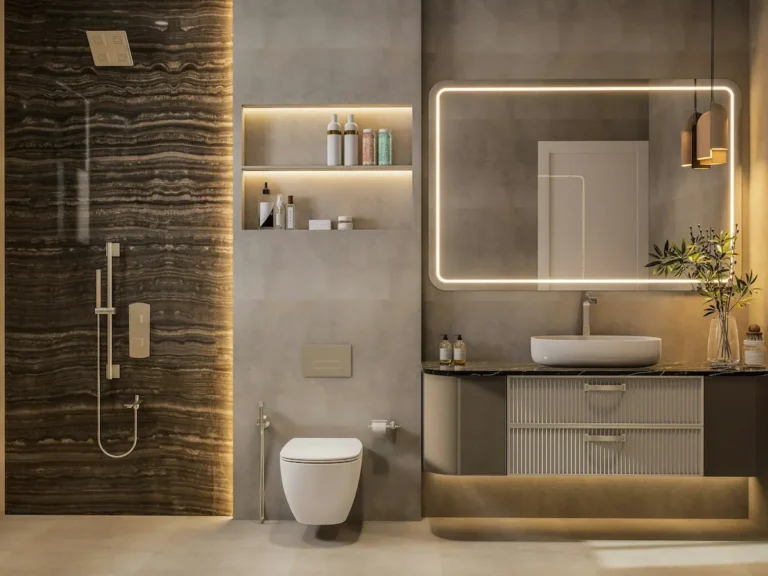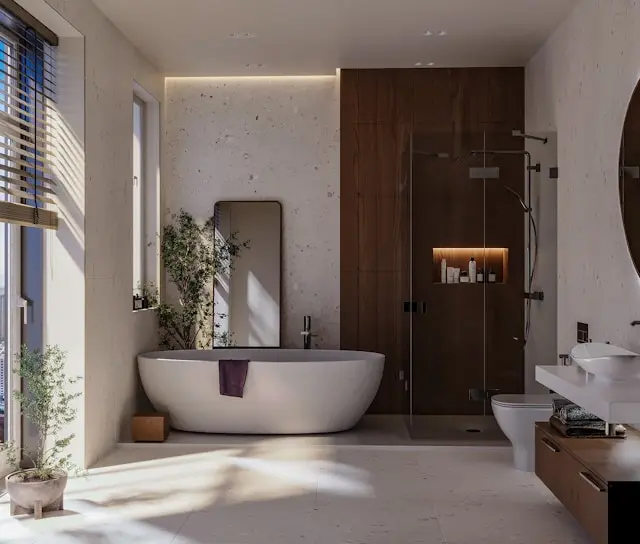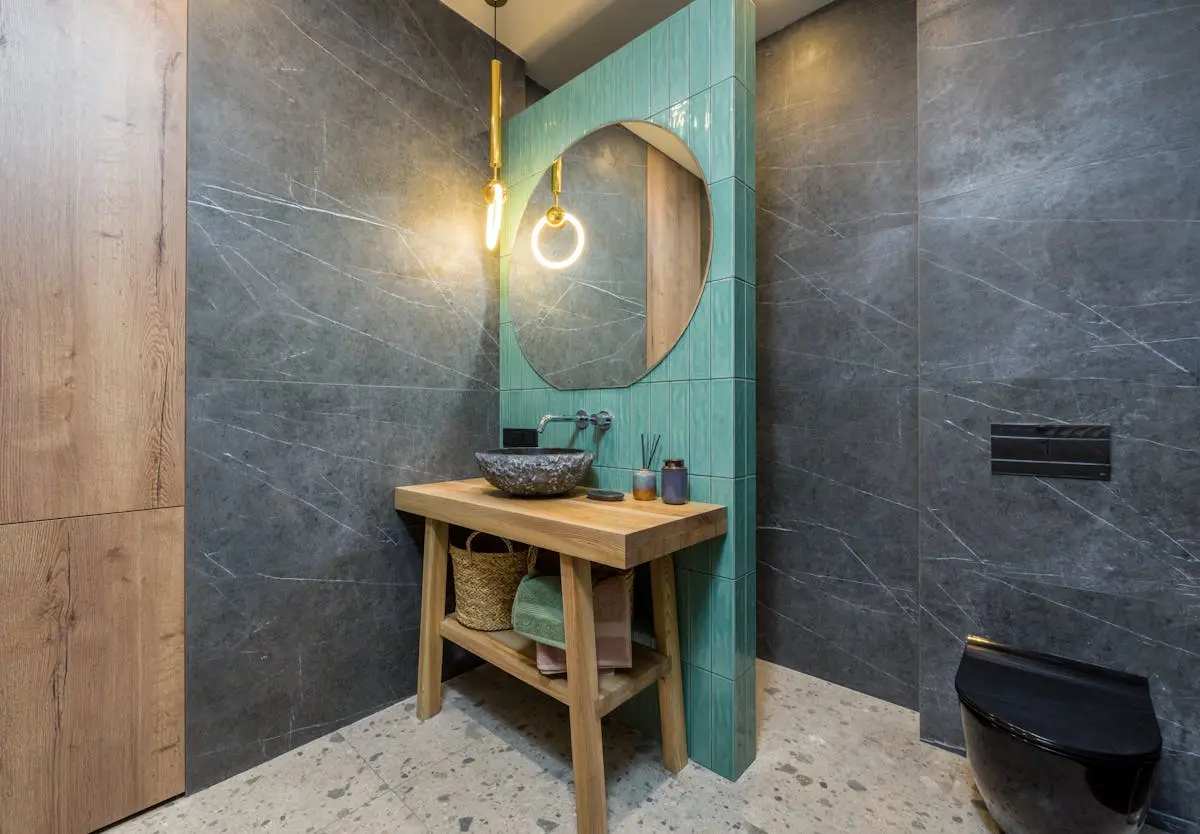
Stone Bathroom Design Ideas: Types, Trends & Maintenance (2026)
If tiles and chrome make your bathroom feel like a public locker room, stone is the antidote.
Real stone instantly adds visual weight, history, and that “hotel spa in the Alps” feeling that plain ceramic can’t touch.
The flip side? Stone can be high-maintenance and expensive if you choose the wrong type for the wrong spot.
So in this guide, I want to walk you through stone bathroom design ideas that actually work in real life: what to use, where to use it, and how to keep it looking beautiful in 2026 and beyond.
Here’s the snapshot before we dive in:
Choosing Your Stone – The Big 4
Think of this as the “personality chart” for stone. Each type has strengths and non-negotiable weaknesses. If you understand those, you’ll avoid 90% of renovation regrets.
Marble
Marble is the classic “I live in a boutique hotel” choice. Veining, movement, and a soft sheen that immediately reads as luxury.
But:
- It etches with acids (toothpaste, skincare, lemon, some cleaners).
- It stains if not sealed properly.
- It’s best for low-traffic master bathrooms where you’re happy to baby it a little.
I usually recommend marble for:
- Vanity tops in adult bathrooms (not kids).
- Feature shower walls where products are stored on a niche, not directly on the ledge.
- Floors only if you’re willing to seal and use rugs in high-use areas.
If you’re messy, or you share with kids or teenagers, marble is beautiful but unforgiving. In that case, I’d treat it as a “feature” material, not the whole room.
Travertine
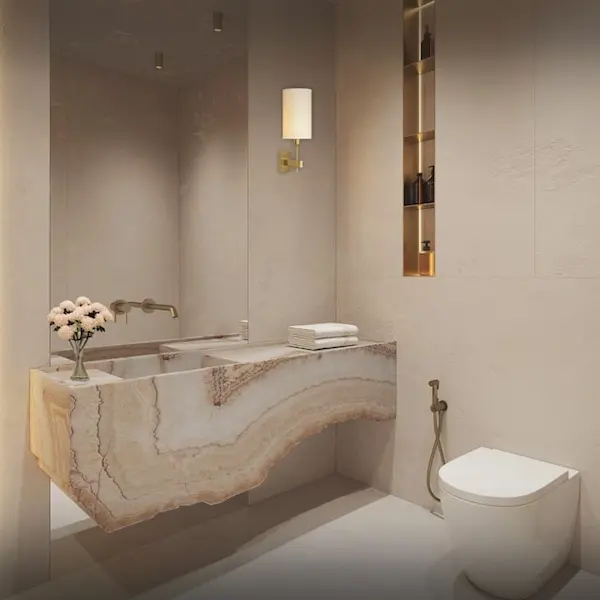
Travertine is the star of travertine bathroom trends 2026 for a good reason. It’s warm, earthy, and has that porous, slightly rustic texture that immediately feels like a Mediterranean spa.
Key traits:
- Naturally holey stone that is usually filled and honed for bathrooms.
- Lives in the beige/sand spectrum, perfect for warm minimalism.
- Works incredibly well with brass, black, and wood.
Where I like travertine:
- Vanity tops and basins in warm, beige Scandi/Japandi bathrooms.
- Flooring in larger bathrooms (in small windowless rooms, it can feel heavy if the tone is too dark).
- Shower walls, if you commit to sealing and using pH-neutral products.
If you want that spa feel but find marble too cold and grey, travertine is your friend.
Slate
Slate is the drama queen of stone bathrooms: dark, textured, and naturally non-slip.
It’s ideal if you love:
- Deep charcoal and black palettes.
- Rustic, “outdoor spa” vibes.
- Floors that feel secure when wet.
Slate shower pros and cons (simplified):
- Pros:
- Naturally textured, great grip in wet areas.
- Hides dirt and hair better than pale stone.
- Works beautifully with timber and warm metals.
- Cons:
- Can make small bathrooms feel cave-like if you don’t balance it with lots of white and light.
- Some slates can flake slightly if they’re lower quality.
- Needs sealing to avoid water marks and soap scum absorption.
My usual compromise: slate (or slate-effect porcelain) on the floor and one feature wall, with the other walls kept light.
Limestone
Limestone is the quiet one: soft, matte, and incredibly calming. It feels like a natural extension of sand or clay.
Pros:
- Soft, chalky texture and very matte, which photographs beautifully.
- Comes in a range of gentle neutrals: warm beiges, soft greys, putty tones.
- Looks expensive without screaming for attention.
Cons:
- Very porous.
- Hates aggressive products like hair dye, bleach, or strong cleaners.
- More suited to adult bathrooms, guest ensuites, and low-splash zones.
If you love the look but live with messy products, choose limestone for walls and complement it with a tougher stone or quartz on vanity tops.
Applications – Slab vs Tile
Once you’ve chosen the stone type, the next decision is format. This choice completely changes the mood of the room.
The Slab Look
A slab is a large, continuous piece of stone. In a bathroom, that might mean:
- A full height shower wall in one or two bookmatched slabs.
- A vanity top and tall matching backsplash.
- A stone “skirt” around a built-in tub.
Why people love slabs:
- Zero or minimal grout lines – easier to clean and visually calmer.
- Showcases the stone’s natural veining like a giant piece of art.
- Feels ultra-luxurious and high-end.
Reality check:
- It’s expensive: material plus specialist labour.
- It requires strong, straight walls and careful planning for joints and niches.
In my experience, if you want to splurge anywhere, a stone slab behind the vanity gives the most impact per square metre.
The Tile Look
Tiles give you more flexibility and are far more budget-friendly.
You’ll see stone tiles in:
- Subway layouts (classic and clean).
- Large rectangles (more modern and minimal).
- Mosaics – hex, penny, herringbone – used as accents.
Pros:
- Easier to manoeuvre in tight spaces.
- Easier to repair a damaged tile than a damaged slab.
- Let you play with pattern and texture.
Cons:
- Grout = maintenance.
- More visual “busyness” compared to slabs, especially in small rooms.
I like using stone mosaics on one surface only – e.g., shower floor or a niche – and keeping other surfaces calmer with larger tiles.
The Vanity: Why Granite or Quartzite Often Wins
For vanity tops, makeup spills, hair dye, toothpaste, and skincare acids are the real villains.
This is why I often steer people towards:
- Granite – very hard, resistant to most day-to-day acids.
- Quartzite – natural stone with hardness closer to granite but veining closer to marble.
They still need sealing, but they are more forgiving than soft marbles.
If you love the marble look but are rough on surfaces, a subtle white or grey quartzite is usually the smarter long-term choice.
The “Fake” Stone Option – Porcelain & Friends
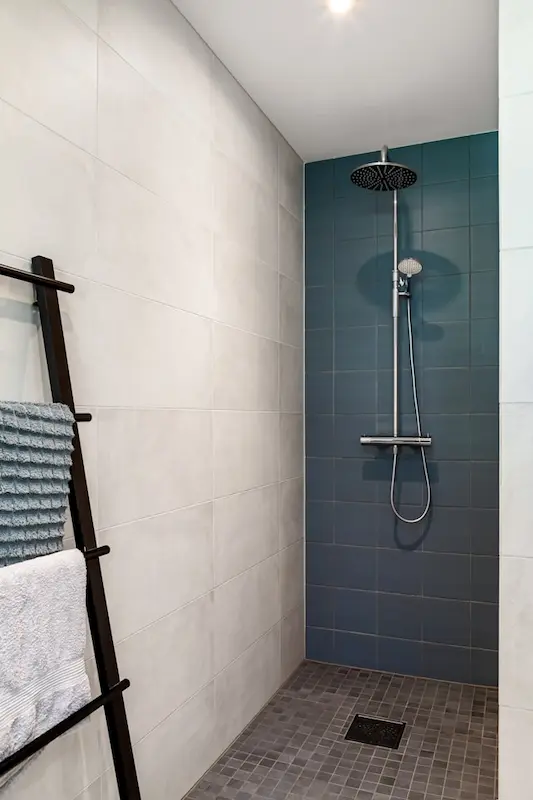
If you love the look of stone but not the ongoing maintenance, porcelain is the modern shortcut that actually makes sense.
Porcelain Slabs and Tiles
Porcelain has become the main low-maintenance alternative in stone bathroom design ideas.
Why designers (me included) use it constantly:
- High-quality printing in 2026 means the veining can look shockingly realistic.
- It’s non-porous – no sealing, no panic over spilled products.
- Works well in steam showers and high-traffic family bathrooms.
Good ways to use stone-effect porcelain:
- Full shower enclosures in “Calacatta” or “Travertine-look” slabs.
- Floors in kids’ bathrooms where you want resilience and easy cleaning.
- Feature walls behind freestanding tubs.
If budget allows, I like mixing real stone on touchpoints (like a travertine stool or basin) with porcelain on the hard-working surfaces. You get authenticity and practicality.
Stone Resin
Stone resin (or composite stone) is another useful category:
- Made from crushed stone + resin.
- Commonly used in freestanding baths and shower trays.
- Retains heat longer than steel or acrylic tubs, which is genuinely nice for long baths.
If you want a sculptural “stone” tub without the insane weight or cost of solid stone, stone resin is often the sweet spot.
Maintenance – The Reality Check
Stone is not a “fit and forget” material. If you treat it like ceramic, it will punish you.
The Water Test
A simple way to check whether your stone needs resealing:
- Put a few drops of water on the surface.
- Wait 5–10 minutes.
If the water beads up, you’re fine.
If it darkens the stone or soaks in, it’s time to reseal.
In high-use shower zones, expect to check this every few months. On walls and low-traffic areas, once or twice a year is usually enough.
Sealing Schedule (General Guidance)
Without inventing fake exact numbers, I’ll give you the pattern I recommend:
- Wet zones (showers, tub surrounds): roughly every 6–12 months.
- Dry zones (walls, some floors, vanity gables): every 1–2 years.
Always follow the specific product instructions, but don’t assume your installer did this forever-task for you. Sealing is ongoing.
pH-Neutral Cleaners Only
This is the rule people ignore the most.
- Natural stones like marble, travertine, and limestone are calcium-based.
- Acids (even mild ones like vinegar or lemon) and harsh alkalis can etch or dull the surface.
So:
- Avoid vinegar, bleach, and heavy-duty “bathroom sprays” on natural stone.
- Look for pH-neutral stone cleaners or just use mild soap and water.
- Rinse off shampoo, conditioner, and hair dye from stone surfaces as quickly as you can.
If you’re someone who loves strong cleaners, go for porcelain or quartzite instead of tender stones.
FAQ
Is stone flooring cold in the bathroom?
Yes, stone feels cooler underfoot because it conducts heat away from your body.
I strongly recommend pairing stone floors with underfloor heating if your climate or budget allows. It transforms the experience from “beautiful but chilly” to “luxury hotel”.
Can you use real stone in a steam shower?
Yes, but it needs to be done properly. The stone should be:
- Fully waterproofed behind with a proper membrane system.
- Sealed on all six sides before installation when possible.
- Resealed regularly because steam drives moisture into every tiny pore.
If you’re not ready for that maintenance, consider stone-effect porcelain for the main surfaces and keep real stone as an accent.
What is the most durable stone for a bathroom?
For true durability and stain resistance, I usually rank them like this:
- Top tier: Granite, Quartzite – very hard, more resistant to acids and scratching.
- Middle: Slate, some dense limestones.
- High maintenance: Marble, Travertine, softer limestones.
If you want to “set it and forget it” as much as possible, choose granite or quartzite for countertops and porcelain for heavy splash areas, and bring in your favourite softer stones in smaller, more controlled doses.
If you tell me your bathroom size, light (north/south-facing, window/no window), and how chaotic your household is, I can help you choose a specific stone + layout combo that won’t make you regret anything in two years.