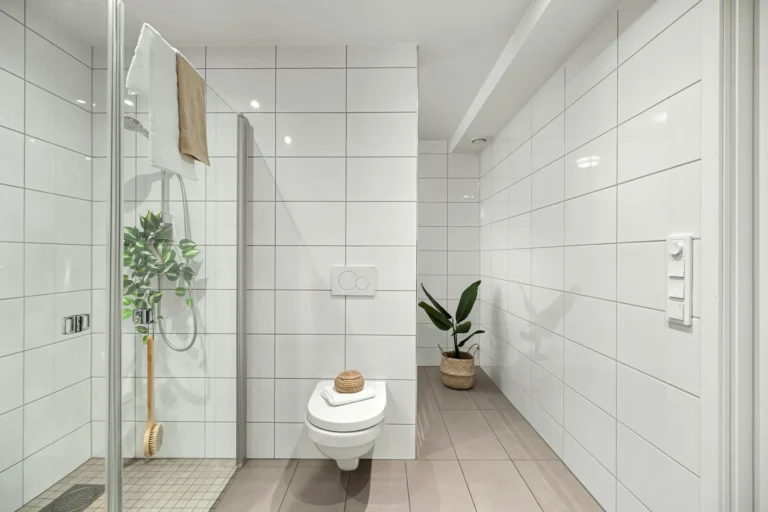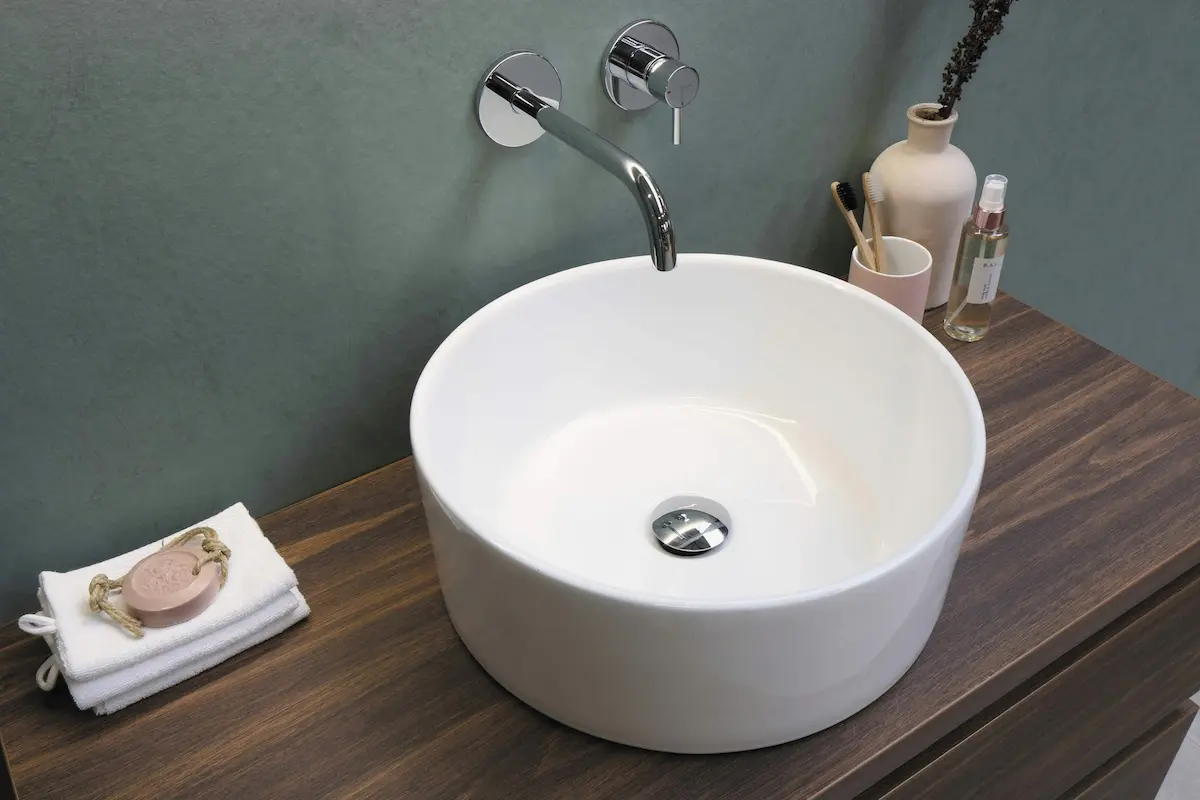
Ceramic Bathroom Decor Ideas: Tiles, Accessories & Trends (2026)
Ceramic is doing the heavy lifting in bathrooms right now. It’s the skin on your walls pretending to be marble, and the little handmade cup that makes your toothbrush look stylish instead of sad. If you get both sides right, your bathroom stops feeling like “the place you rush through in the morning” and starts feeling like a small spa that just happens to have plumbing.
In this guide, I’ll walk you through ceramic bathroom decor ideas that cover surfaces, accessories, and styling so everything feels intentional, not random. I’ll also show you how to use ceramic vases and handmade pottery without cluttering your sink, and how to choose tiles that still look current in five years.
The “Fake Marble” Revolution (Ceramic Surfaces)
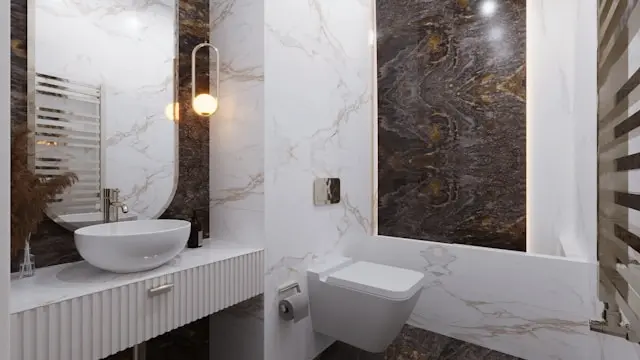
If you want a marble bathroom without the marble stress, this is the section you care about.
The Tech: Sintered Stone and High-Definition Ceramic
Modern “marble look” ceramic is not the cheap, flat print you might remember from old rentals. In 2026, you’re looking at:
- Sintered stone / porcelain slabs: Clay and minerals pressed and fired at extreme temperatures, creating a surface that’s:
- Non-porous (no sealing).
- Highly scratch-resistant.
- Stain-resistant, even with hair dye and skincare acids.
- High-definition inkjet printing: This is what gives you:
- Realistic veining that wraps across tiles.
- Multiple pattern variations so your walls don’t look repetitive.
- Options that mimic Calacatta, Onyx, or limestone without the upkeep.
In practice, it means you can have a very expensive stone look in a family bathroom without babying it.
Cost vs. Reality
Here’s the brutal truth I tell clients:
- Real marble:
- Roughly $50–$100 per sq ft depending on the stone.
- Stains, etches, and needs sealing.
- Looks incredible… if you’re okay with patina and babysitting.
- Ceramic “marble look”:
- Typically $5–$15 per sq ft depending on brand and size.
- Zero sealing, low maintenance.
- Looks 90% as good once installed, especially in a small bathroom.
If your bathroom is high-traffic or you know spillages happen (kids, hair dye, skincare experiments), I strongly prefer ceramic over real marble for anything except maybe a feature niche.
Application: Large-Format Slabs for Impact
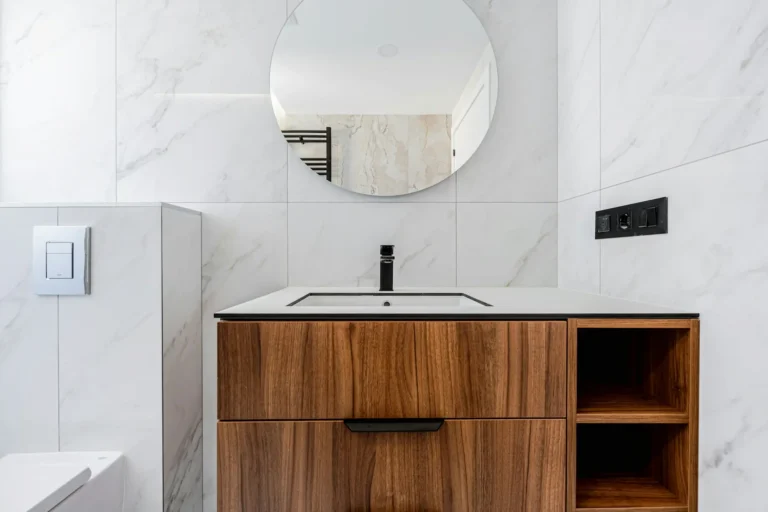
For ceramic bathroom decor ideas that feel high-end, think in slabs, not small tiles:
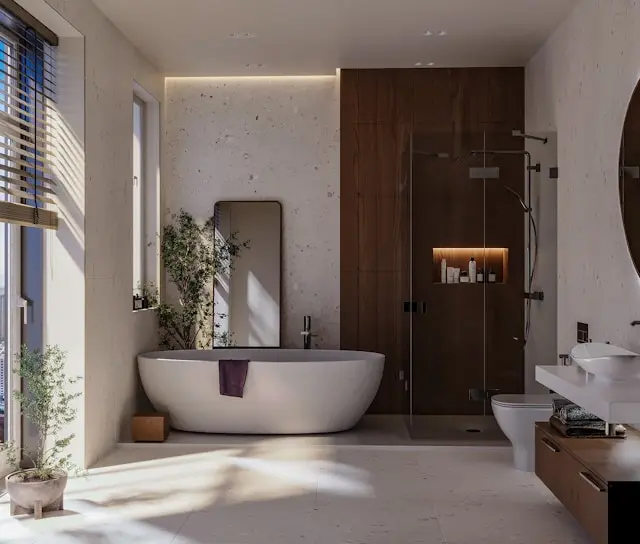
- Use large-format tiles (like 24×48 or full slabs) on:
- The shower wall behind the fixtures.
- The wall behind a freestanding tub.
- The vanity backsplash up to the ceiling.
- Why it works:
- Fewer grout lines = less visual noise.
- Large tiles trick your eye into reading the surface as one giant stone panel.
- Cleaning is easier; grout is always the weak link for maintenance.
If you have a tiny bathroom, one slabbed “feature wall” in a marble-look ceramic can carry the entire room.
Ceramic Accessories – The Wabi-Sabi Trend
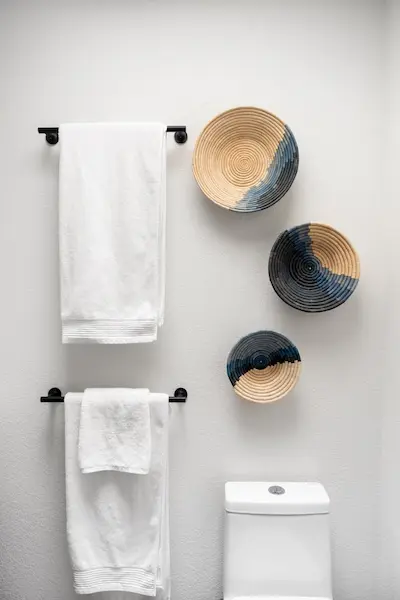
Once the “hard shell” is sorted, ceramic becomes softer and more human. This is where styling ceramic vases and handmade bathroom accessories comes in.
The Look: Imperfect, Hand-Thrown Pottery
Polished chrome sets with matching soap dish, toothbrush holder, and cup feel dated now. In 2026, the look is:
- Slightly irregular, hand-thrown ceramics
- Soft matte or satin glazes
- Subtle variation in color and texture
Think:
- A matte stoneware soap dispenser with a visible throwing ring.
- A small bud vase with a slightly uneven rim, holding a single stem or dried sprig.
- A toothbrush tumbler with a thick, comfortable lip in a warm clay tone.
The point is: your accessories should look like they came from a potter’s studio, not a mass-produced set.
The Palette: Warm, Muted Tones
For ceramic bathroom decor ideas that feel current and calm, I’d look at:
- Terracotta: Adds warmth and works beautifully with beige, white, and stone.
- Sage: Soft green ceramics pair well with natural wood and travertine.
- Sand / Oatmeal: Neutral clay tones that echo stone and microcement.
I would avoid bright primary colors in most bathrooms unless you’re deliberately going graphic. Soft, earthy ceramics age better and integrate into more schemes.
The Styling Rule: The Cluster Technique
Ceramic looks best when it feels intentional, not scattered.
Use the Cluster Technique:
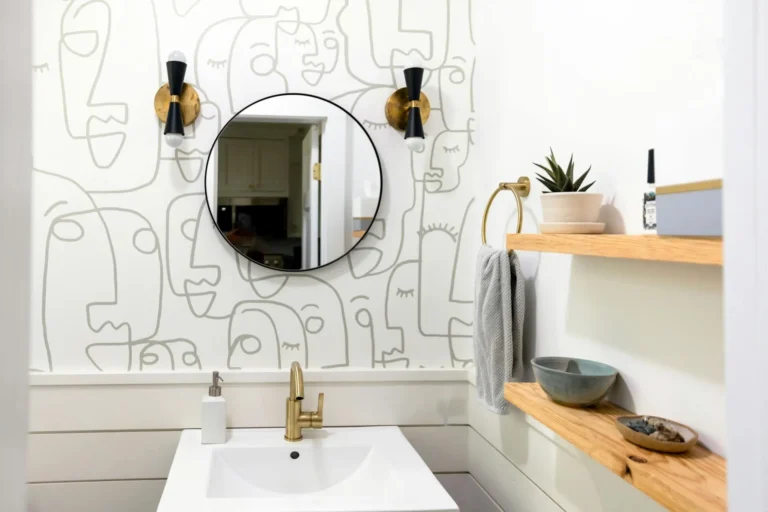
- Group ceramics in odd numbers: 3 or 5 items.
- Anchor them on a tray:
- A small wooden, stone, or ceramic tray on the vanity.
- This instantly says “curated vignette” instead of random clutter.
Example cluster for a vanity corner:
- 1 matte ceramic soap dispenser
- 1 small bud vase with eucalyptus or dried grass
- 1 ceramic dish for rings, hair ties, or a bar soap
Three pieces, three heights, one small footprint.
Wall Decor – Ceramic Art & 3D Texture
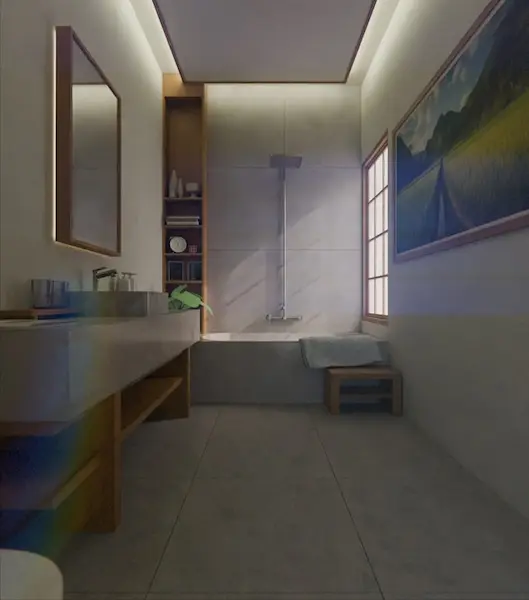
Ceramic isn’t just for tiles or countertop accessories. You can use it to bring sculptural texture to the walls without breaking the “wet room” rules.
3D Tiles: When Tiles Become Art
If you want your walls to do more than just sit there, consider:
- Fluted / reeded ceramic tiles:
- Vertical ridges that create rhythm and shadows.
- Perfect behind a vanity or as a half-height dado all around the room.
- Geometric 3D tiles:
- Soft waves, scallops, or rounded cubes.
- Work best in a single color (usually white, off-white, or pale grey) so the interest comes from light and shadow, not busy pattern.
Used sparingly, a single 3D tiled wall can replace the need for extra art.
Hanging Ceramics: Wall-Mounted Decor
If you’re in a humid bathroom and nervous about canvas prints, ceramic wall decor is a clever alternative:
- Wall-mounted ceramic planters:
- Great for trailing plants like pothos in bright bathrooms.
- If your bathroom is dark, use faux greenery to keep the vibe without the maintenance.
- Abstract clay wall hangings:
- Handmade ceramic “plates” or forms hung as a small gallery above the toilet or towel rail.
- Choose matte or satin finishes in a simple palette (e.g. sand, bone, clay).
These pieces withstand humidity much better than paper or unsealed wood.
Tile + Decor Pairing Guide
This is where a lot of bathrooms go wrong: stunning tiles plus random accessories that feel like they belong in a different house.
Here’s how to keep your ceramic bathroom decor ideas cohesive.
Glossy on Matte (Or Matte on Glossy)
You need contrast in texture, not chaos in color.
- If you have matte ceramic floors (stone-look porcelain, microcement-effect tiles):
- Pair with glossy ceramic accessories like glazed vases or shiny soap dishes.
- The small glossy accents bounce light and keep the room from feeling too flat.
- If you have glossy wall tiles (Zellige, classic subway, or polished porcelain):
- Ground them with matte ceramics:
- Matte soap dispensers
- Unglazed vases
- Textured stoneware trays
- Ground them with matte ceramics:
It’s the interplay between matte and gloss that makes the room feel layered rather than sterile.
The Japandi Mix: Ceramic + Wood
If your taste leans warm minimalist, Japandi is your friend:
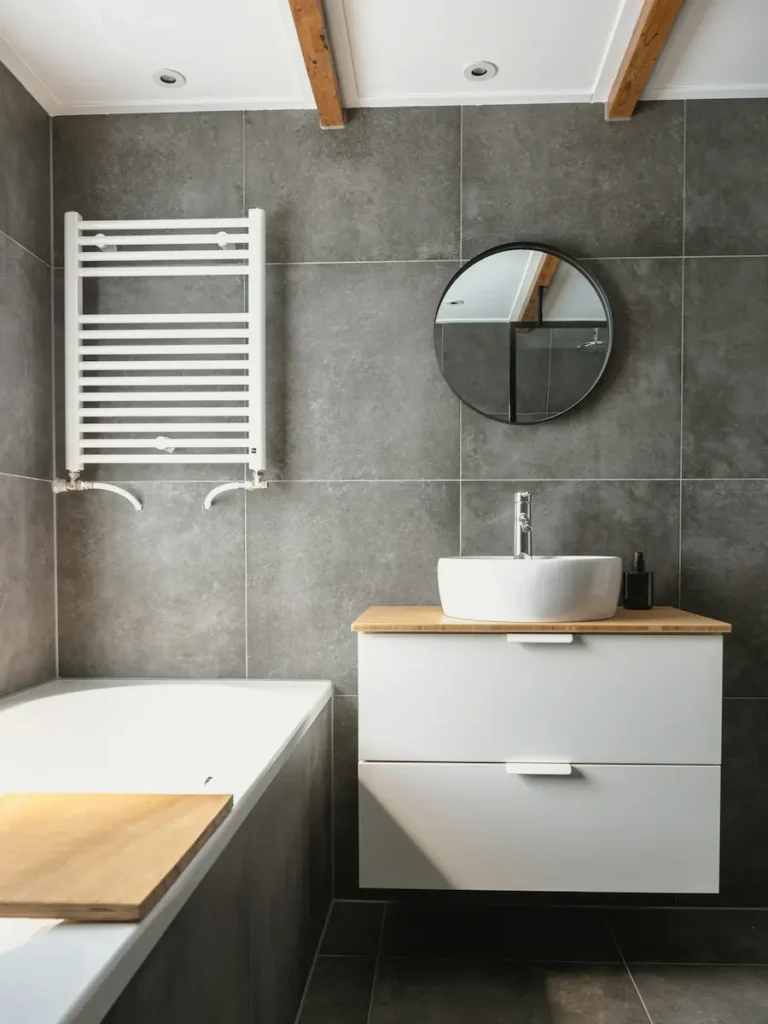
- Wood-look ceramic tiles (planks) on the floor or one accent wall.
- Cream or sand-colored pottery on the vanity and shelves.
- A tight palette of white + wood + clay.
A simple formula:
- Floor: wood-look porcelain in a soft oak tone.
- Walls: off-white matte ceramic.
- Accessories: three to five cream or sand ceramics clustered on a wooden tray.
It’s calm, timeless, and renter-proof if you keep the changes to surfaces and decor.
FAQ
What is the difference between ceramic and porcelain decor?
- Porcelain:
- Fired at higher temperatures.
- Less porous, more durable, typically frost-proof.
- Great for tiles, floors, and any area that takes impact or moisture.
- Ceramic:
- Slightly softer and more porous.
- Perfectly fine for wall tiles and bathroom accessories.
- I like ceramic for vases, trays, and decor because it often has a softer, more artisanal feel.
For floors or heavy-use areas, I’d always choose porcelain. For decor, either is fine; focus more on shape and finish.
How do you clean unglazed ceramic accessories?
Unglazed ceramic is like stoneware: it can absorb liquids if you’re careless.
- Use a soft cloth with mild soap and water.
- For deeper stains, a baking soda paste (baking soda + a bit of water) works well.
- Avoid bleach, harsh chemicals, or colored cleaners that could soak into the clay.
If you’re using unglazed ceramic trays for oils or heavily pigmented products, place a small coaster or liner on top to protect them.
Is ceramic tile outdated in 2026?
Standard, shiny 4×4 flat tiles with white grout can look dated if everything else is also basic. But ceramic itself is absolutely not outdated.
To keep ceramic tiles feeling current:
- Choose Zellige-style tiles with variation and texture, or
- Go for large-format slabs with stone or concrete looks.
- Use interesting layouts (vertical stack, herringbone) instead of default brick pattern everywhere.
Ceramic is still the backbone of most beautiful bathrooms in 2026. The difference now is all in the texture, size, and the way you style the accessories around it.