Shower Only Bathroom Ideas: Layouts, Resale Value & Styles (2026)
The bathtub is quietly being retired.
In 2026, most clients I work with would rather have a huge, spa-style shower than a narrow tub they climb into twice a year and resent every day. The challenge is knowing when a shower-only layout is smart design and when it might hurt resale.
If you are already googling shower only bathroom ideas: layouts, resale value & styles (2026), you’re probably stuck between what you actually use and what you are “supposed” to keep for buyers. We are going to solve that.
You will see exactly how to convert a 5×8 tub space into a generous walk-in, how wet room designs expand small spaces, and where the line is between smart resale and future regret.
Layouts for Every Size
Let’s start with the floor plan, because this is where most remodels either work beautifully or become daily annoyances.
The classic 5×8 tub-to-shower conversion
This is the standard suburban bathroom: one 150 cm/60 inch alcove tub, a toilet, and a single vanity.
If you want to remove the tub and turn that area into a shower:
- Keep the alcove footprint. Turn the entire 150 cm length into a wall-to-wall shower. It feels generous because you remove the tub “sides” and step directly onto the shower floor.
- Keep plumbing on the same wall. In my experience, this alone can save you around $1,500–$2,000 in labor, because you are not moving drains or supply lines across the room.
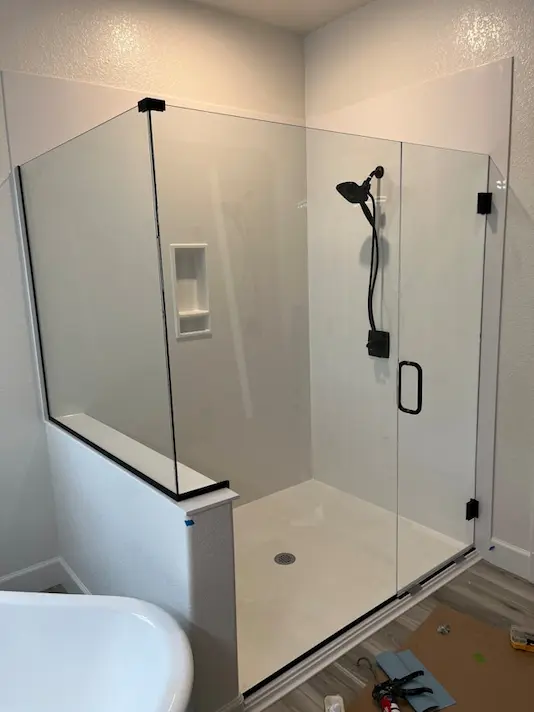
- Use a single glass panel. Instead of a full sliding door, one fixed glass screen with an opening gives a more modern, open feel.
If you want a visual:
- Tub footprint: 150 x 70 cm (approx 60 x 28 inches)
- New shower footprint: keep roughly 150 x 90 cm (60 x 36 inches) if you can steal a bit of space from the old tub face or adjacent wall.
A 90 cm / 36 inch depth is the comfort standard for adults.
The corner neo-angle solution for tiny square rooms
If your bathroom is more square than rectangular, and every centimeter matters:
- Neo-angle showers cut off one corner of the enclosure diagonally.
- This gives you a usable shower inside, while freeing up turning space outside for the door swing or a small vanity.
- I recommend this when the room feels like a tight cube and a rectangular shower would pinch the circulation.
For very small spaces:
- Aim for a 90 x 90 cm neo-angle minimum (36 x 36 inches).
- Anything smaller starts to feel like a phone booth.
The wet room: when the whole floor becomes the shower
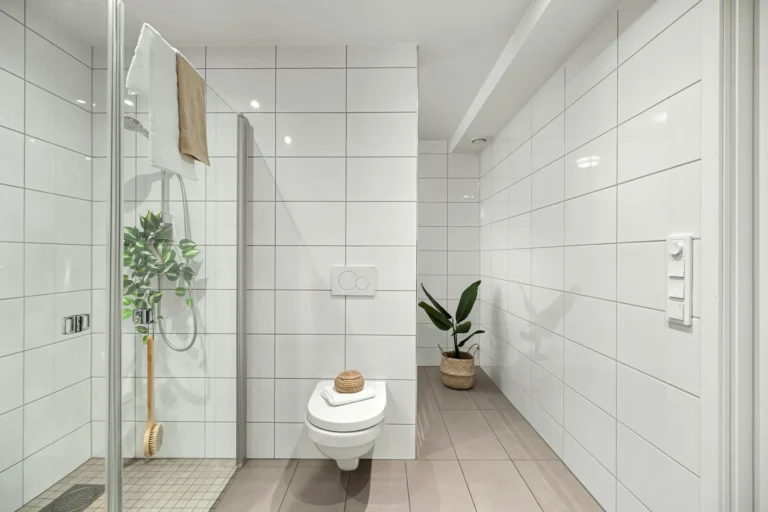
A wet room is simply a bathroom where the shower isn’t boxed in by a curb; the entire floor is gently sloped towards a drain.
Why I like it for small spaces:
- You lose the visual barrier of a tub edge or heavy shower tray.
- The floor runs continuously, which makes the room feel larger and calmer.
- It’s easier to future-proof for aging in place or mobility issues.
Key details:
- Use a linear drain along one wall so the floor has a gentle single-direction slope.
- Extend wall tiles at least to 1.2–1.5 m beyond the main spray zone if the space is truly open.
- Use matte tiles on the floor for grip, glossy on the walls for light reflection.
If you do it right, a tiny bathroom suddenly reads as a compact spa instead of a cramped box.
The “Doorless” & Glass Trend
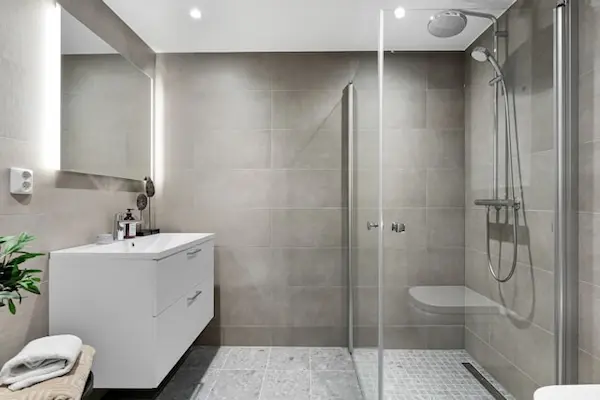
Doorless showers and clever glass work are another reason people happily give up the tub.
Why go doorless?
A well-designed doorless shower:
- Eliminates fiddly hinges and tracks that collect soap scum.
- Improves airflow, which means less mildew smell.
- Feels more like a spa zone and less like a plastic box.
The catch is splash management.
The “splash zone” rule
To go doorless without constantly mopping the floor, you need:
- At least 105–110 cm (42–44 inches) of shower depth from the opening to the main shower head wall.
- The shower head positioned so it does not directly spray toward the opening. Aim it towards a back or side wall.
- A fixed glass panel shielding the first part of the opening if the bathroom itself is tight.
If your shower depth is only 80–90 cm, I strongly recommend a door, or at least a longer fixed panel, to avoid soaking the toilet and vanity.
Crittall-style and framed glass
If your style leans modern, Scandinavian, or slightly industrial:
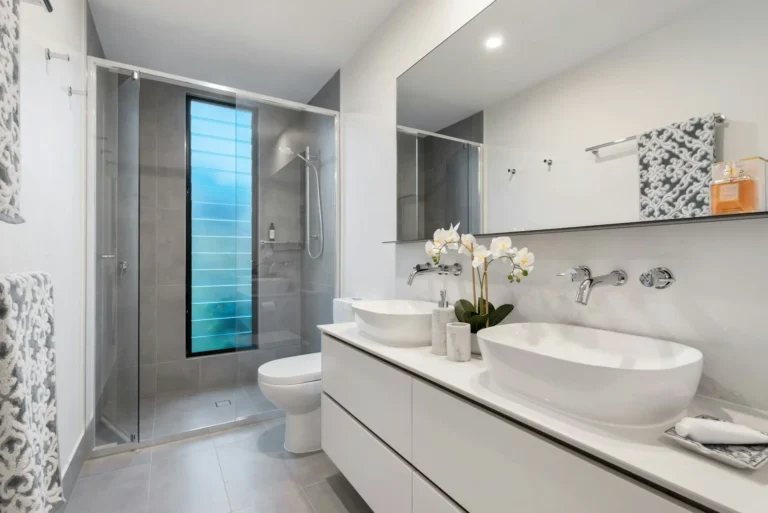
- A black-framed, grid-style glass screen (often called Crittall-style) can turn the shower into a feature.
- It visually “frames” the white tile behind it, almost like a huge piece of art.
- In my experience, this works best when the rest of the bathroom is simple and light; otherwise, it can start to feel busy.
For softer styles, you can do:
- Slim brushed brass frames, or
- Very thin matte black edges instead of full grids.
Features You Can’t Have with a Tub
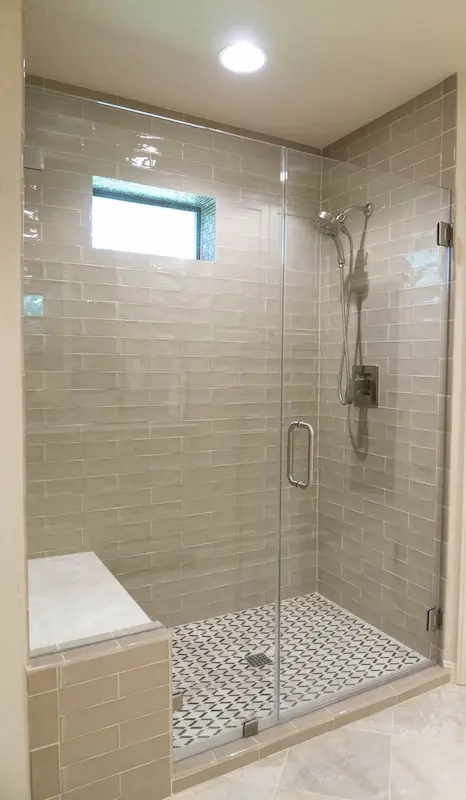
This is where shower only bathroom ideas really pull ahead of the old tub-shower combo.
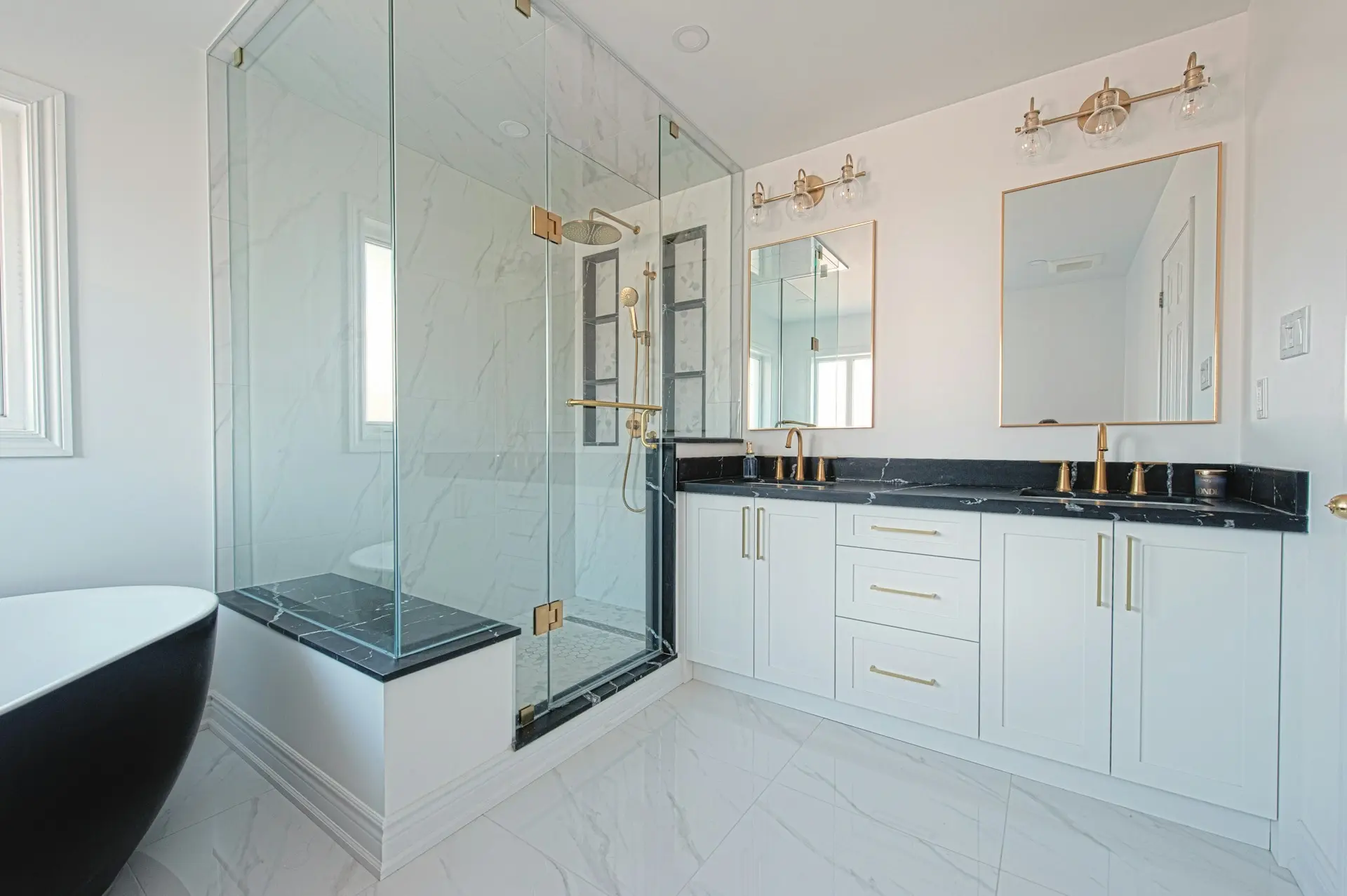
Built-in bench
A proper shower bench is one of those features you don’t realise you needed until you have it.
Benefits:
- A safe, comfortable spot for shaving legs.
- A place to sit and enjoy hot water like a mini steam room.
- A convenient landing zone for products or a folded towel.
Design tips:
- Height: around 45–48 cm (18–19 inches) from the floor.
- Depth: 35–40 cm (14–16 inches) for comfortable sitting.
- I prefer floating benches that are anchored to the wall, so the floor still feels open underneath.
You simply cannot get this level of comfort with a standard alcove tub.
Double shower heads
If you are removing a tub anyway, consider spending some of that space on double shower heads.
Good combinations:
- One ceiling-mounted rain head for relaxation.
- One wall-mounted handheld on a sliding bar for everyday practicality and cleaning.
For couples, twin wall-mounted heads:
- Allow two people to shower at once without fighting over the spray.
- Feel incredibly luxurious in a primary suite.
From a resale point of view, a big double shower with quality fixtures reads as a “premium feature”.
Wall-to-wall niches
Once you commit to a full shower wall, you can also commit to better storage.
Instead of one tiny niche:
- Create a wall-to-wall horizontal niche, maybe 10–15 cm tall and 8–12 cm deep.
- This visually reads like a horizontal stripe around the shower and breaks up tall walls of tile.
- It stores everything without cluttering the floor or edge of the glass.
If you want to elevate the look:
- Tile the inside of the niche in a contrasting color or texture.
- Add a small LED strip (IP-rated for wet zones) under the top shelf for a spa-like glow.
The “Resale Value” Myth
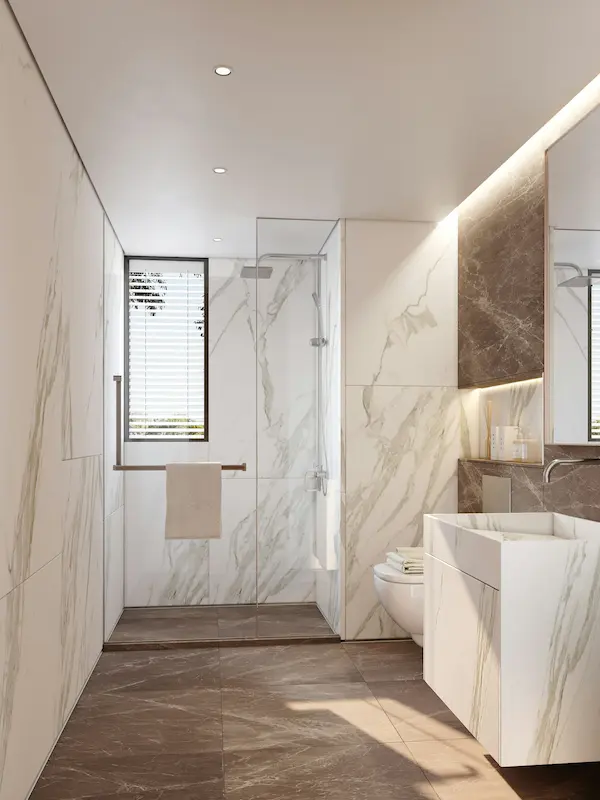
This is the part everyone worries about: will removing my bathtub kill my resale?
The real rule of thumb
In practice, agents and buyers care about function, not nostalgia.
The general pattern I see:
- If your home has at least one bathtub elsewhere (usually in a family or guest bathroom), turning the primary suite into a huge shower-only space is not a problem.
- Buyers increasingly see a tight, dated tub as a downgrade compared to a generous, modern walk-in shower.
Put simply:
A well-designed, high-quality walk-in shower often adds more perceived value than a flimsy, old tub-shower combo.
When you should keep a tub
You should think twice about removing the only tub if:
- You live in a family-focused area, and this is the only bathroom in the house.
- Your likely buyer profile is parents with small children, who rely on tubs for bath time.
In that situation, I’d either:
- Keep one tub in a secondary bathroom and upgrade the primary to a shower only, or
- Invest in a deeper, more comfortable soaking tub instead of removing it.
The goal is balance: at least one tub in the property, and then let the main suite go all-in on the shower experience.
FAQ
Does a shower-only bathroom devalue a house?
Not necessarily.
As long as your home still has one functional bathtub somewhere, a primary suite with a large, beautiful walk-in shower is generally a selling point, not a red flag. What hurts value more is an outdated, cramped tub-shower that looks and feels cheap.
How wide should a walk-in shower be?
The bare minimum is around 76 cm / 30 inches, but that feels tight.
My comfort recommendations:
- 90 cm / 36 inches wide as a realistic standard.
- 120 cm / 48 inches or more if you want double heads, a bench, or a real spa feeling.
If you are converting a tub, aim for the full alcove width (typically 150 cm / 60 inches) as a walk-in to really feel the upgrade.
Is a curbless shower more expensive?
Yes, a bit.
A true curbless (no step) shower usually costs more because:
- The subfloor often needs to be recessed or re-framed to create the correct slope.
- Waterproofing is more meticulous, especially at the transition between shower and main floor.
In my experience, expect roughly $500–$1,000 more in labor compared to a standard shower pan, depending on your region and the existing structure.
If your budget allows it, I recommend it. A curbless wet room feels bigger, is easier to clean, and is much more comfortable long-term than stepping over a high tub edge for the next ten years.