Affordable Home Organization: The “Zero-Dollar” Guide (No Bins Required)
If you are searching for affordable home organization tips, the answer is not another cart full of plastic bins.
It is changing how you use what you already have.
You do not need a trip to The Container Store.
You need a trip to your recycling bin and a little strategy.
Before we talk about any zero dollar home organization hacks, I want you to anchor everything to one simple idea.
The 1-to-1 Rule
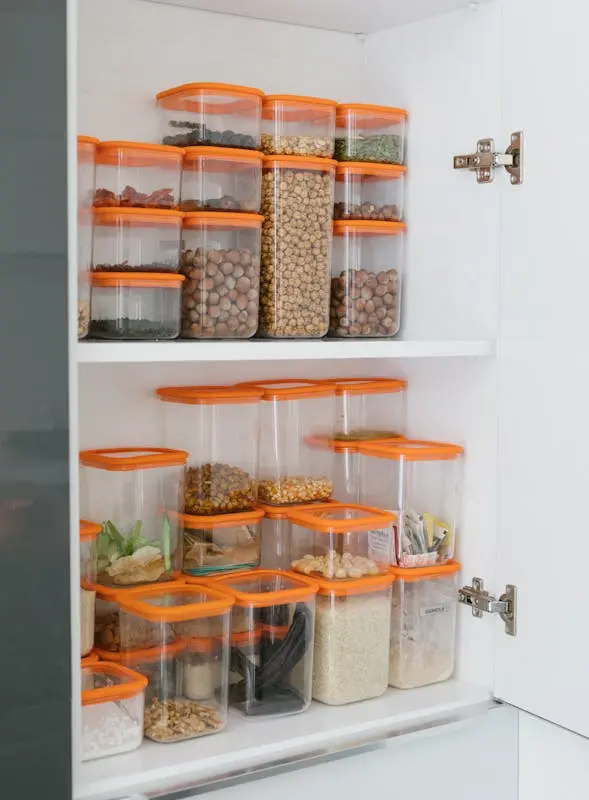
For every item you keep, you must have a designated home for it.
Not “on that chair,” not “somewhere in the drawer.”
A real, repeatable spot.
If something does not have a home, you have two choices:
- Give it one.
- Or let it go.
Every tip below supports this rule. That is how you keep your home organized without constantly “starting over” every weekend.
The “Trash to Treasure” System (Repurposing)
Before you spend a cent on containers, look at the packaging you are about to throw away.
You are already buying storage. It just arrives disguised as cereal boxes, jars, and tins.
This is where the best repurposing household items for storage lives.
The Cereal Box Drawer Divider
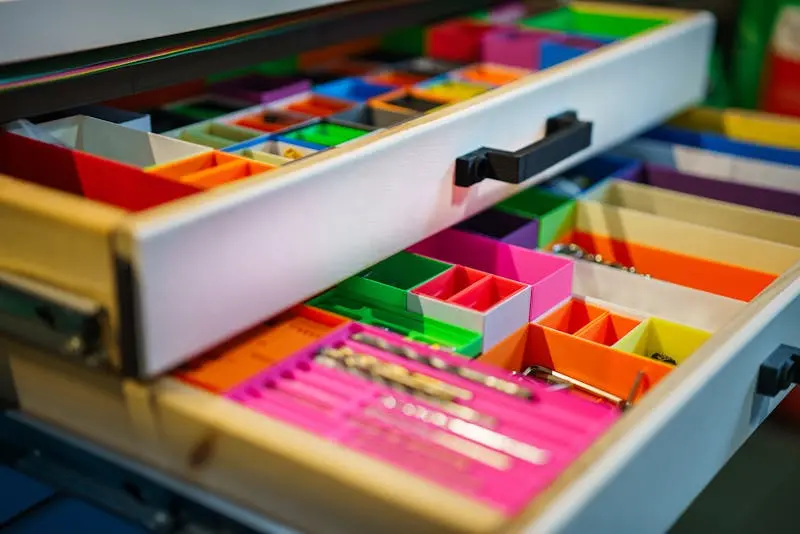
Messy junk drawers are not a personality flaw.
They are the result of putting lots of small items into one big empty box.
You do not need custom acrylic organizers to fix this. A couple of cereal or cracker boxes can do the same job.
How to turn boxes into organizers
- Empty the drawer completely.
- Gather a few cereal, pasta, or snack boxes.
- Measure the inside height of your drawer. Mark that height on each box.
- Cut across so each box becomes an open-top tray slightly shorter than the drawer height.
- Trim some narrower, some wider, so you can fit them tightly side by side.
- Slot them into the drawer like Tetris until most of the base is covered.
- Assign each section a category: batteries, pens, chargers, tape, tools, etc.
Optional upgrades:
- Wrap the visible sides with leftover wrapping paper or plain kraft paper.
- Add simple labels to the front edges.
Cost: $0.
Result: A fully customized drawer organizer that fits your things instead of forcing your things to fit it.
In my experience, this works better than many store-bought inserts, because you can adjust the layout whenever your needs change.
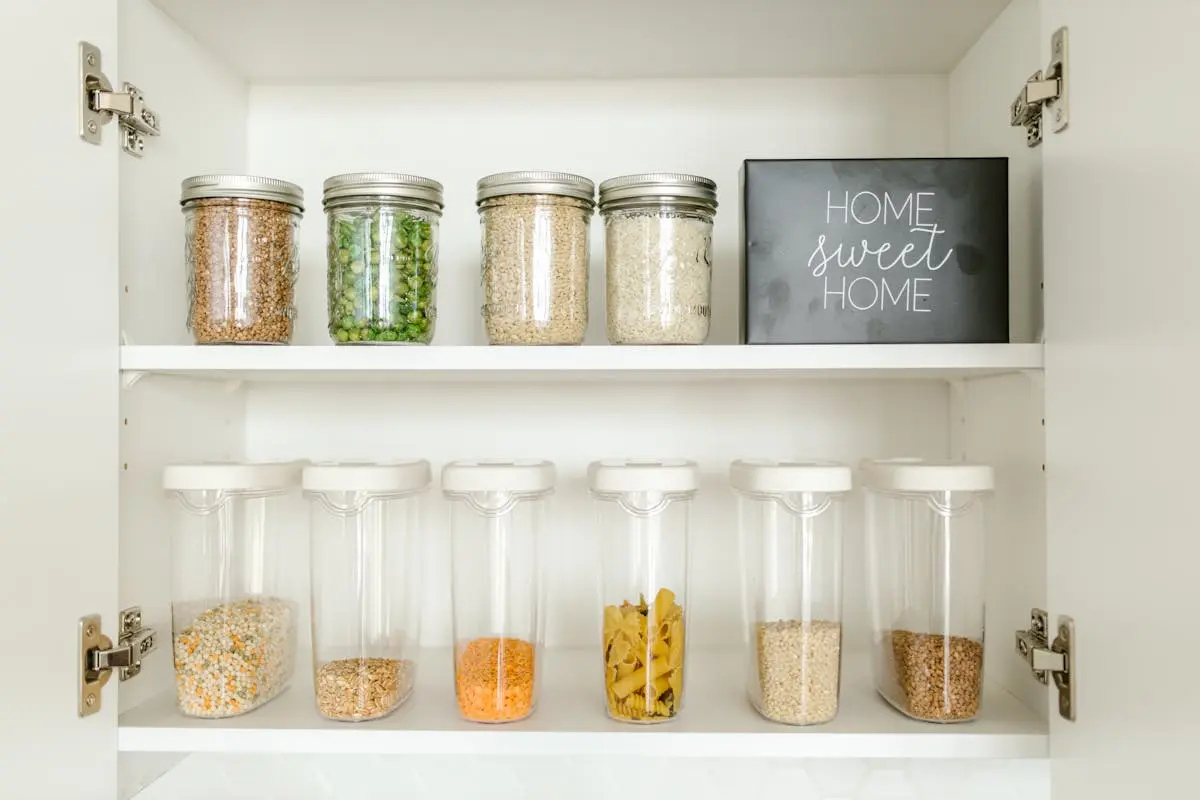
Glass Jar “Decanting”
One of my favorite affordable home organization tips is to stop buying storage jars until you have used what is already in your pantry.
Pasta sauce, pickles, honey, coffee… those containers are perfect for zero dollar home organization hacks.
How to reuse glass jars well
- Rinse the jar and lid thoroughly as soon as they are empty.
- Soak in hot, soapy water to remove labels. A bit of oil on a cloth helps with sticky residue.
- Let them dry upside down until completely moisture-free.
- Refill them with:
- Rice, beans, lentils
- Nuts and seeds
- Tea bags
- Cotton pads, hair ties, or clips in the bathroom
- Screws and small parts in a tool drawer
To make mismatched jars look intentional:
- Use the same style of label on all of them (plain white labels and a black pen work beautifully).
- Write only the category: “Rice,” “Snacks,” “Tea,” “Hardware.”
That visual consistency is what makes it feel like a design choice, not leftover groceries.
You have just upgraded your pantry using pure repurposing household items for storage with no spend.
The “Behavioral” Organization (The Real Estate Angle)
If you do not change your habits, no product will fix your clutter.
Think of your home like a map with prime real estate and cheap land:
- Eye-level and easy reach = premium area
- Top shelves, dark corners, and floor piles = low-value area
We want your habits and your storage to match this reality.
The “Touch It Once” Rule
Most clutter piles are just delayed decisions.
You walk in, drop mail “for now,” put clothes on the chair “for later,” and suddenly your home feels like a storage unit.
The Touch It Once rule is simple:
When you pick something up, you either use it, put it in its home, or let it go. No temporary piles.
To make this realistic:
- Give common problem items a dedicated home close to where they land.
- For example, if your keys always land on the counter by the door, put a small bowl or hook at that exact spot, not across the room.
In my experience, this single mindset shift reduces visual clutter more than any fancy organizer.
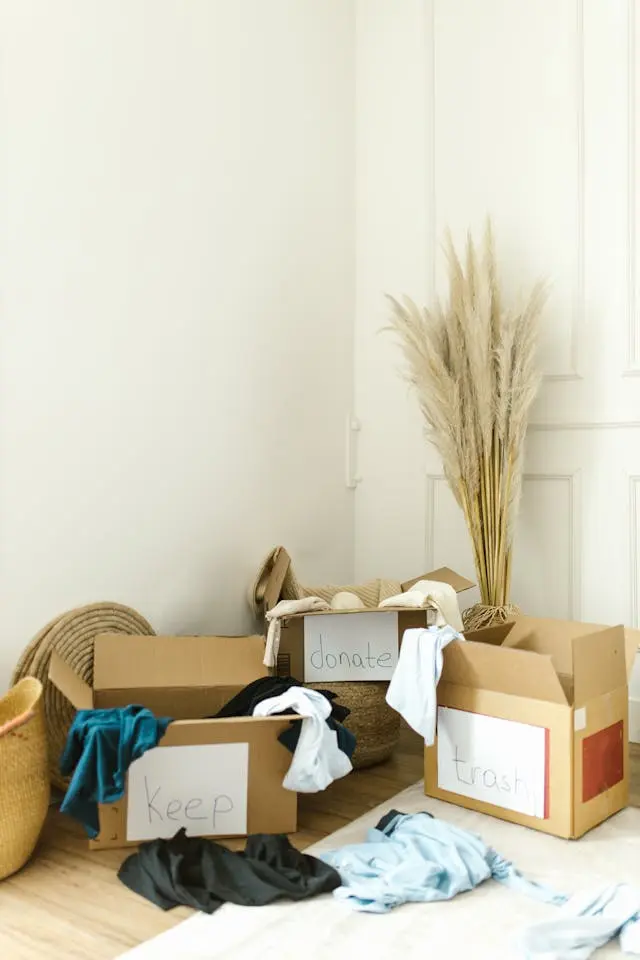
The “3-Box Method”
You cannot organize what you actually do not have space for.
So any list of affordable home organization tips that skips editing is incomplete.
I like to keep it simple with three boxes or bags:
- Keep
- Donate/Sell
- Trash/Recycle
When you tackle a zone (a drawer, shelf, or closet):
- Empty the whole space.
- Touch every item once and decide immediately which box it goes into.
- Clean the empty space.
- Put only the Keep items back, grouped by category.
Why this saves money:
- Less stuff means fewer shelves, baskets, and hooks to buy.
- You see clearly what you actually use, so you stop buying duplicates.
- You make room for smart free or dollar store organization ideas instead of trying to stack clutter on clutter.
Dollar Store Hacks (The “Under $5” Section)
Once you have repurposed packaging and edited your things, a few low-cost tools can make everything easier to maintain.
The goal is not to buy everything in the aisle; it is to choose the pieces that genuinely multiply your space.
Shower Curtain Rings
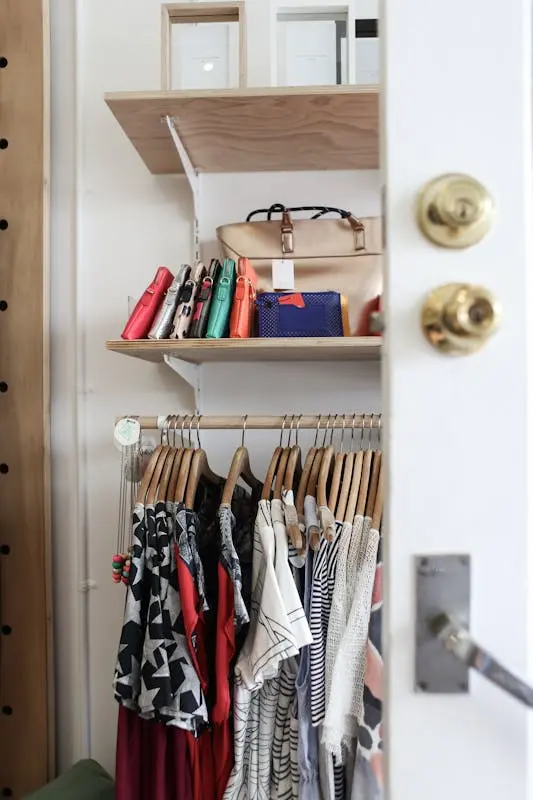
Shower curtain rings are one of those quietly genius items for cheap home organization.
For a couple of dollars, you can transform a hanger or rail into a compact organizer.
Ways to use them
On a single hanger:
- Slide 10–12 rings onto a strong hanger.
- Use each ring to hang:
- Tank tops by their straps
- Scarves looped through
- Belts or ties
- Baseball caps clipped via the back strap
In a closet or entry:
- Use rings on a tension rod or rail to hang reusable shopping bags.
- Group small fabric totes, hats, or accessories.
I prefer this over buying specialty hangers because you can reconfigure it whenever you like.
Tension Rods
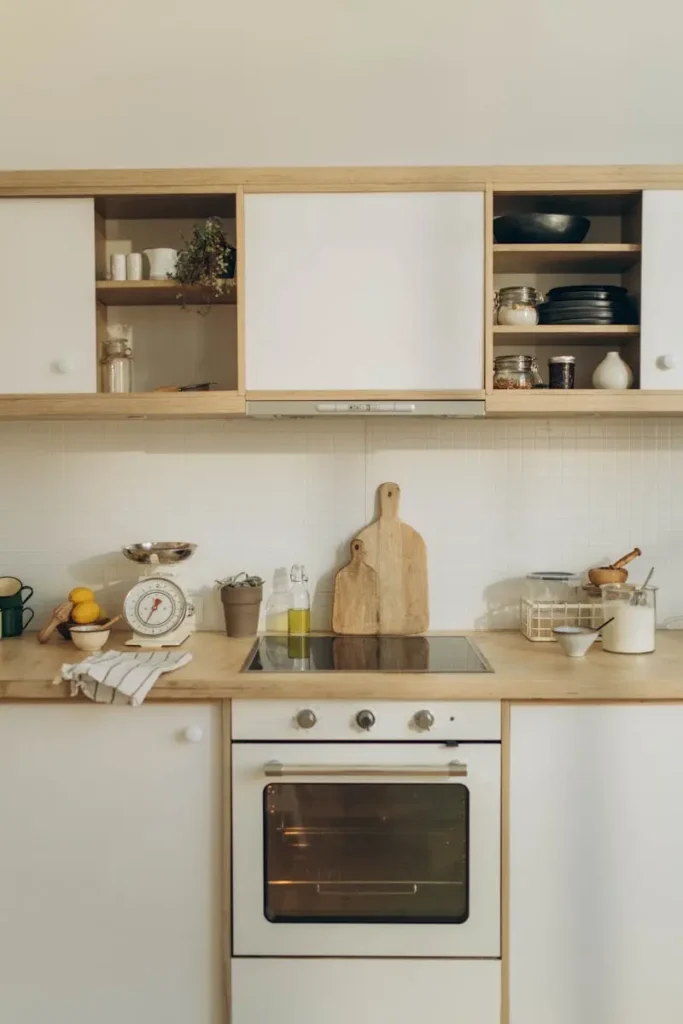
Tension rods are one of the most underrated dollar store organization ideas.
They are adjustable, renter-friendly, and surprisingly versatile—if you keep the loads light to medium.
My favorite uses
In kitchen cabinets:
- Use two or three short rods vertically to create “slots” for baking sheets and cutting boards.
- Place one near the back and one near the front so nothing tips over.
Under the sink:
- Stretch a rod across the cabinet and hang spray bottles by their trigger handles.
- This clears the base for bins, cloths, or a caddy.
In small nooks:
- Mount a tension rod inside a narrow alcove and add S-hooks or rings for scarves, gloves, or cleaning tools.
Used well, tension rods often replace one or two bulky organizers you do not actually need.
Layout Optimization (The iCabinetry Angle)
You now have:
- Less clutter
- Free organizers
- A few smart dollar-store upgrades
The next step is to place everything so your home works with you, not against you.
This is where affordable home organization tips become long-lasting, because they are rooted in logic rather than trends.
Zone Planning
Every shelf, drawer, and hook has a value.
I like to think in sectors:
- Prime Real Estate: Eye level and easy arm’s reach
- Secondary Real Estate: Slightly higher or lower
- Tertiary Real Estate: Very low, very high, or awkward to reach
Your job is to match item frequency to zone:
- Daily items → prime real estate
- Weekly items → secondary
- Rarely used items → tertiary
Examples:
- Everyday mugs and plates at eye level, not in the highest cupboard.
- Seasonal baking gear at the top of the pantry.
- Keys, wallet, and bag near the entry, not on the opposite side of the room.
This costs nothing but feels like a remodel when it is done properly.
Frequency Mapping
Now apply the same thinking room by room.
Ask for each category: daily, weekly, monthly, or yearly?
Then place accordingly.
Daily:
Remote controls, phone chargers, frequently worn shoes, daily skincare.
- Should be visible, easy to reach, and ideally at hand level.
Weekly:
Extra towels, deep cleaning supplies, certain tools.
- Can live in baskets on mid-level shelves, under the bed, or in side cabinets.
Monthly or Yearly:
Holiday decor, guest bedding, luggage.
- Should live in top cupboards, under-bed boxes, or clearly labeled storage that you do not need to touch often.
This is pure logic, but in my experience it is the real engine behind a home that stays organized.
The “Don’t Buy” List
Let’s be honest: organizing culture loves to sell you things.
But if your focus is truly affordable home organization, there are a few products I recommend pausing on.
Items I would skip (or at least treat with caution):
- Overly specialized containers
Those “berry bins,” soda can organizers, or oddly shaped gadgets that only work for one item. They are fun on social media but not great long term. - Too many tiny compartments
A drawer with thirty little boxes is hard to maintain. Three or four good-size sections are usually enough. - Friction-heavy storage
If you have to unstack three boxes and open a lid to put something away, you won’t. Choose open bins, trays, or single-lid solutions for daily items. - Duplicate jars when you have plenty of glass already
Use your saved jars first. If you still feel the need to “upgrade” later, do it once you know exactly how many you truly need.
Good organization is about thinking, not shopping.
FAQ: How Can I Make Cheap Storage Look Expensive?
You do not need expensive materials to get an elevated look.
You need consistency.
Use Uniform Labels
Even cardboard boxes and mixed jars can look curated if you:
- Use the same label style on everything (white stickers or hanging tags).
- Use the same pen color and handwriting/printed font.
- Place labels in the same position on each container.
Suddenly, your zero dollar home organization hacks, your repurposed jars, and your dollar store finds all read as one calm, cohesive system.
That is the real secret behind the best affordable home organization tips:
Edit ruthlessly.
Repurpose creatively.
Buy slowly.
And make the whole thing look intentional with simple, unified details.