Black Living Room Ideas: How to Use Black Without Ruining the Room
Black scares a lot of people because they imagine a cave. In practice, the most luxurious spaces I see in real homes and hotels often have at least one deep, inky moment anchoring the room. The difference between “dramatic” and “dungeon” is rarely the color itself; it is the finish, the undertone, and the lighting.
If you want black living room ideas that feel considered, not moody-just-for-Instagram, you need to think like a lighting designer, a color consultant, and a stylist at the same time. Let’s walk through it properly so you can decide if you want a single black wall, a color drenching living room moment, or a full-on “jewel box” space.
Choosing the Right Black (It’s Not Just One Color)

Before we talk furniture and accessories, you need to choose the right black paint. There are real technical differences between blacks, and they will absolutely show up on your walls.
Understanding LRV (Light Reflectance Value)
LRV (Light Reflectance Value) runs from 0 (pure black) to 100 (pure white). True black sits at 0, but most wall paints live in the LRV 3–5 range. That tiny number means they reflect almost no light back into the room.
The lower the LRV, the more the paint will:
- Swallow light instead of bouncing it.
- Hide small surface irregularities because shadows get absorbed.
- Demand stronger, better-placed lighting to keep the room usable.
If you’re nervous about going full-ink, look for deep charcoals in the LRV 8–12 range rather than absolute black. You’ll still get the depth, but the room is easier to light.
The Undertones
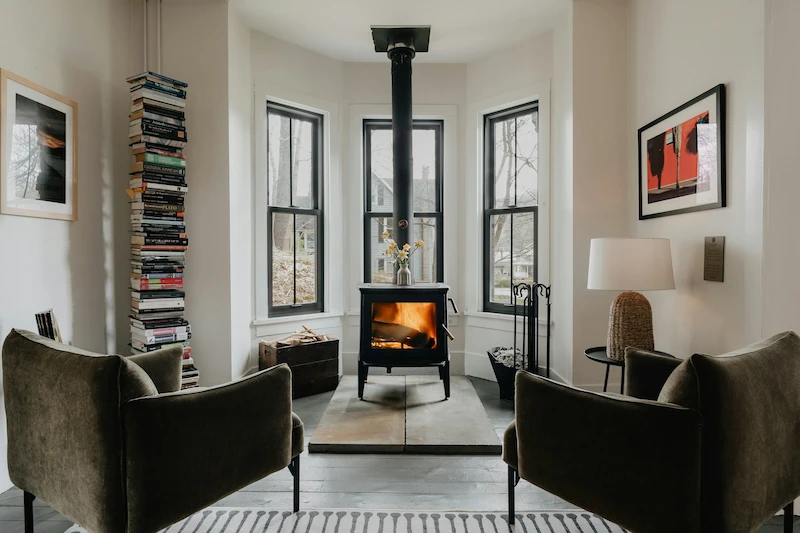
Not all blacks are neutral. Undertone is what makes one black feel crisp and another feel cozy.
- Cool black (blue undertones):
- Feels sharp, architectural and modern.
- Works well with grey concrete, chrome, and glass.
- Can go “cold” if your natural light is already very blue.
- Warm black (brown/red undertones):
- Reads softer and more intimate, especially at night.
- Pairs beautifully with oak, walnut and beige upholstery.
- Ideal if you want a “library” or “cinema room” mood.
If your living room already has a lot of blue daylight (for example, a north-facing space), I usually recommend a warmer black to balance it. If you have very warm, golden light, a cooler black can keep things from turning murky.
The Finish Matters (Matte vs Satin vs High Gloss)
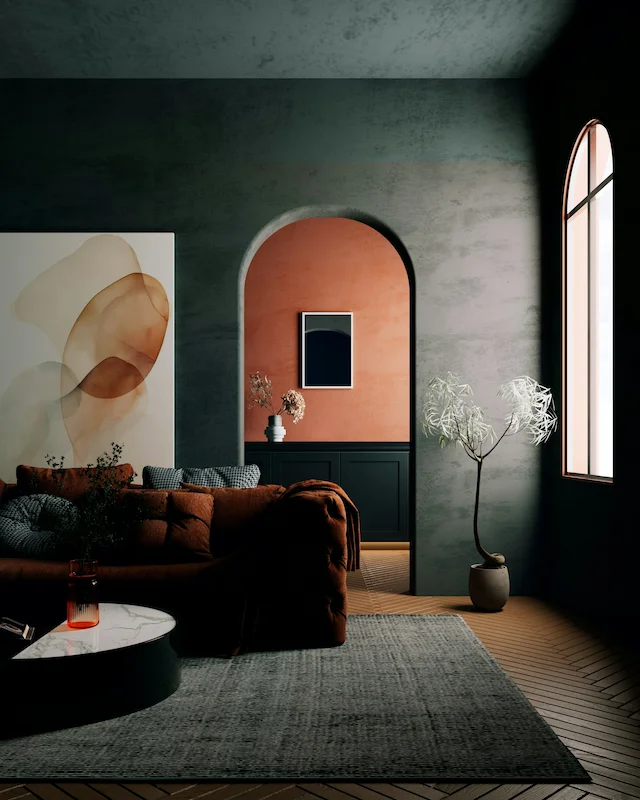
Choosing between matte vs satin black paint will change the character of the room as much as the color itself.
- Matte black:
- Absorbs light and gives a velvety, almost chalky look.
- Hides wall imperfections better because there is no sheen to highlight bumps.
- Feels more “2026” and high-end, especially in color-drenched rooms.
- Downsides: shows grease marks and fingerprints more, so better for walls than high-touch trim.
- Satin / eggshell black:
- Has a slight sheen that reflects light and makes the surface easier to wipe.
- Good compromise for families: practical on doors, baseboards and lower walls.
- Will highlight dents and roller marks more than matte, so prep matters.
- High gloss black:
- Creates that “lacquer box” look—very glamorous, very unforgiving.
- Works best on perfectly prepped doors, cabinetry or a single feature wall.
- Every brush stroke, dust particle, and dent will show, so I never recommend this as a DIY for large walls.
My usual hierarchy: matte on walls, satin on trim and doors, and reserve high gloss black for one or two carefully chosen elements if you want drama.
Black Interior Trends for 2026
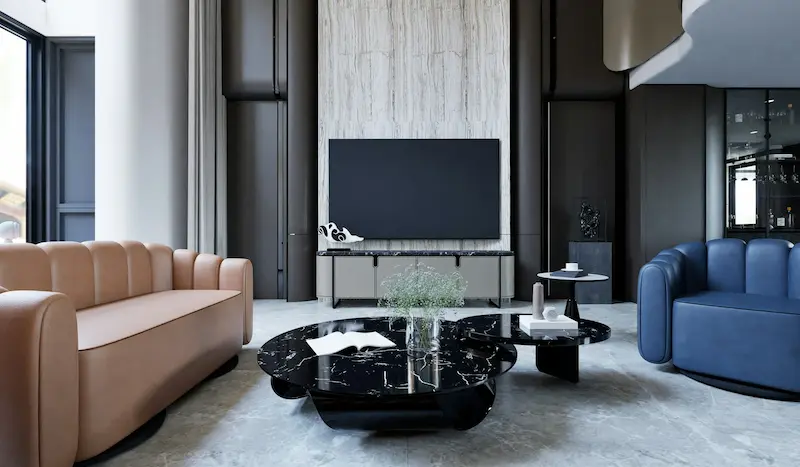
Once you understand the basics, you can play with the current black interior trends in a way that still feels timeless.
1. Color Drenching
Color drenching a living room in black means painting walls, trim and sometimes even the ceiling in the same shade. Done well, this doesn’t make the room feel smaller; it blurs boundaries so your eye can’t read where the room stops.
This works especially well in:
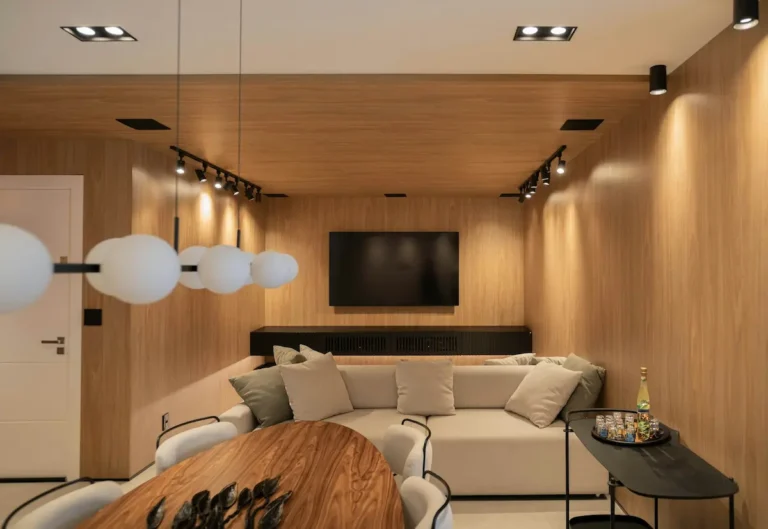
- TV rooms where you want the screen to visually disappear when it is off.
- Small living rooms that you want to turn into “jewel box” spaces.
If you’re unsure, start by drenching just one end of the room (for example, the TV wall plus side walls) and keep the opposite end lighter. That gives you a built-in transition.
2. “Gothic Luxe”
Gothic Luxe is less about Halloween and more about balancing black with rich textures and jewel tones:
- Deep emerald or bottle green velvet cushions on a neutral sofa against a black wall.
- Ruby or garnet-colored textiles layered over a dark, textured rug.
- Brass or aged gold accents to keep everything warm rather than severe.
I like this direction for evening-focused rooms where you mostly use the space after dark.
3. The Charred Wood Look (Shou Sugi Ban Influence)
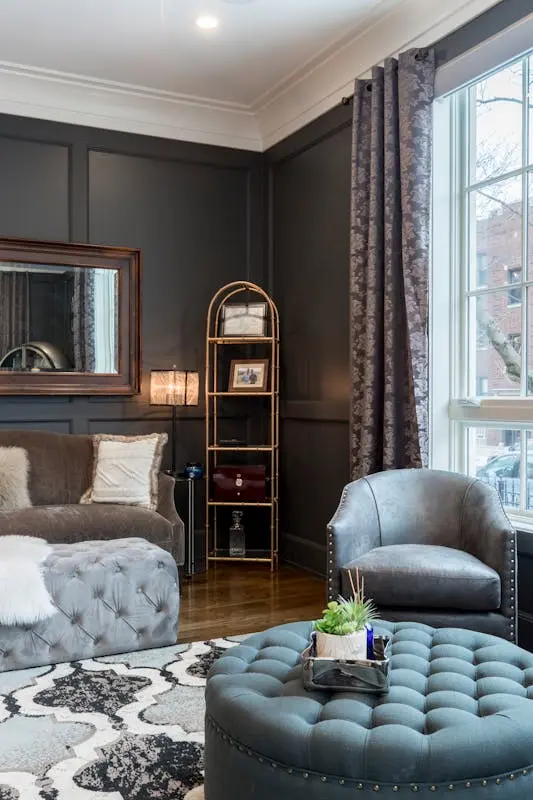
Instead of flat paint, many high-end spaces are using textured black wood paneling inspired by Shou Sugi Ban (charred timber).
You don’t need to literally char wood at home; the point is the texture:
- Vertical or horizontal planks stained almost black, with the grain still visible.
- Slatted walls in deep charcoal behind a TV or sofa.
This gives you movement and shadow even in a monochrome scheme. If you’re worried about commitment, use this on a half-height paneling detail, with the upper wall in a softer charcoal.
4. Black and Beige (Warm Noir)
Black and white can feel harsh, especially in small or low-light living rooms. Black and beige, on the other hand, feels chic and far easier to live with.
Think:
- Black walls with a camel or sand-colored sofa.
- Light oak floors, black window frames, and oatmeal curtains.
- Beige limewash on three walls, black on the fireplace wall only.
This combination lets you have the drama of black without turning the whole space into high contrast.
How to Light a Black Room (The 3x Rule)
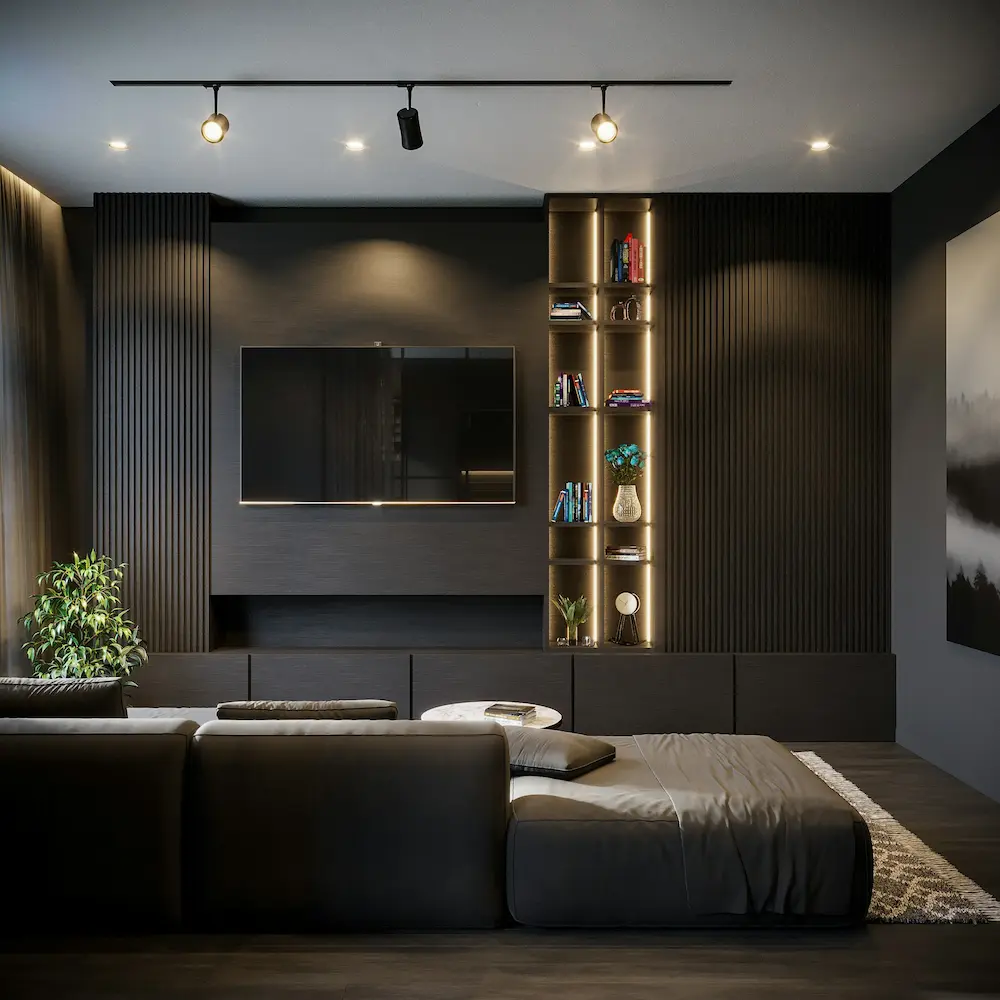
Black absorbs light, so your usual single ceiling fitting plus one lamp will not survive. You need to treat lighting as part of the design, not an afterthought.
The 3x Rule
As a practical guideline, a black living room often needs around three times as much total light output as a similar white room to feel equally bright. That doesn’t mean three times the fixtures in one spot; it means more points of light at different heights.
I like to aim for:
- One main ceiling source (not necessarily in the center).
- At least two or three eye-level lamps (floor or table).
- A few accent sources, like wall washers or LED strips in shelving.
When you turn everything on at night, the walls should glow softly rather than vanish into a void.
The Wall Grazing Technique
Black walls look incredible when you highlight their texture instead of fighting it.
“Wall grazing” means aiming light down or up along the surface so it:
- Emphasizes paneling, slats, or plaster texture.
- Creates subtle vertical streaks of light rather than a flat wash.
Use:
- Adjustable wall sconces angled down over a black accent wall.
- Ceiling-mounted spots placed closer to the wall and aimed downwards.
This breaks up the “black hole” effect and turns the wall into a feature even when nothing is hanging on it.
Warm vs Cool Bulbs
In a black living room, 2700K–3000K bulbs are your safest range.
- Warmer light (around 2700K) flatters skin tones and makes black feel cocooning rather than stark.
- Going up to 4000K+ in a very dark room often makes it feel like an office or basement, especially when the light bounces off pale furniture.
I almost always recommend dimmable warm white bulbs in black spaces so you can shift from “bright and practical” during the day to “cinematic and soft” at night.
What Goes With Black?
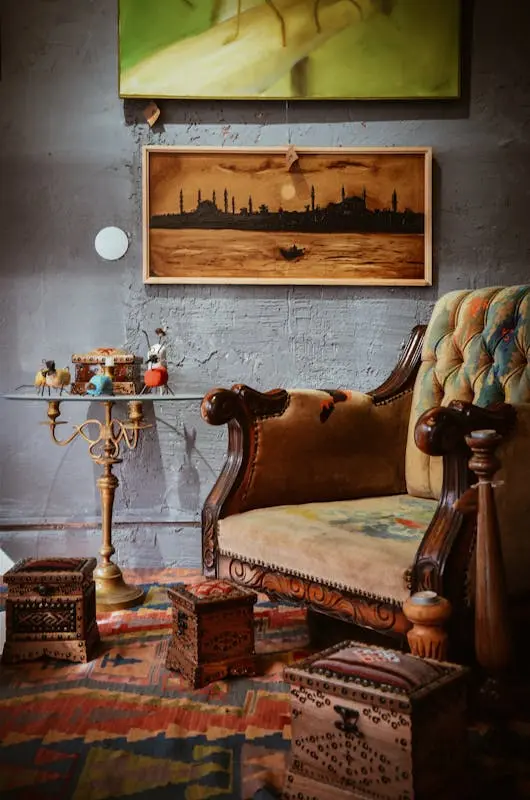
A black living room is not meant to be all black. The supporting actors—metals, woods, fabrics, and plants—are what make it feel intentional.
Metals
Black is the perfect backdrop for metal.
- Unlacquered brass:
- Pops beautifully against black, especially on sconces and coffee table bases.
- Warms the overall palette and works well with beige and taupe fabrics.
- Chrome / polished nickel:
- Blends more with cool blacks and modern schemes.
- Can feel cold if everything else is also cool and glossy.
If you want a softer, more inviting look, I’m firmly in the “brass or bronze over chrome” camp for black walls.
Wood
Wood is how you stop a black living room from feeling too sleek or severe.
- Walnut: deeper and moodier, great with warm black and brass.
- Oak or ash: lighter, brings in a Scandinavian-modern balance.
You can absolutely have black walls with a light oak floor and an oak coffee table; the contrast makes the black look richer and the wood look brighter.
Greenery
Plants look incredible against black—more saturated, more sculptural.
A single tall plant in a simple clay or stone pot next to a black wall does three things at once:
- Breaks up the darkness with organic shape.
- Adds a biophilic element, which calms the room.
- Softens straight furniture lines without introducing new color chaos.
If you feel your black scheme is a bit too serious, add life, not random accent colors.
Can Small Rooms Be Black? (Yes, and Here Is Why)
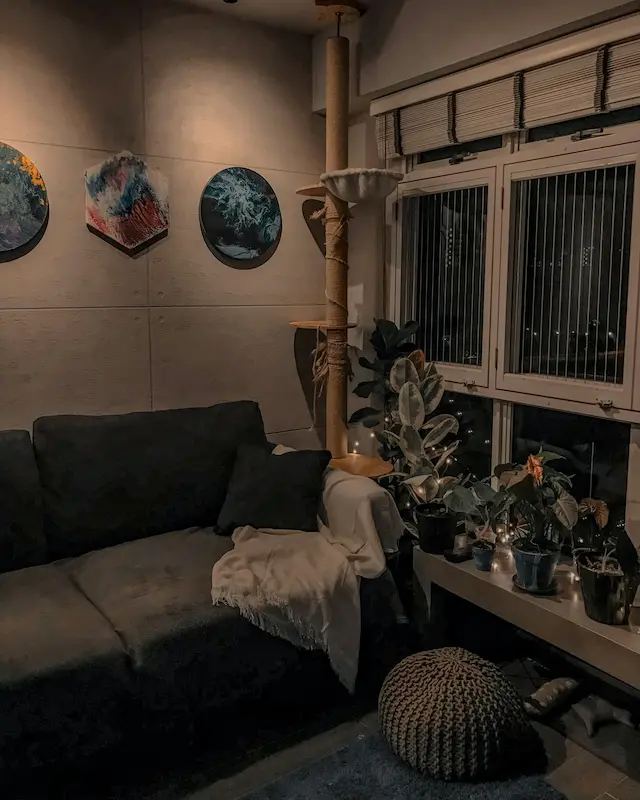
The idea that small rooms “must” be white is outdated. Dark colors, especially black, can actually be your best friend in a compact living room.
The Infinity Effect
Dark walls make edges harder to read. When you color drench a small living room in one deep tone:
- Corners visually blur, so the eye can’t easily tell where the room stops.
- The focus shifts to what is in the room—sofas, art, lighting—rather than the room size.
This is why small “jewel box” rooms in hotels feel so luxurious. The walls recede, and the furnishings become the experience.
How to Make It Work in a Small Space
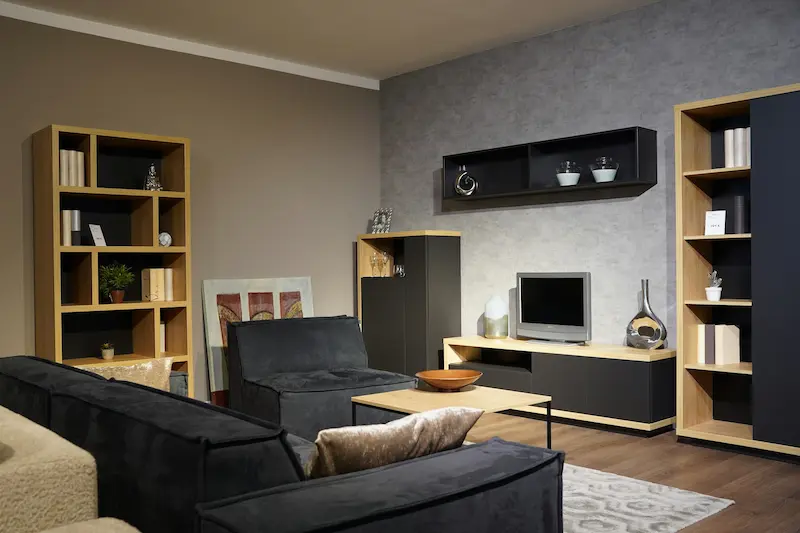
For tiny living rooms, I usually recommend:
- Matte or low-sheen black on walls to avoid glare.
- A light, textured rug to keep the floor from feeling heavy.
- Slim, leggy furniture so you see floor under the pieces and maintain some visual air.
- Plenty of eye-level lighting so faces are lit, not just the ceiling.
If full drenching feels too bold, start with:
- One black wall behind the sofa or TV.
- Black built-in shelves with a lighter wall color behind other zones.
The key is consistency: one strong, repeated dark element will look better than scattered bits of black that never add up to a story.
If you treat black as a tool rather than a dare, it can give you one of the most sophisticated living rooms you’ll ever have. Choose the right undertone, pick the right finish (matte vs satin black paint where it makes sense), increase your lighting thoughtfully, and let wood, brass, and greenery do the softening.
Then your black living room ideas stop being “risky” and become the room everyone remembers.