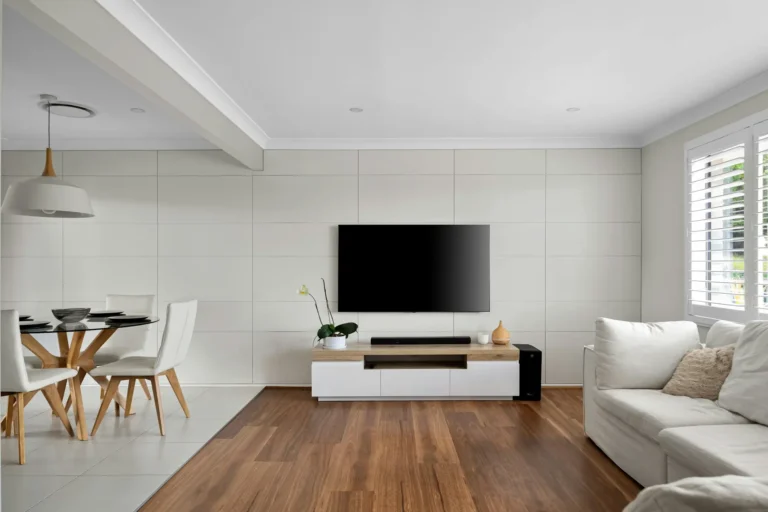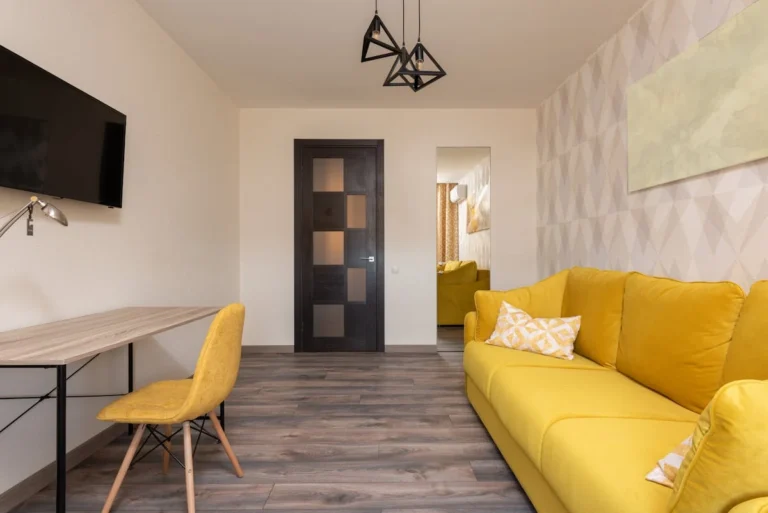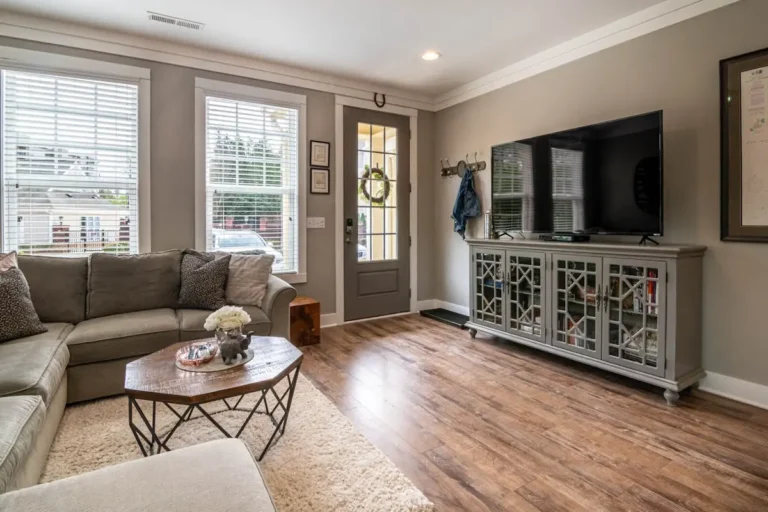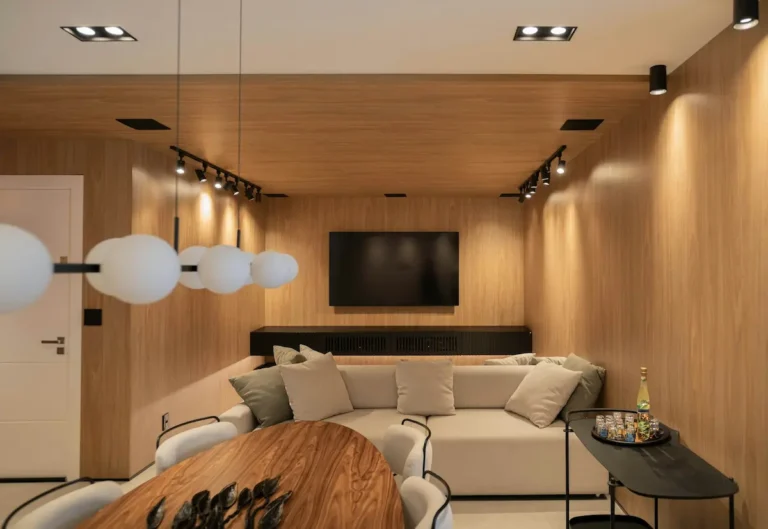
Living Room Lighting Ideas: How To Design Light That Actually Feels Good To Live In
You know that moment in the evening when your living room feels more like a dentist’s office than a place to relax?
Too bright. Too cold. One lonely ceiling light trying to do everything.
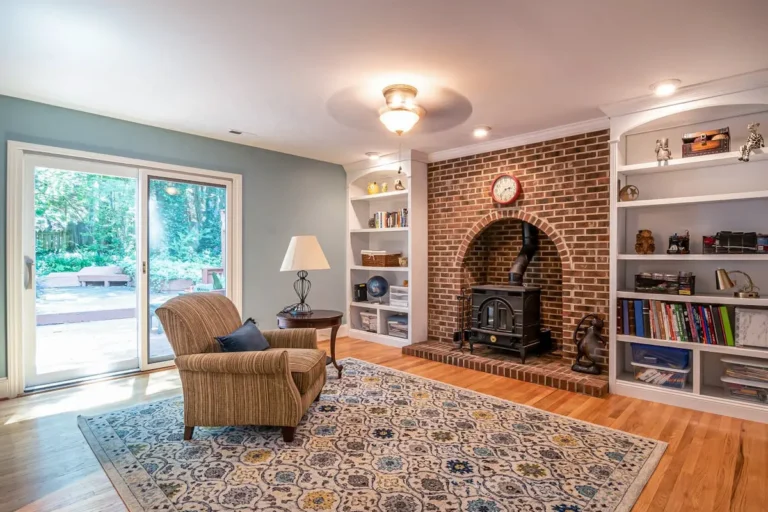
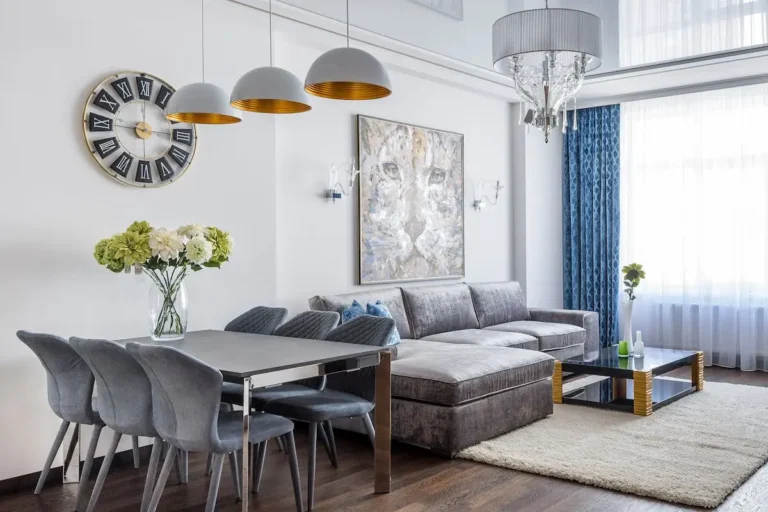
Good living room lighting ideas are not about buying a prettier lamp. They’re about understanding how light works in a space – then layering it so your room feels calm, flattering, and functional all day.
In this guide, we’ll walk through the science (in human language), the 2026 trends, the wellness angle, and a simple formula you can copy in any living room.
Part I: The Science of Living Room Lighting (What Experts Know)
Understanding Color Temperature (Kelvin)
Before we talk about pretty lamps, we need to talk about Kelvin (K) – the scale that describes how “warm” or “cool” a bulb looks.
- Lower Kelvin (1800–2700K) = warm, candle-like, relaxing
- Mid-range (2700–3000K) = classic cozy “living room” warm white
- Higher (4000K+) = cool, bright, good for tasks and offices
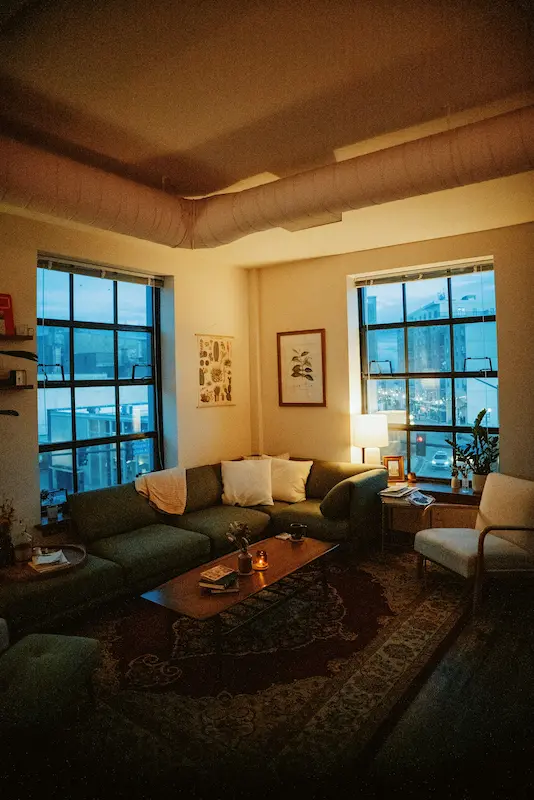
For living rooms, I strongly recommend staying between 2700K and 3000K for everyday use. This range is consistently described in lighting research as the most “pleasing” for low, home-level brightness and is perceived as warm and relaxing.
Here’s a quick cheat sheet:
| Kelvin Range | Visual Feel | Best For |
|---|---|---|
| 1800–2200K | Candle / firelight | Ultra-cozy evenings, accent lamps, hygge |
| 2700K | Warm white | Main living room lighting in the evening |
| 3000K | Soft neutral white | Mixed-use living rooms / reading corners |
| 4000K | Cool neutral white | Kitchen task areas, home office corners |
In my experience, if your living room “feels like a hospital,” your bulbs are either too bright, too cool, or both.
Practical tip:
When you buy bulbs, ignore “Soft White / Warm White” marketing terms and look directly at the Kelvin number on the box.
The 3 Layers of Light
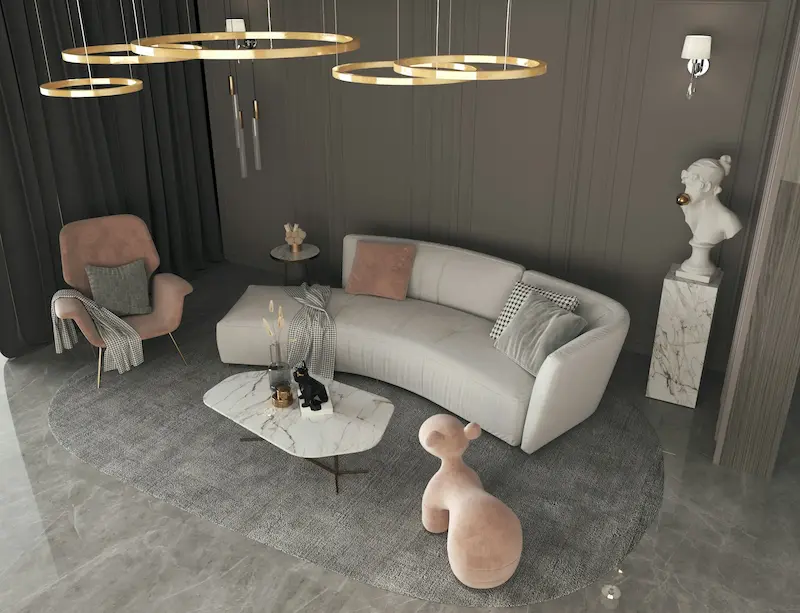
Every well-designed living room uses three layers of lighting. If the room feels flat or harsh, you’re probably missing one.
- Ambient Light
- The base layer: overall illumination.
- Usually from ceiling fixtures, recessed lights, or a large central pendant.
- Think: “Can I walk around without tripping?”
- Task Light
- Focused light for doing things: reading, knitting, games, laptop.
- Table lamps, floor lamps by the sofa, swing-arm wall lamps.
- This is where you want 3000K max and good brightness.
- Accent Light
- Light just for mood and emphasis:
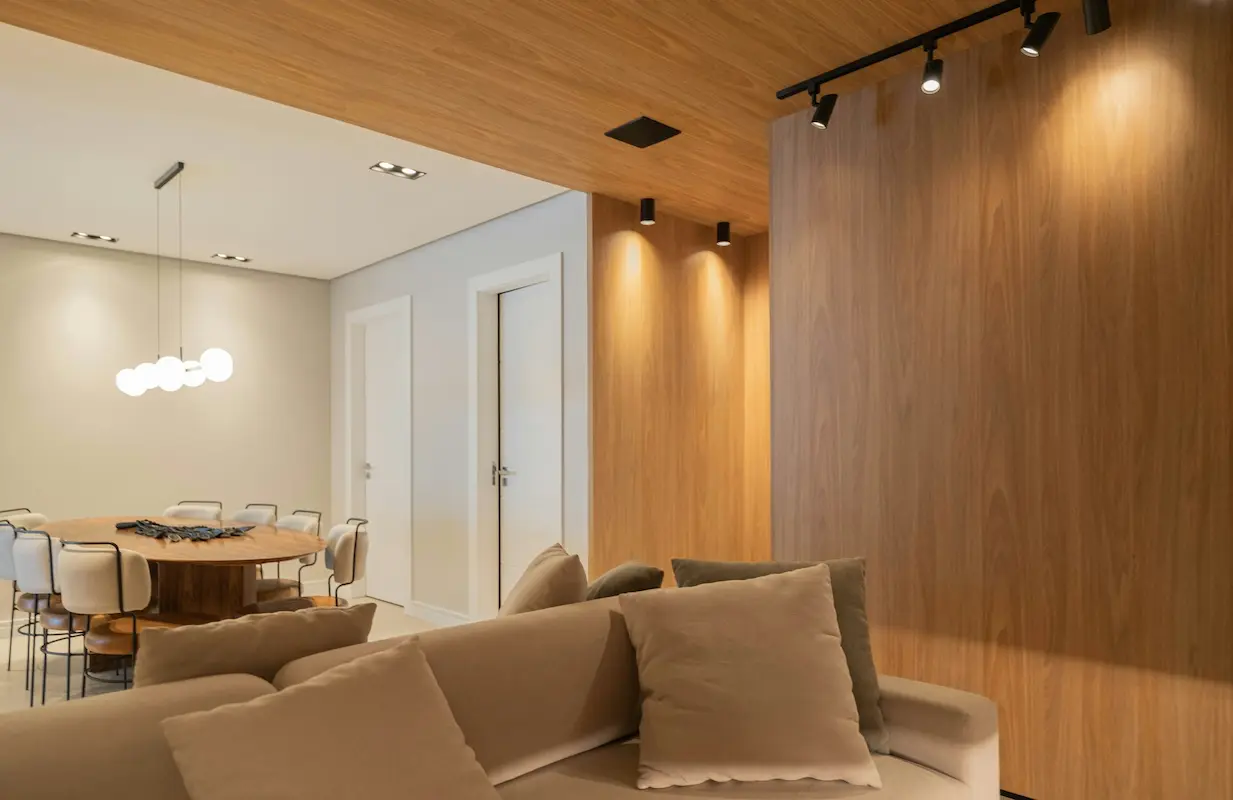
- Picture lights, LED strips on shelves, tiny spotlights on art, candle-style lamps.
- This layer makes a room feel designed rather than just “lit.”
In a real living room, all three should be present – and dimmable when possible.
Lighting for Wellness (Circadian Rhythm Basics)
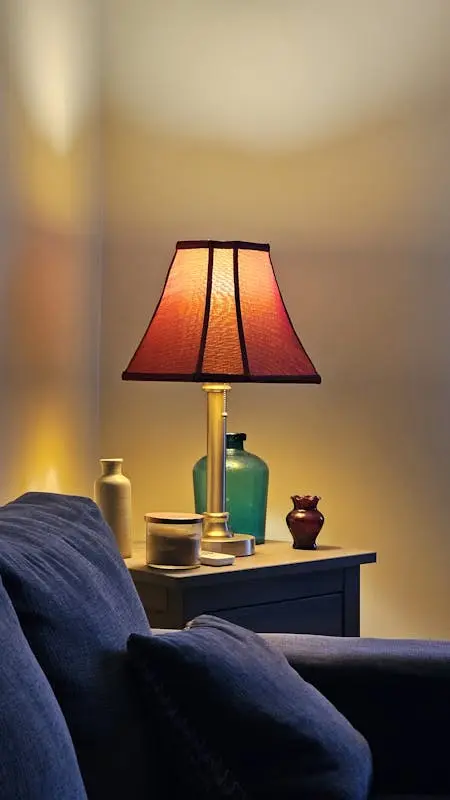
Your brain uses light to decide whether to be alert or sleepy. Bright, cool light keeps you awake; dim, warm light signals “wind down.”
In the evening, especially in a living room you use to relax:
- Avoid strong overhead lighting above 3000K later at night.
- Use lamps at eye level or lower with 2700K or warmer bulbs.
- If you use smart bulbs, set an “evening scene” that shifts warmer and dimmer after sunset.
You don’t need a complicated “circadian lighting system.”
If you simply dim and warm your lights as the evening progresses, you’re already doing more than 90% of homes.
Part II: The List – 2026 Living Room Lighting Ideas & Trends
Now that the science is out of the way, let’s plug it into real, design-forward ideas.
Category A: The 2026 Trends
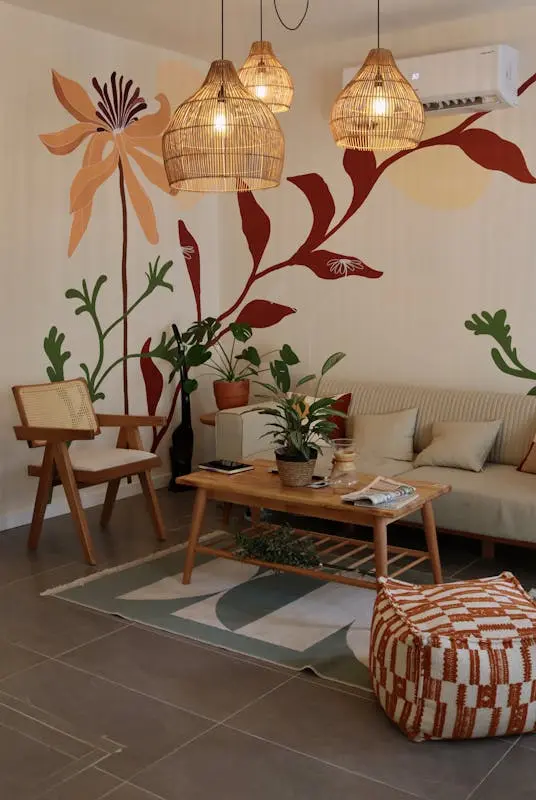
1. Biophilic Lighting
This trend mixes natural materials with soft, organic shapes:
- Rattan or wood pendants
- Linen drum shades
- Lamp bases in stone, clay, or wood
I like these especially in neutral or organic-modern living rooms – they soften all the straight lines and screens.
2. Oversized Statement Floor Lamps
Think of these as functional sculptures.
- Arched floor lamps that reach over a sofa
- Tripod lamps with huge fabric shades
- Slim, tall fixtures that create a pool of light in a corner
In a modern living room, one big, confident lamp often looks better than five tiny ones scattered around.
3. Vintage & “Aged” Metals
We’re moving away from shiny chrome everywhere. Warm metals like brushed brass, antique bronze, and pewter feel richer and cozier.
My rule is simple:
If your room feels cold or sterile, introduce at least one warm metal in the lighting.
4. Rechargeable “Nomad” Lamps
Cordless, rechargeable table and floor lamps are a game changer:
- Perfect for renters who can’t add outlets.
- Great for coffee tables where cords would be messy.
- Ideal on shelves or window sills for soft accent light.
I often recommend one “nomad lamp” you can move around depending on whether you’re reading, hosting, or watching TV.
Category B: Solutions for Specific Layouts
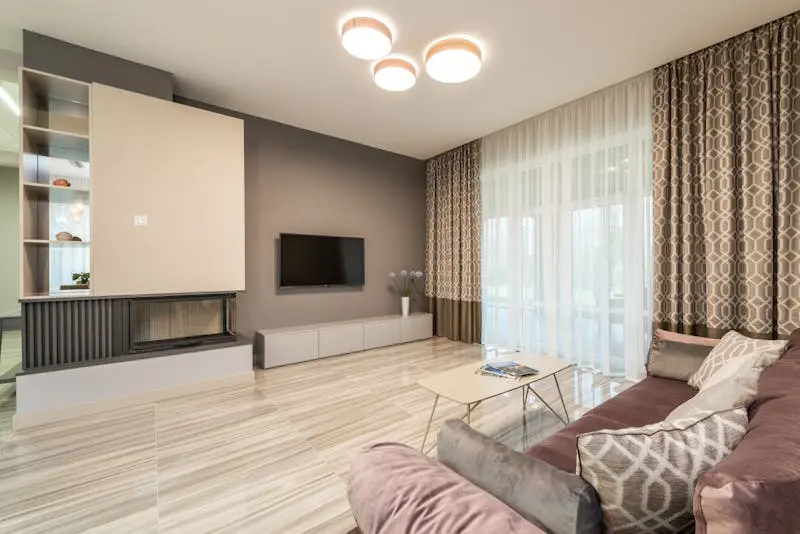
5. Lighting for Low Ceilings
If your ceiling is under about 2.5 m, skip bulky chandeliers.
Instead:
- Use low-profile flush or semi-flush mounts with fabric shades.
- Add floor and table lamps to bring the light down to eye level.
- Avoid intense recessed spots that create hard shadows on faces.
The goal is to keep the ceiling feeling high and the faces softly lit.
6. The “Dark Corner” Solution
Every living room has that corner where plants go to die.
Fix it with:
- A tall, slim floor lamp that throws light upwards and outwards.
- Or a corner lamp with two heads – one up, one angled onto a chair or plant.
In my experience, one well-placed floor lamp does more for a dark corner than repainting the entire room.
7. Small Living Room Hacks
When floor space is tight:
- Use wall sconces instead of floor lamps. Many plug-in sconces don’t require hardwiring.
- Mount swing-arm lamps over side tables so you can skip bulky lamp bases.
- Consider LED strips behind a sofa or media unit to add glow without adding furniture.
This is where good lighting can replace an entire extra piece of furniture.
Category C: Tech & Smart Integration
8. Invisible Tech
Smart lighting doesn’t have to look like a spaceship.
- Use smart bulbs inside classic fabric shades or vintage-style fixtures.
- Control brightness, color temperature, and schedules from your phone or voice assistant.
- Keep the fixture aesthetic timeless; let the bulb be the “tech.”
I like this approach because it keeps your decor evergreen while your tech can evolve.
9. Scene Setting
At minimum, create three scenes:
- Daytime: Brighter, slightly cooler (around 3000K), all layers on.
- Evening Relax: Dimmer, warmer (2700K), mostly ambient + accent.
- Movie Mode: Very dim, just accent lights behind or beside the TV to reduce eye strain.
Once those are set, you don’t fiddle with switches; you just tap a scene or use a voice command.
Part III: How To Layer Lighting Like a Pro
This is where we turn theory into a simple formula you can copy.
The Lighting Equation
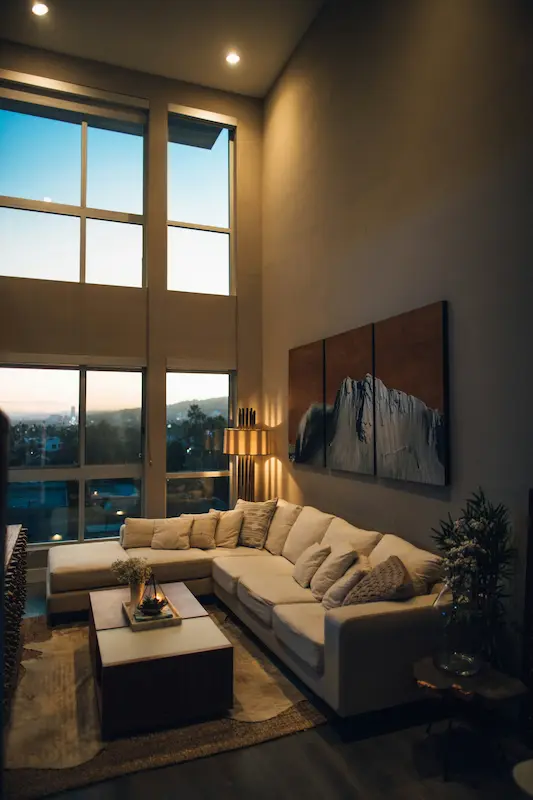
As a starting point, aim for:
1 Overhead + 2 Eye-Level + 1 Accent
For an average-sized living room (around 15–20 m²), that usually means:
- 1 Ambient: A ceiling fixture or a grid of recessed lights (dimmable).
- 2 Eye-Level: Floor lamps or table lamps around seating.
- 1 Accent: Picture light, LED strip on shelves, or a small decorative lamp.
If your room is larger, repeat the pattern: every additional seating zone deserves its own eye-level + accent combo.
Step-by-Step Layering
- Start With the Ceiling (But Don’t Stop There)
- Make sure your overhead light is on a dimmer.
- Choose a warm bulb (2700–3000K).
- Use it mainly for cleaning, hosting big groups, or daytime.
- Add Eye-Level Light At Each Seat
- No seat should be more than an arm’s reach from a lamp switch.
- This is the layer that makes people feel comfortable and relaxed.
- Finish With Accent Light
- Backlight shelves, highlight art, or add a tiny light on a console.
- This is also where candles or candle-style LED lamps come in.
- Test at Night
- Turn off the ceiling light.
- Adjust only lamps until your room feels calm but you can still walk and read.
- If it’s still harsh, your bulbs are too cool or too bright.
Part IV: Living Room Lighting FAQ (People Also Ask)
Q: What is the best color temperature for a living room?
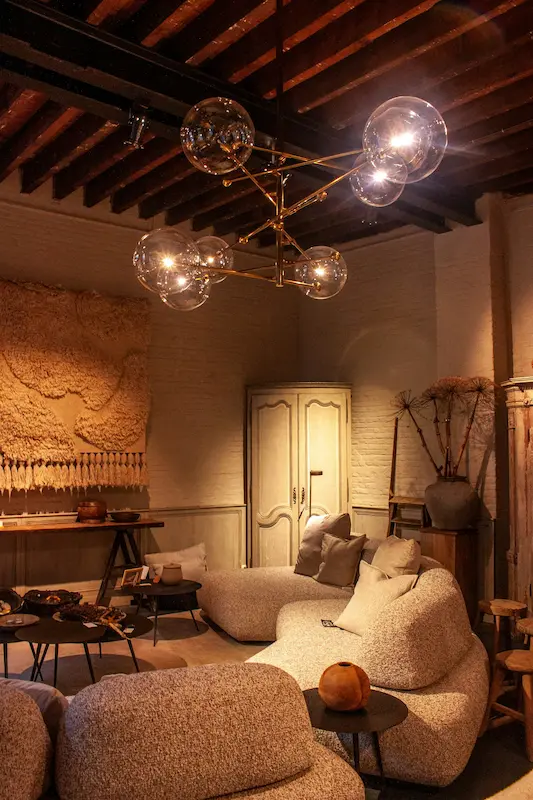
For most living rooms, 2700K is the sweet spot – it feels warm, cozy, and flattering on skin tones. If your room doubles as a workspace, you can use 3000K in a desk lamp or specific reading corner, but I wouldn’t go cooler than that for general evening use.
Q: How many lumens do I need for a 20 × 20 living room?
A rough rule of thumb is 10–20 lumens per square foot (around 100–200 lumens per square meter) for living spaces.
A 20 × 20 ft room is 400 sq ft:
- Low end: 4000 lumens
- High end: 8000 lumens
That total can be split between your ceiling light, floor lamps, table lamps, and accent lights. I prefer to stay closer to the lower end with more lamps rather than one blinding ceiling fixture.
Q: How do I light a living room with no overhead lights?
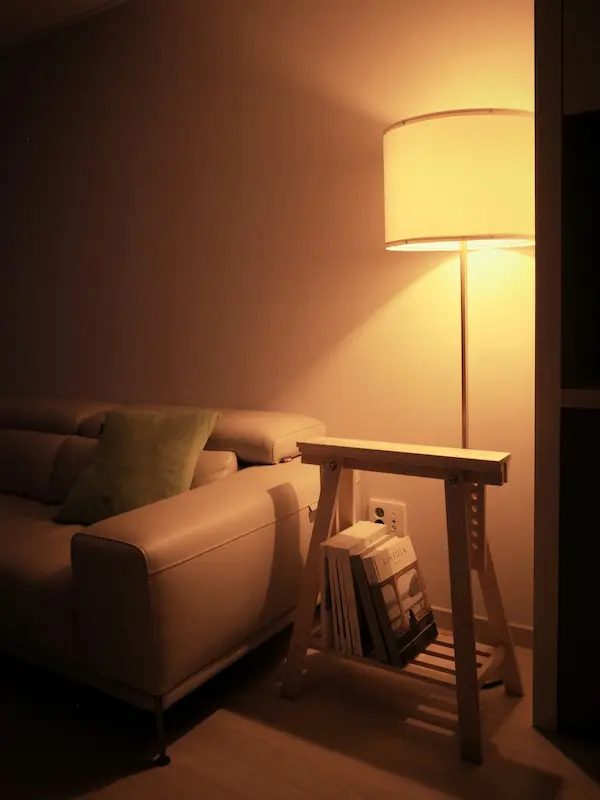
You absolutely can – and often it ends up looking better.
- Use 2–3 floor lamps placed in corners and near seating.
- Add table lamps on side tables or consoles.
- Use LED strips behind the TV or under shelves for soft glow.
- Consider plug-in wall sconces if you have wall space but no floor space.
Think of your lamps as “portable ceiling lights” that you position where people actually sit and move, instead of blasting light from above.
If you take one thing from all of this, let it be this:
Don’t shop for lamps first. Decide on your Kelvin range, your layers, and your scenes, then choose fixtures that fit that plan.
That’s how you move from random lamps to a living room lighting plan that feels intentional, relaxing, and genuinely modern in 2026.