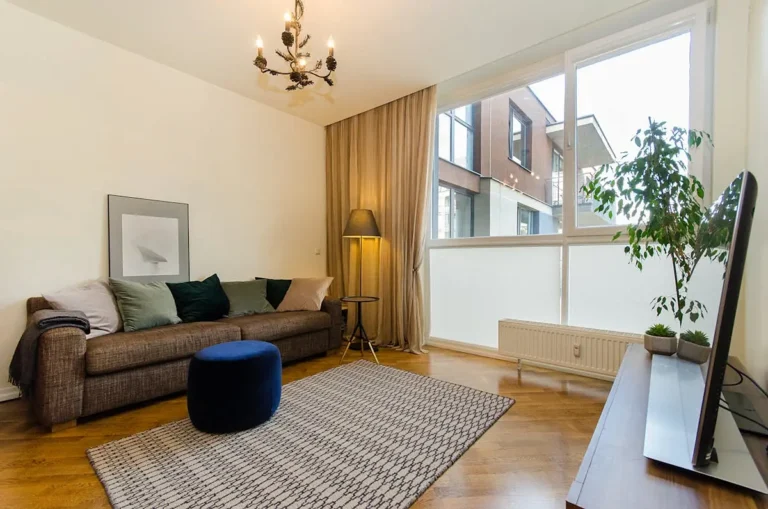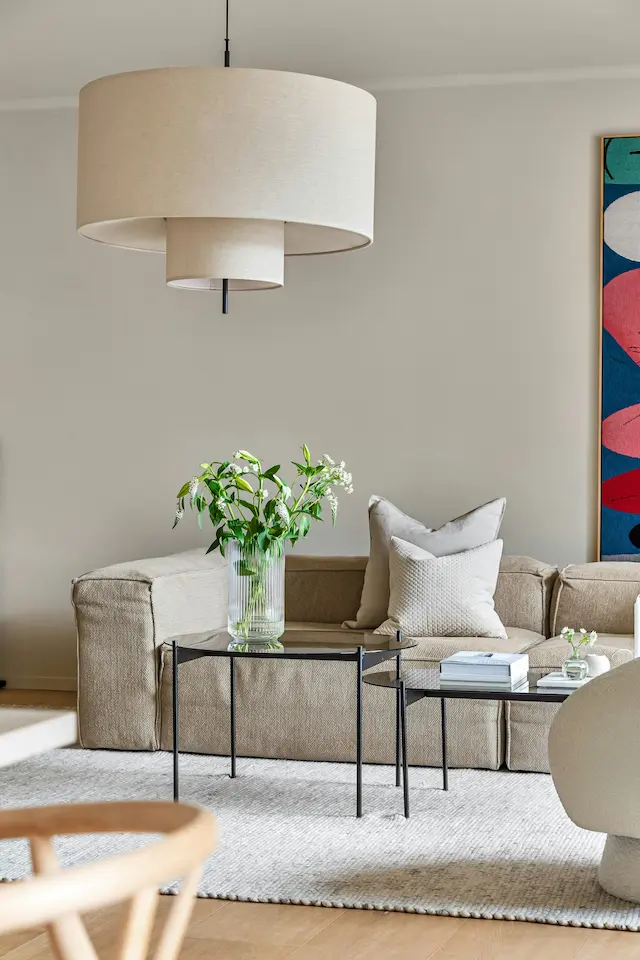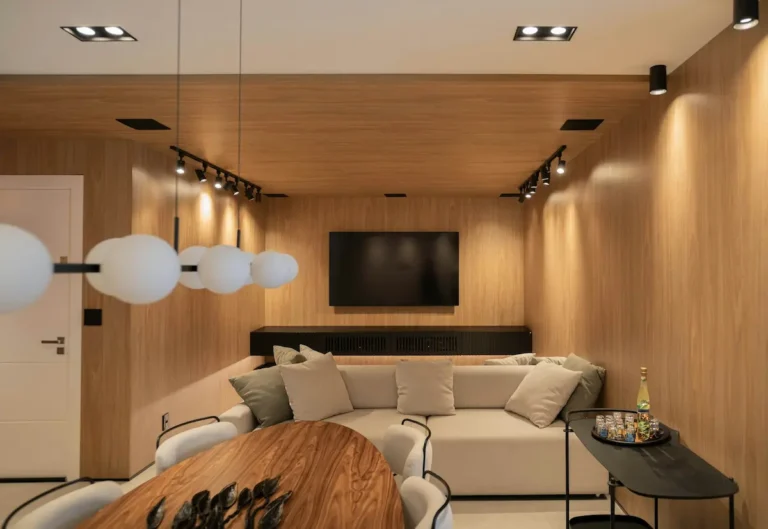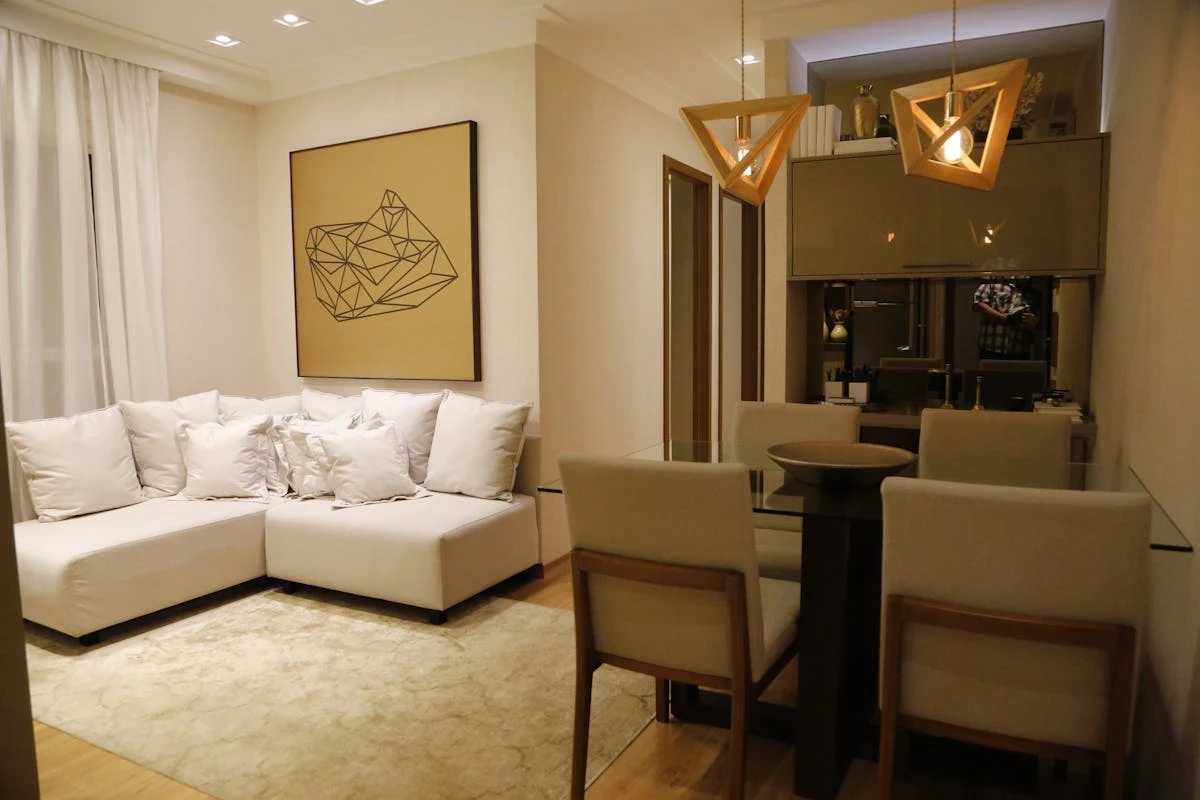
Living Room Sectional Sofa Ideas: Layouts, Shapes & Buying Guide (2026)
The sectional is the hero of the modern living room. It seats everyone, anchors the layout, and quietly decides whether your space feels inviting or cramped.
The problem is simple: a sectional is big, and most people choose the wrong shape or size. Put a Left-Arm Facing chaise on the wrong side, ignore clearance rules, and suddenly your “dream sofa” blocks doors, walkways, and half your rug.
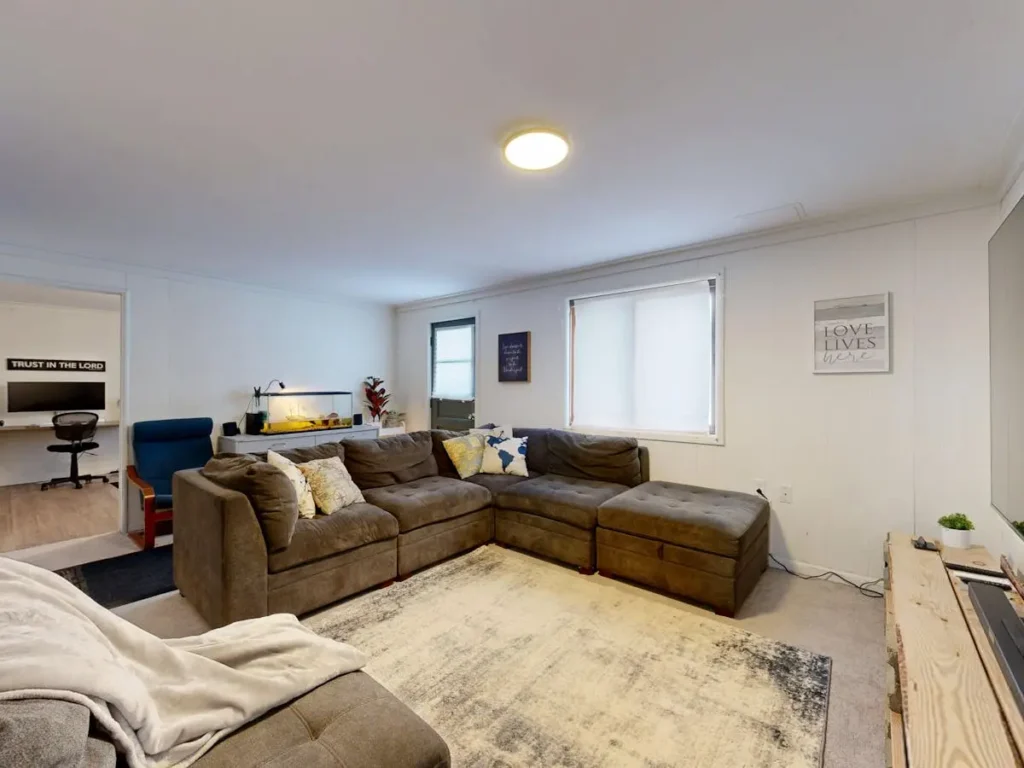
In this guide to living room sectional sofa ideas, we will break down shapes, layouts, and measurements so you can choose with confidence. By the end, you’ll understand the three main configurations (L-shape, U-shape, modular), how to apply sectional sofa dimensions and clearance rules, and how to adapt sectionals even to small living room sectional layout ideas without overwhelming the space.
H2: The 4 Types of Sectionals (The Taxonomy Section)
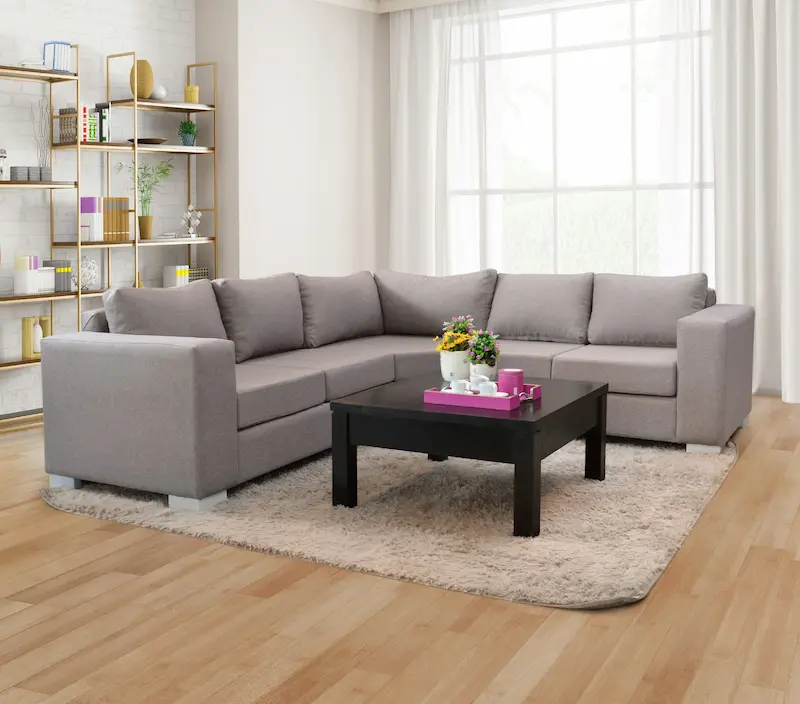
Think of sectionals as a family of shapes that solve slightly different problems. Once you match the shape to your room’s reality, things become much easier.
H3: 1. The L-Shape
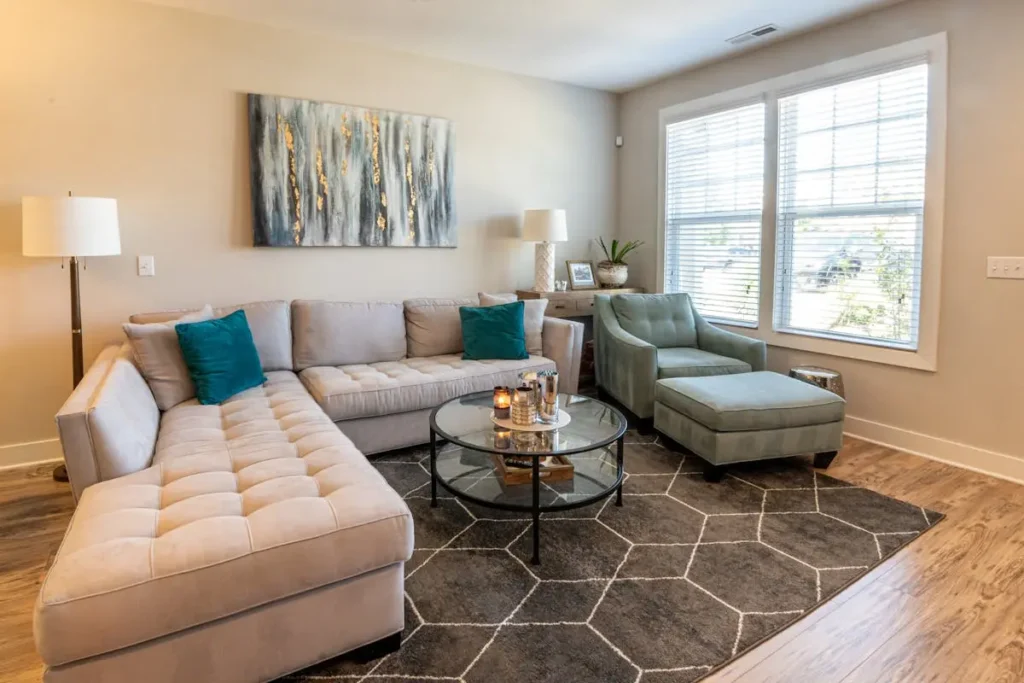
The L-shape sectional is the classic workhorse. It is made of two perpendicular segments that form a right angle.
- Best for: Corners, standard rectangular living rooms, and open-plan spaces where you want to “draw a line” between living and dining.
- Why I like it: In my experience, this is the most forgiving option. It works in both medium and larger rooms and feels intuitive to place.
- Use it when: You have one main wall for the TV or fireplace, and you want the sectional to wrap around that focal point.
H3: 2. The U-Shape
A U-shaped sectional adds another return, creating three sides of seating. It feels like a built-in conversation pit without the renovation.
- Best for: Large living rooms, media rooms, and families who host often.
- Pros: Incredible for movie nights and game evenings. Everyone faces inward, so conversation feels natural.
- Cons: It demands space. If you try to squeeze a U-shape into a modest room, you will destroy circulation.
I usually recommend U-shapes only when the room is at least around 15 x 15 feet or larger, or when you can float the sectional in an open plan.
H3: 3. The Chaise Sectional
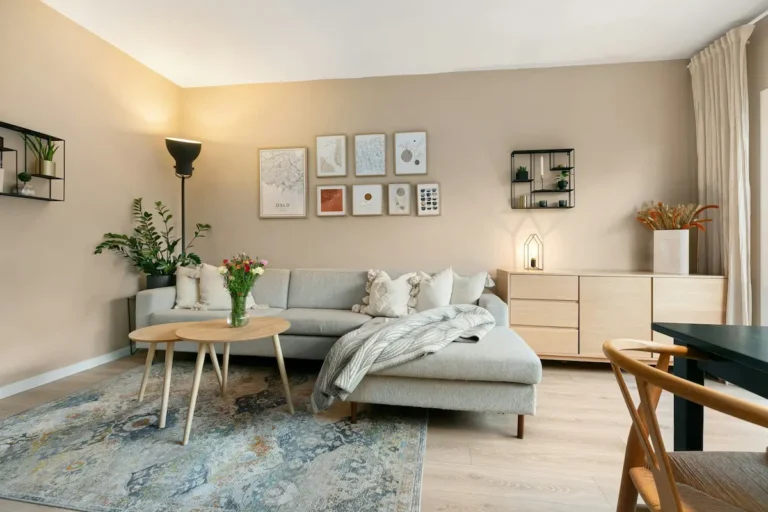
This is a standard sofa with one extended chaise on either the left or right side. It gives you that “put your feet up” comfort in a smaller footprint.
- Best for: Apartments, compact living rooms, long and narrow spaces.
- Why it works: You get lounge seating for one or two people without committing to a full L or U.
- Tip: If your room is tight, a chaise sectional is usually a better idea than an L-shape. It reads lighter and leaves more breathing room for walkways.
H3: 4. The Modular Sectional
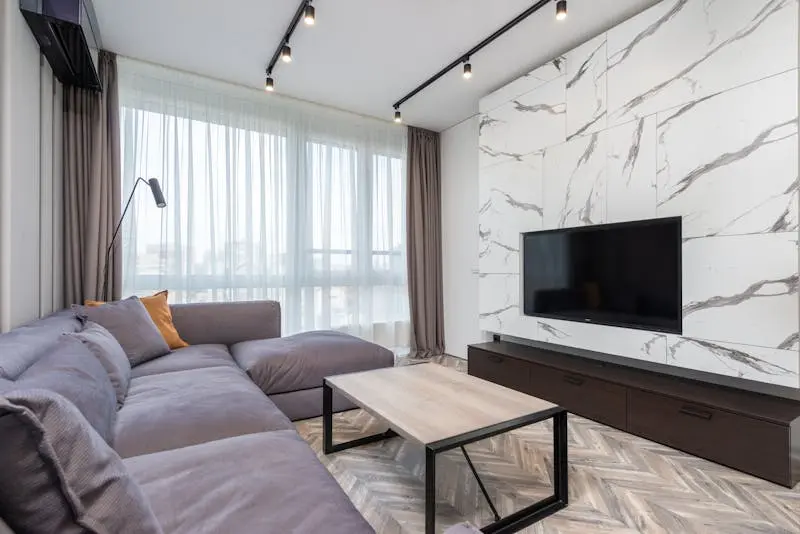
Modular sectionals are built from separate units (corners, armless chairs, chaises) that you can reconfigure.
- Best for: Renters, people who move often, or anyone who likes to “play” with layouts.
- Pros: You can start with a small configuration and add pieces over time.
- Cons: Cheap modular sets can slide apart easily, so I recommend checking for hidden connectors underneath.
In small spaces, a compact modular sectional is incredibly practical. You can experiment with different small living room sectional layout ideas without buying new furniture every time.
H2: Critical Layout Rules: Will It Fit?
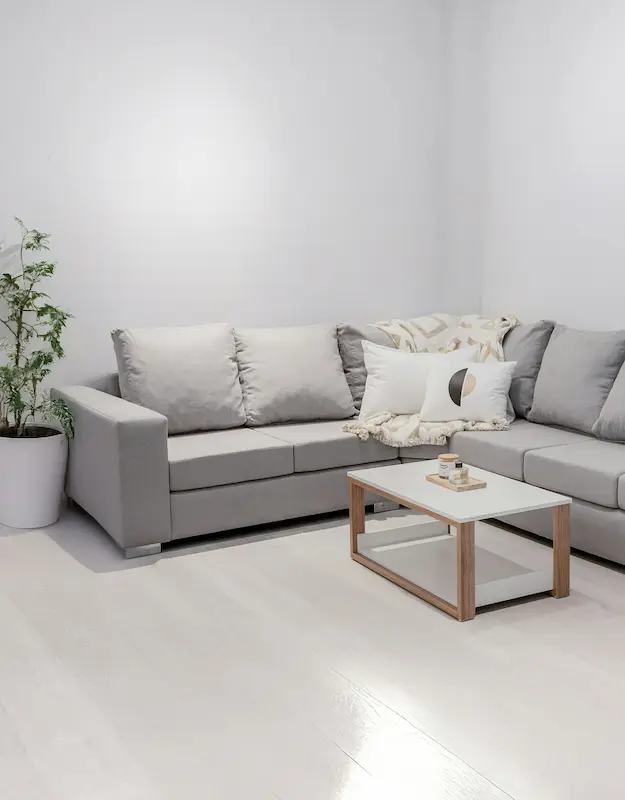
Before you fall in love with a sectional on a website, you need to know if it can actually live in your room. This is where numbers matter.
The “Traffic Flow” Math
You should always leave 30–36 inches of clear space for walkways around the sectional.
- Around the back and sides: Aim for at least 30 inches so people do not twist sideways to pass.
- Between the sectional and other large pieces (like a media console): Again, 30 inches is a comfortable minimum.
If the sectional footprint plus 3-foot walkways on the “traffic sides” do not fit on your floor plan, size down. In my experience, ignoring this rule is the number one reason a room feels cramped.
The “Coffee Table” Gap
The distance between the front edge of your sectional and the coffee table matters for comfort.
- Ideal range: 14–18 inches.
- Closer than 14 inches: You feel cramped, especially when standing up.
- Farther than 18 inches: You will constantly lean and overreach.
When you sketch your layout, draw in the coffee table and check that this gap works with the sectional depth.
Left-Arm vs. Right-Arm Facing (LAF/RAF)
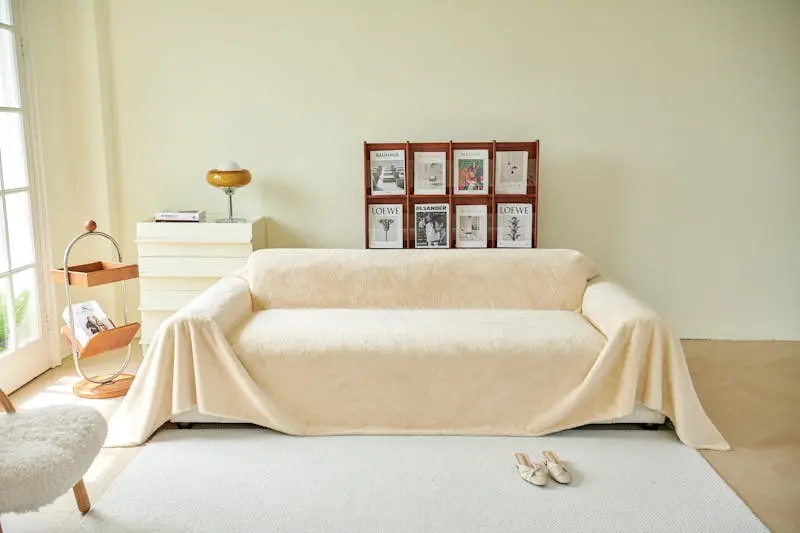
This is where a lot of people get confused.
- When manufacturers say Left-Arm Facing (LAF) chaise, they mean: As you stand in front of the sectional and look at it, the chaise is on your left.
- Right-Arm Facing (RAF) means the chaise is on your right when you face the sofa.
Do not think about it from the perspective of you sitting on the sofa. Always imagine you are standing in front of it, looking at it head-on. I recommend literally drawing an arrow on your floor plan and writing “I am standing here” to avoid mistakes.
H2: 7 Sectional Layout Ideas for Any Room
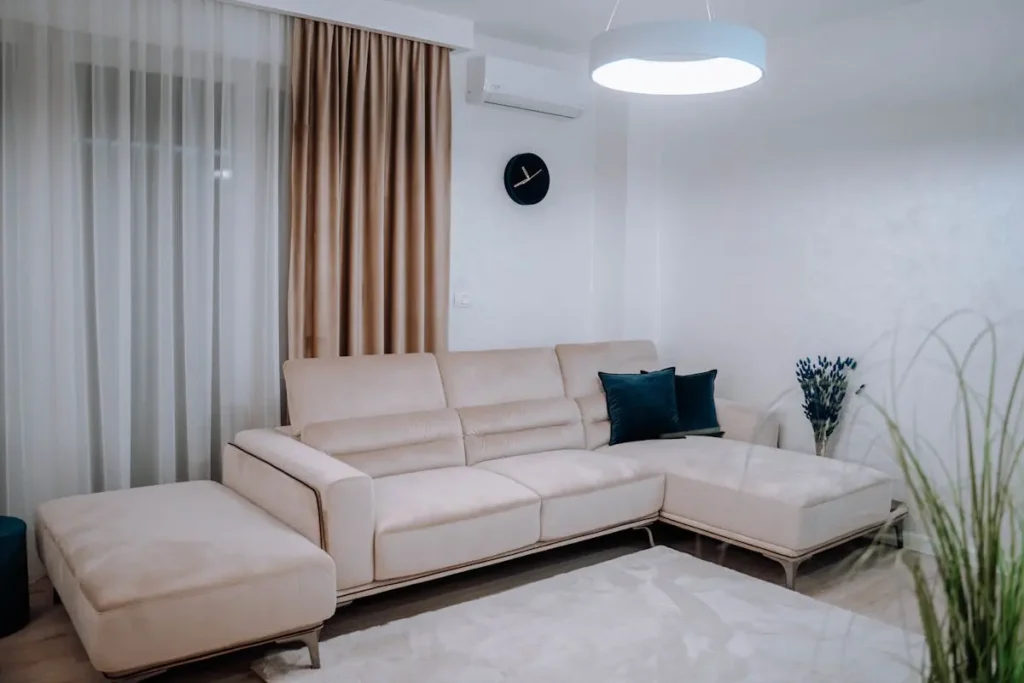
Once you understand clearances, you can get playful with placement. Here are layout ideas you can adapt to your own space.
The Corner Tuck
This is the classic L-shape tucked neatly into a corner.
- Best for: Small and medium rooms where you want maximum seating with minimal footprint.
- How to do it well:
- Place the longer side of the sectional along the longest wall.
- Add a single accent chair opposite the open side if there is space.
- Use a larger rug that extends beyond the sectional’s front legs to visually “stretch” the room.
For many small living room sectional layout ideas, the corner tuck is the most efficient starting point.
The “Floating” Zone
Instead of pushing the sectional against the wall, you float it in the middle of the room.
- Goal: To divide open-concept spaces into zones (Living / Dining / Workspace) without adding walls.
- How to set it up:
- Place the back of the sectional facing the dining area or kitchen.
- Add a slim console table behind the back for lamps and storage.
- Ensure that 30–36 inches of passage space still exists behind the sectional.
The Fireplace Face-Off
Here, the sectional frames the fireplace or TV wall as the hero.
- One option is a U-shape facing the fireplace.
- Another is two chaise sectionals facing each other with a coffee table in between, creating a very cozy, formal conversation space.
I like this approach in larger rooms when the goal is “lounge and talk,” not just “watch TV from every angle.”
The Window Frame
If your living room has a great view, you do not want the sectional to block it.
- Choose a low-profile sectional that sits below the window sill.
- Float it slightly forward so the back does not crush against the glass.
- Add occasional chairs at angles so everyone can enjoy both the view and the conversation.
The Narrow Room “Rail”
In long, narrow spaces, place the sectional along one long wall rather than trying to center it.
- Pair it with a narrow, oval or rectangular coffee table.
- On the opposite wall, use shallow storage (like wall-mounted shelving or a shallow console) to avoid squeezing circulation.
The “Conversation Plus TV” Layout
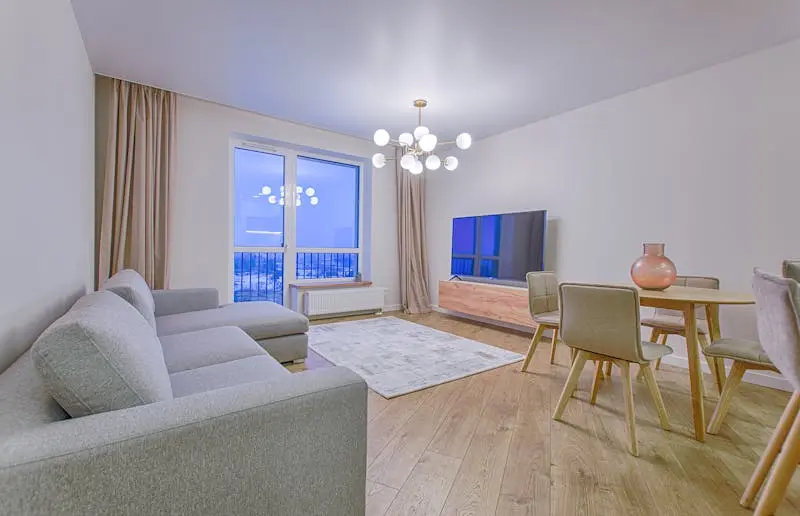
If your room has to serve both as a TV room and a social zone:
- Position the sectional so most seats can see the TV, but add one or two accent chairs at 45-degree angles.
- This way, you can pivot between “everyone faces the screen” and “everyone faces each other.”
The Sectional and Dining Combo
In very small apartments, the sectional often shares space with a dining table.
- Float the sectional so the back visually separates the living area.
- Use a round or oval dining table behind the shorter side of the sectional to soften circulation.
H2: Trending Styles & Materials for 2026
Even though this is a buying guide for long-term use, it helps to know what feels current in 2026 so your room looks fresh, not dated.
Curved Sectionals
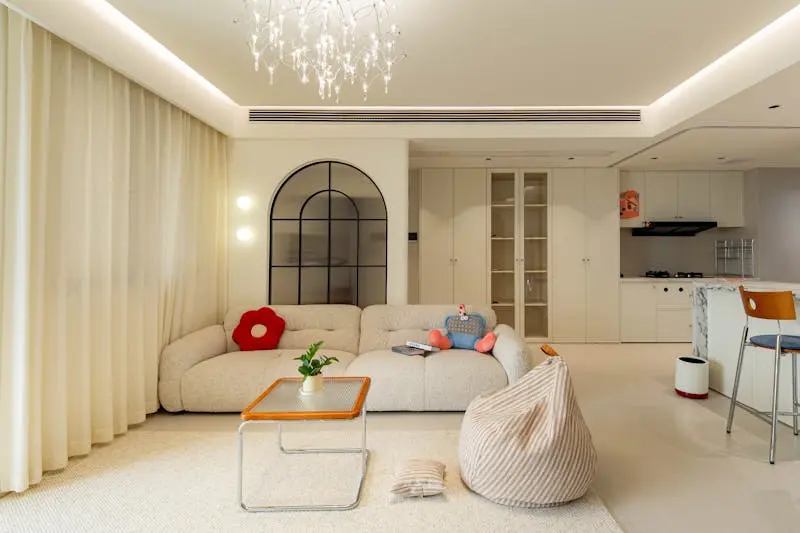
Curved sectionals are everywhere right now.
- Why they work: They soften the room’s geometry and feel welcoming.
- Best in: Larger rooms, or at least spaces where you are not fighting tight corners.
If you choose a curved sectional, keep other elements simpler so the shape remains the star.
Low-Slung “Cloud” Sofas
Deep, relaxed, almost mattress-like “cloud” sectionals are still very popular.
- Pros: Extremely comfortable and inviting.
- Cons: They can be visually heavy and tricky in small spaces.
I prefer using them in medium to large rooms and pairing them with lighter coffee tables (glass, slim metal) to keep the look balanced.
Performance Velvet and Textured Weaves
For families and pet owners, performance fabrics are non-negotiable.
- Performance velvet: Adds a richer, cozy feel without sacrificing durability.
- Textured weaves: Hide small stains and wear far better than flat, smooth fabrics.
If your living room is heavily used, I recommend prioritizing performance fabric over ultra-trendy colors. You will thank yourself in three years.
H2: Small Living Room? Yes, You Can Have a Sectional.
A sectional in a small living room can absolutely work, but it needs to be the right one.
Choose Apartment-Sized Sectionals
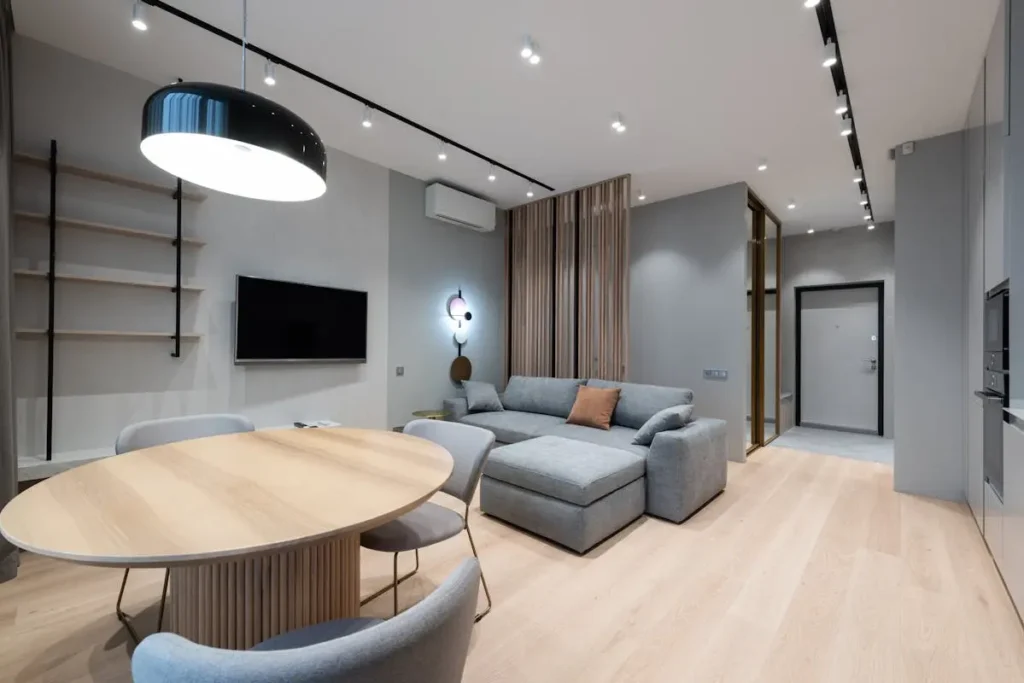
Look for:
- Compact depths: Around 34–37 inches instead of ultra-deep lounge styles.
- Slim arms: Chunky arms waste precious width.
- Reversible chaise: You can move the chaise from left to right if you change layout or move homes.
Reversible chaise styles are my go-to for renters who want flexibility without going fully modular.
Use Legs to Create Visual Space
Skirted sectionals feel heavier because they hide the floor.
- Sectionals with visible legs allow light to pass underneath, making the room feel more open.
- Pair them with a rug that extends beyond the sectional to anchor the entire seating zone.
Edit Everything Around the Sectional
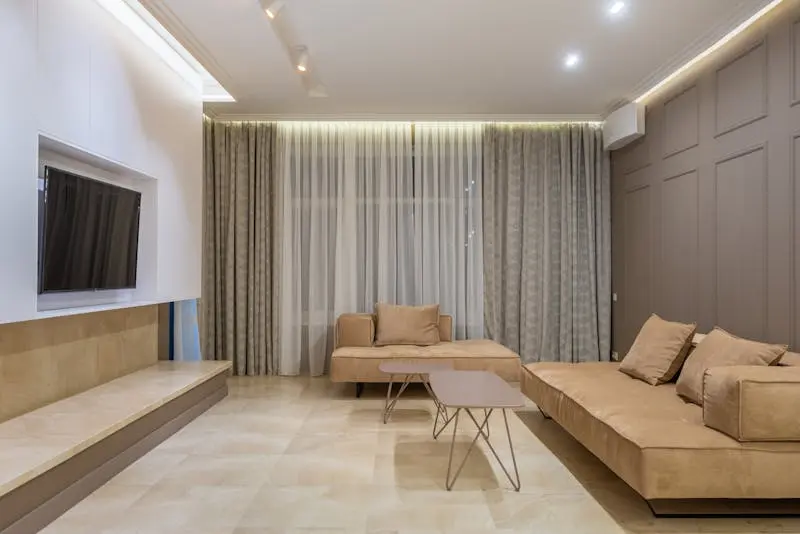
In a small space, the sectional is the main character.
- Keep side tables slim and vertical (like pedestal or C-shaped tables).
- Use wall-mounted lighting to free up floor space.
- Limit decor on the walls to a few larger pieces instead of lots of small frames.
H2: Sectional Sofa Comparison Table
Here is a quick comparison to help you narrow down options:
| Style | Best Room Size | Best For | Cons |
|---|---|---|---|
| U-Shape | Large (approx. 15×15 ft or more) | Movie nights, big families, media rooms | Can be hard to navigate around; visually heavy |
| L-Shape | Medium and large | Zoning open plans, corners | Fixed orientation; less flexible than modular |
| Chaise | Small to medium | Apartments, solo lounging, couples | Limited seating direction; chaise can block paths if mis-placed |
| Modular | Any (with planning) | Renters, frequent movers, layout flexibility | Cheaper models may shift; can look messy if pieces are not aligned |
Use this table as a starting point, then test your favorite style on a scaled floor plan before buying. I always recommend taping the footprint on the floor with painter’s tape to feel the volume in real life.
FAQ Section
What is the difference between a modular and a sectional sofa?
A sectional is usually sold as a fixed configuration (for example, an L-shape with a left-facing chaise). You can sometimes detach pieces, but the design assumes a specific layout.
A modular sofa is built from individual units that are designed to be rearranged. You can add or remove seats, swap a chaise to the other side, or turn a U-shape into an L-shape as your room or lifestyle changes.
If you like to experiment with layouts, modular is worth the investment. If your room has one clear, unchanging layout, a classic sectional is perfectly fine.
How big should a rug be for a sectional sofa?
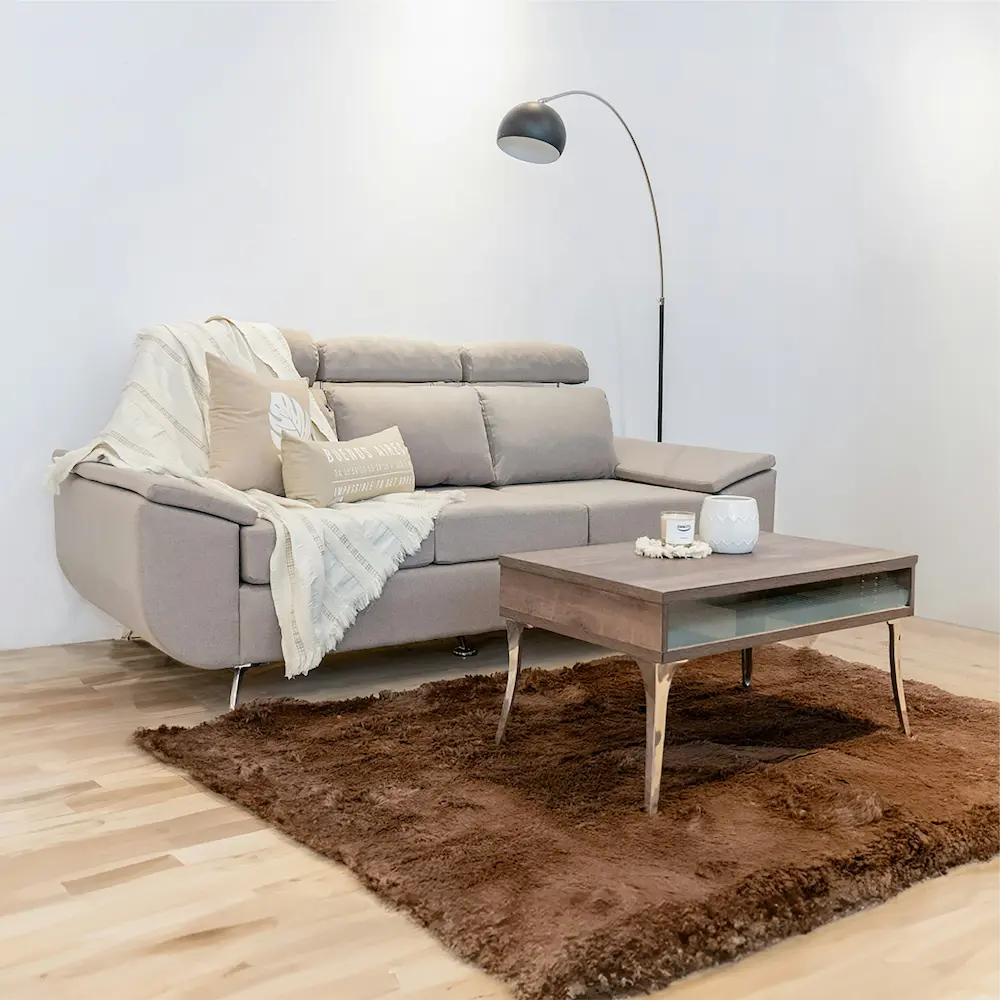
As a rule of thumb, the rug should be large enough that all front legs of the sectional sit on it, with some rug extending beyond.
- For medium rooms, this often means an 8×10 rug.
- For larger rooms and U-shapes, you may need a 9×12.
Avoid small rugs that only float under the coffee table. They cut the room visually and make the sectional feel disconnected from the rest of the space.
Can I put a sectional in a small living room?
Yes, as long as you:
- Choose a compact L-shape or chaise sectional with slimmer proportions.
- Respect the 14–18 inch coffee table gap and aim for 30 inches of clearance where people walk.
- Keep surrounding pieces light and minimal so the sectional can be the anchor, not the bully.
In many small rooms, a well-sized sectional plus one accent chair actually works better than a sofa and two bulky armchairs. You gain more comfortable seating in a cleaner, more unified shape.
If you treat your sectional as a piece of architecture rather than just another sofa, it will reward you with a living room that feels intentional, social, and calm for years—no buyer’s remorse, no blocked walkways, just a layout that finally makes sense.