Natural Light Bathroom Ideas: Architecture & Illusions (2026 Guide)
Natural light is the one thing you can’t fake with a pretty candle.
Get it right and your bathroom feels clean, spa-like and expensive. Get it wrong and you’re stuck with a gloomy box where mirrors do nothing and even white tiles look flat.
The twist? Bathrooms are the hardest rooms to brighten because you’re always juggling privacy and light. You want sun, but you also don’t want to wave at your neighbours from the tub.
In this guide, I’ll walk you through architectural upgrades and clever illusions so you can maximise daylight, protect privacy, and make even dark bathrooms feel brighter using reflective tiles, mirrors and simple tricks.
Structural Ways to Add Light (The Renovation Layer)
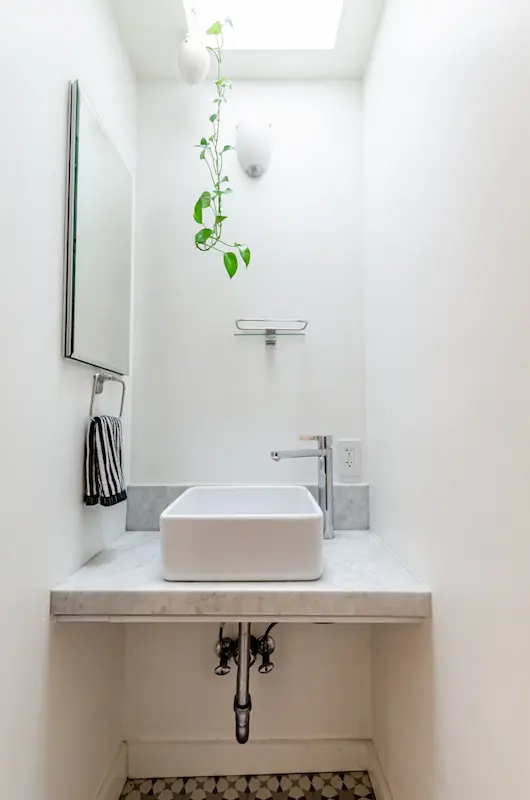
If you own your home (or have a very kind landlord), architectural changes are the most powerful natural light bathroom ideas you can use. These are the “hard” moves that change how the room feels all day, every day.
Solar Tubes (Tubular Skylights)
Think of a solar tube as a periscope for sunlight. A small dome on the roof catches daylight and pipes it down a reflective tube into your bathroom.
Why I like them:
- Ideal for internal bathrooms with no external wall.
- Much cheaper and less invasive than a full skylight.
- They flood the space with soft, diffuse light without direct glare.
In my experience, one decent-sized solar tube can make a windowless bathroom feel like it has a big frosted window. If you’re renovating anyway, I’d absolutely price this in before spending on “fancy tiles”.
Clerestory Windows
Clerestory windows are long, narrow windows placed high up near the ceiling.
Why they’re clever:
- They sit above eye line, so you get maximum light and zero need for curtains.
- Perfect for privacy-sensitive locations (ground-floor, shared walls).
- They can run almost the full width of the wall, which gives an even wash of daylight.
Design tip: Pair a clerestory window with light, reflective wall tiles beneath it so the light can bounce deeper into the room.
Transoms: Borrowing Light from Other Rooms
If adding an external window isn’t possible, you can still borrow light from nearby spaces.
The trick: a glass transom above the bathroom door.
- It pulls daylight from a bright corridor, bedroom or living area.
- When done with frosted or reeded glass, it preserves privacy.
- It’s less invasive than moving walls or cutting a new window opening.
I like this especially for apartments where structural changes are limited but you still want that “is it daylight or not?” feeling in the bathroom.
Amplifying Light – The “Bounce” Technique
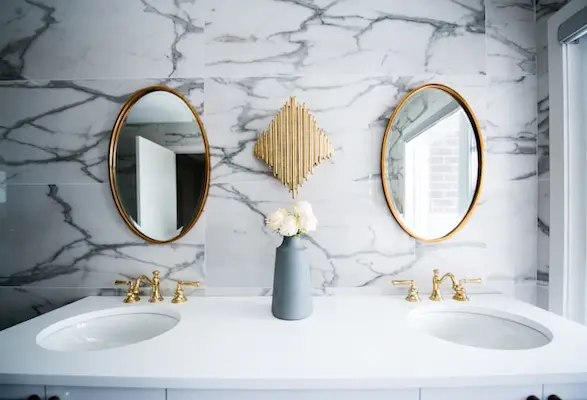
Once the architecture is doing its best, the next step is to treat light like a ball: your job is to bounce it around the room as many times as possible.
This is where reflective surfaces, mirrors and tile choices come in – the key for reflective bathroom tiles for dark rooms.
The Mirror Multiplier
Most people slap a small mirror above the sink and call it a day. That wastes half its potential.
Smarter options:
- Full-height mirror on the wall perpendicular to the window.
- This pulls light sideways into the room, not just back at the window.
- If the room is narrow, consider a wall-to-wall mirror above the vanity.
- The entire wall becomes a light reflector and visually doubles the width.
If you have the budget, I prefer one oversized, clean-edged mirror instead of several small decorative ones. Function first, gallery wall later.
Surface Selection: Matte vs Gloss
For natural light, you want to be intentional about how each surface interacts with it.
- Floors:
- Choose matte or low-sheen for safety (non-slip) and to avoid harsh glare.
- Walls:
- Use glossy or semi-gloss tiles in pale shades. These act like soft mirrors and bounce light deeper into a dark room.
This is where reflective bathroom tiles for dark rooms shine (literally). A glossy white, cream or very light grey on the shower wall opposite the window can make the whole space feel one size bigger.
Glass Barriers Instead of Curtains
Shower curtains are light thieves. They create a big solid block right where you need transparency.
If moisture and budget allow:
- Swap heavy curtains for frameless glass panels.
- Choose clear glass rather than frosted for the main divider, and handle privacy at the window instead.
If privacy is non-negotiable, you can always combine:
- Clear glass shower screen
- Frosted / reeded glass at the window
That way, light still travels through the entire room while views stay blurred.
Privacy vs Light – The Eternal Struggle
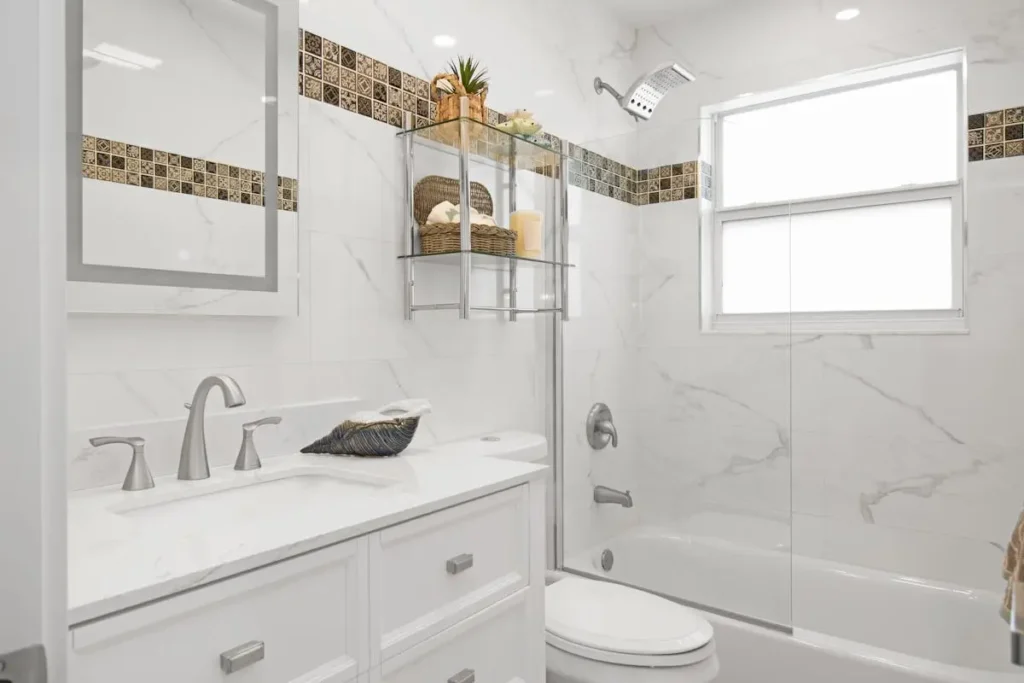
Now the tricky part: keeping all that beautiful natural light without feeling like you’re on display. This is where smart bathroom privacy window ideas come in – frosted glass, films, blinds and even plants.
Switchable Glass (The Fancy Option)
If you’re doing a high-end remodel, switchable smart glass is worth considering.
- At the touch of a button, it goes from clear to frosted.
- You can shower with full privacy and then switch it back to clear to maximise light.
It’s not cheap, but for a street-facing bathroom with a great view, it’s one of the best “no compromise” solutions.
Privacy Films: Frosted, Reeded, and Rice Paper
For most people, high-quality static window films are more practical.
Good films can:
- Let in up to 80–90% of the light
- Completely blur any detailed view from outside
- Be applied and removed without damaging glass
Options I recommend:
- Plain Frosted: Clean, minimal, works with any style.
- Reeded / Fluted: Vertical “ribbed” texture – very Scandi, adds subtle pattern.
- Rice Paper Effect: Softer, more organic look that diffuses light beautifully.
If you’re in a rental, this is the easiest way to get privacy without losing daylight and without making your landlord nervous.
Bottom-Up Blinds
Most people instinctively cover the top half of the window with blinds. In a bathroom, it’s often smarter to do the opposite.
Bottom-up blinds start at the window sill and pull upwards, so you can:
- Block sightlines at eye level
- Keep the upper part of the window open for light
I like these for urban apartments where you’re overlooked from across the street, but still want that “morning sun on tiles” feeling.
Plant Screening
If you want privacy and softness, use plants as filters.
Good picks:
- Tall, slim plants on the sill that sit in front of the glass, not inside the room.
- Trailing plants on high shelves that droop down across part of the window.
They act like a natural net curtain, breaking up the view but letting light flow in.
Just keep the layout clean: one or two generous plants are better than ten tiny pots cluttering the sill.
H3: FAQ
Does a skylight add heat to a bathroom?
Yes, any opening to the sky will bring extra heat in summer. If you live in a hot climate, I recommend vented skylights or solar tubes with diffusers. A vented model can also help release steam after a shower, which is great for preventing mould.
What is the best paint color to maximise natural light?
Look for a high LRV (Light Reflectance Value) white or off-white. The higher the LRV, the more light it bounces back into the room.
- For north-facing or shaded bathrooms, avoid icy, cool whites – they can look grey and flat.
- Instead, choose a soft warm white with a slight beige or cream undertone to mimic sunlight.
If you’re already tiled in cool white, a warmer white on the ceiling can balance the temperature.
Can you add a window to a shower?
Yes, and done properly it can be stunning.
Key rules:
- Use vinyl or fiberglass frames (they won’t rot like wood).
- Go for tilt-and-turn or awning styles that can open for ventilation without inviting rain straight in.
- Choose frosted, reeded or patterned glass so you don’t rely on curtains that stay wet and mouldy.
If you’re worried about maintenance, keep the sill slightly sloped so water runs off instead of pooling.
Natural light is half architecture, half illusion. If you can’t cut a new window, you can still design your way to a brighter bathroom with reflective tiles, clever mirrors, and smart privacy solutions.
Start with one thing: maybe it’s a solar tube, maybe it’s a full-height mirror opposite your existing window, or just swapping a heavy curtain for reeded film. Those small, technical tweaks usually do more for the space than another decor accessory ever will.