Small Bedroom Design 2026: The Shift From “Tiny” to Truly Considered
A small bedroom used to mean compromise: white walls, a mirror over the dresser, and a bed squeezed wherever it happened to fit. In 2026, that formula feels dated. The new standard is not “making do” but designing a small bedroom that feels intentional, layered, and quietly luxurious.
Think of it as micro-living luxury. You still have the same footprint, but every inch is working harder, the layout is calmer, and the room feels like it belongs in 2026 design standards, not in a generic rental from a decade ago.
If you’re tired of hearing the same advice on small spaces, this guide is your reset. We’ll look at the aesthetics that are actually trending, the layout math that makes a small bedroom flow, and the storage tricks that disappear into the architecture instead of sitting on top of it.
The Top Small Bedroom Trends for 2026 (The Aesthetic Angle)
In 2026, small bedroom trends are much less about “hiding” the fact that the room is small and much more about celebrating it. You’ll see richer colors, more texture, and bolder decisions, but all of it is grounded in practicality.
Biophilic Immersion
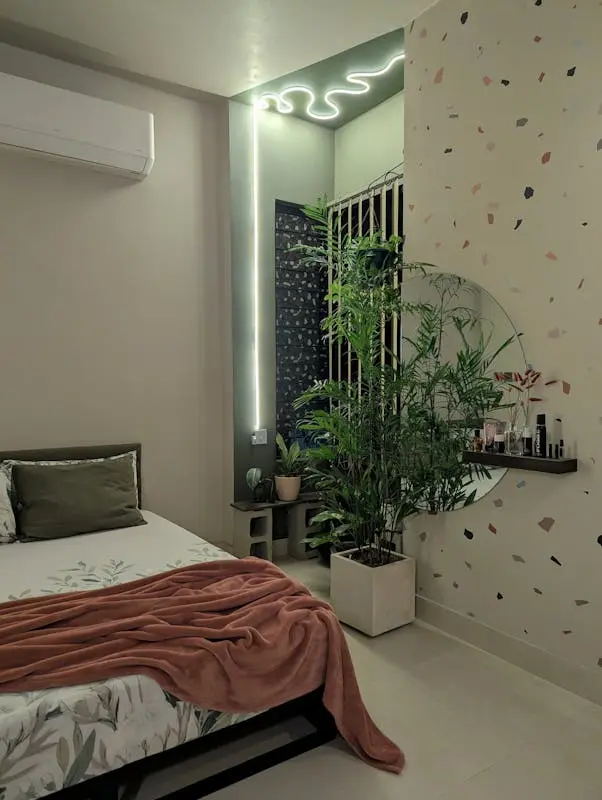
Bringing nature into a small bedroom is no longer about placing a single plant in the corner and calling it a day. Biophilic design has shifted toward immersive, space-saving solutions that work within tight footprints.
Instead of big floor pots that compete with your bedside table, think vertical. A narrow moss panel, a slim wall planter rail with trailing greenery, or a shallow ledge with small potted herbs can all introduce life without costing you floor space. These elements soften sharp corners, improve the visual “air” in the room, and make a small footprint feel less boxed-in.
I like using a simple palette here: warm white walls, a soft wood floor or rug, and then layers of green through plants and textiles. It keeps the small bedroom feeling calm rather than turning into a mini jungle that’s difficult to maintain.
The “Dopamine Decor” Palette for Small Rooms
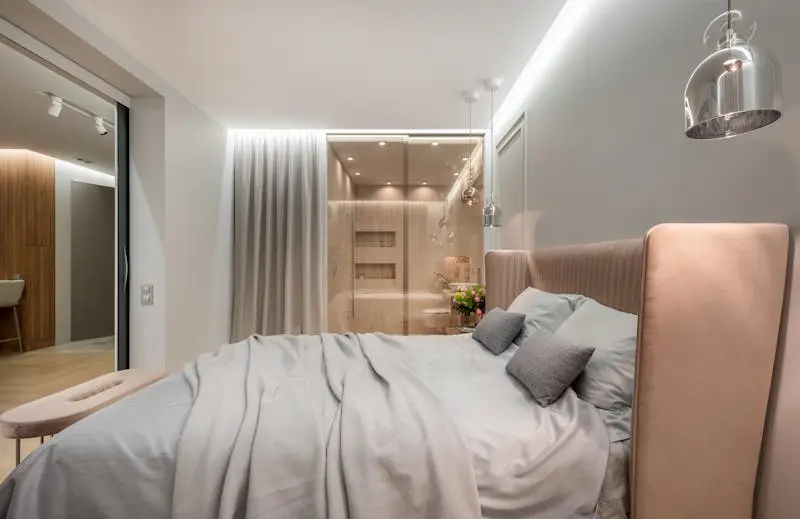
Greige minimalism has finally met its match. Dopamine decor is the feel-good, color-rich trend that focuses on creating rooms that make you genuinely happier to be in them, using saturated color, joyful patterns, and personal objects you actually love.
In small bedrooms, dopamine decor for small rooms is not about throwing every shade onto the walls. It’s about choosing a mood-boosting palette and committing. One of the easiest ways to do that in 2026 is through color drenching: painting the walls, skirting, and even the ceiling in a single hue or in very close tonal variations. This blurs boundaries and makes the envelope of the room feel more like a jewelry box and less like a standard white cube.
A few palettes that work particularly well in a small bedroom:
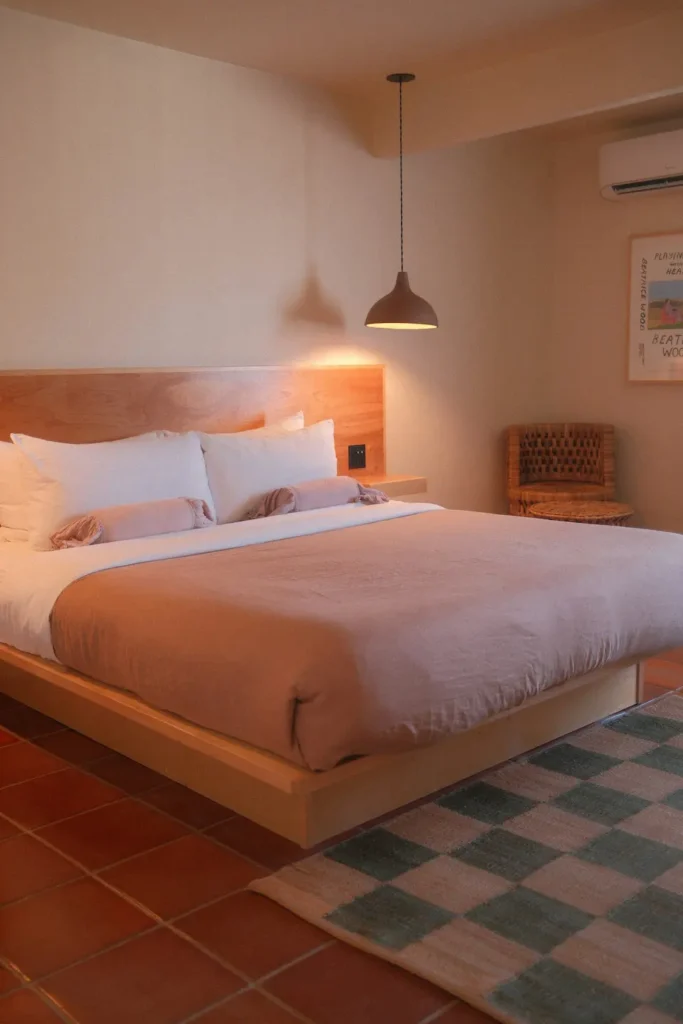
- Soft Terracotta:
- Walls and ceiling: a muted terracotta with a touch of grey (think somewhere between a clay pot and cinnamon).
- Trim and doors: one shade deeper in the same family for subtle contrast.
- Textiles: cream, sand, and woven jute to keep the room grounded.
- Sage Green Monochrome:
- Walls: a mid-tone sage with enough grey to feel calm rather than neon.
- Ceiling: half-strength of the same color so the room feels wrapped but not heavy.
- Bedding: off-white or warm stone linen to stop the palette from feeling too cold.
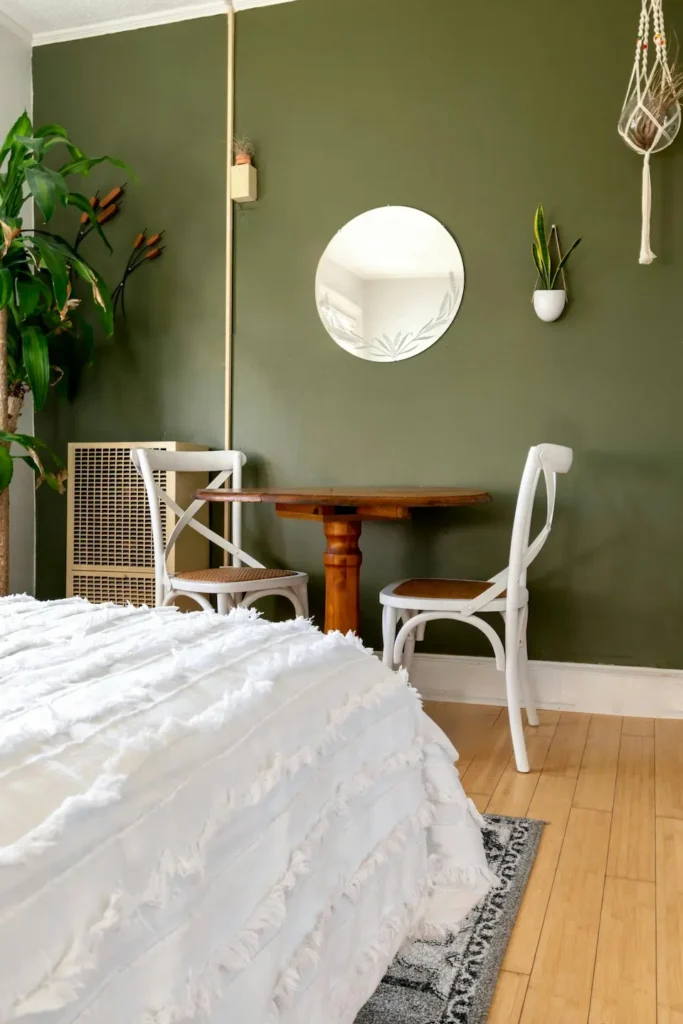
- Inky Blue Cocoon:
- Walls and ceiling: a deep, almost-navy blue for a nighttime cocoon effect.
- Accents: warm woods, brass or black hardware, and ecru bedding to balance the depth.
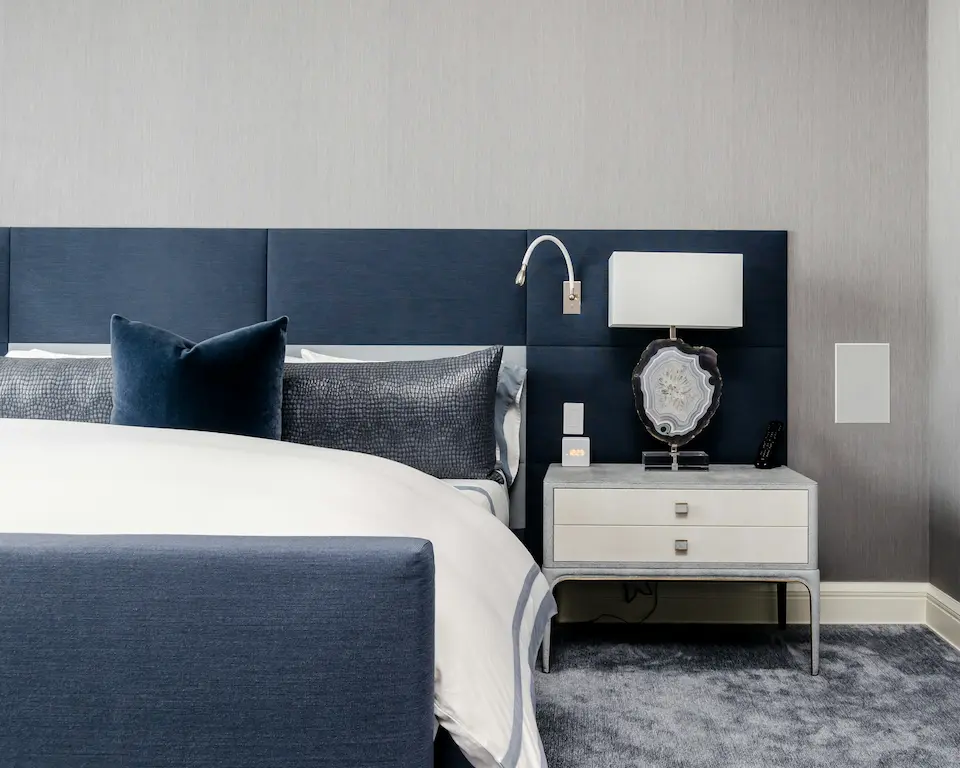
All of these palettes work beautifully with warm white lighting (around 2700K) so the room feels cozy rather than stark at night.
Textured Minimalism
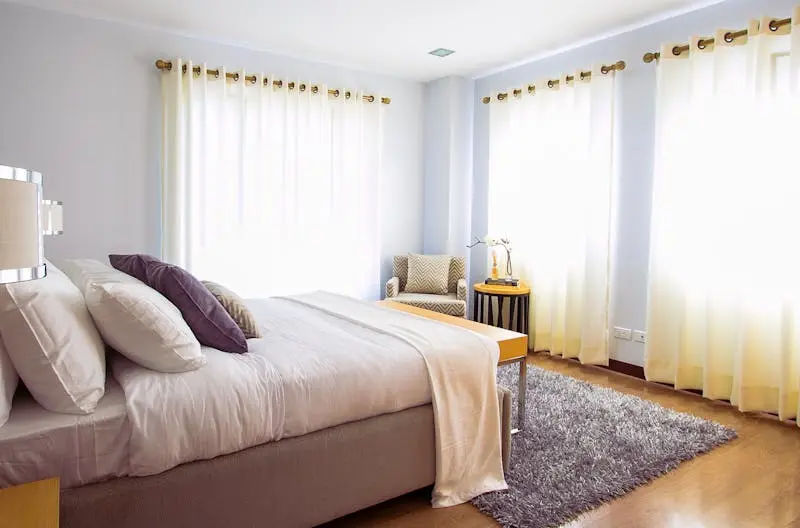
Minimalism is still very present in 2026 small bedroom design, but it’s less about bare white surfaces and more about restraint plus texture. Think of it as textured minimalism: fewer objects, more depth in the pieces you do choose.
Instead of filling every wall with art and every surface with decor, you can let the materials do most of the work. A ribbed wood headboard, linen or cotton bedding, a wool or jute rug, and velvet or boucle cushions add enough visual interest that you don’t need a lot of extras.
This approach is especially helpful in a small bedroom because it keeps the visuals quiet. You still get a rich, layered look, but you don’t end up in a space that feels visually cluttered. The room stays easy to clean, easy to live in, and restful on the eyes.
The “Layout Math”: 3 Floor Plans for Small Rooms
A pretty palette is nice, but the layout is what makes a small bedroom either work or fight you every day. The goal in 2026 is simple: give the bed priority, clear the circulation paths, and then let storage fill the gaps rather than the other way around.
Below is a quick layout table you can use as a starting point when you’re planning a small bedroom layout 2026 style.
| Layout Type | Best For | Key Furniture Piece | Approx. Space Saved* |
|---|---|---|---|
| The Galley | Long, narrow rooms | Slim platform bed on the longest wall | Around 10–15 sq ft of clear path |
| The Corner Anchor | Compact, roughly 10×10 bedrooms | Standard bed tucked into a corner | Around 8–12 sq ft of floor area |
| The Loft | Small rooms with high ceilings | Loft or raised bed over storage/desk | Around 20–30 sq ft of free space |
*Space saved is an approximate range compared with a conventional “bed in the center with two nightstands” layout.
Let’s unpack how each one actually works in real rooms.
The Galley
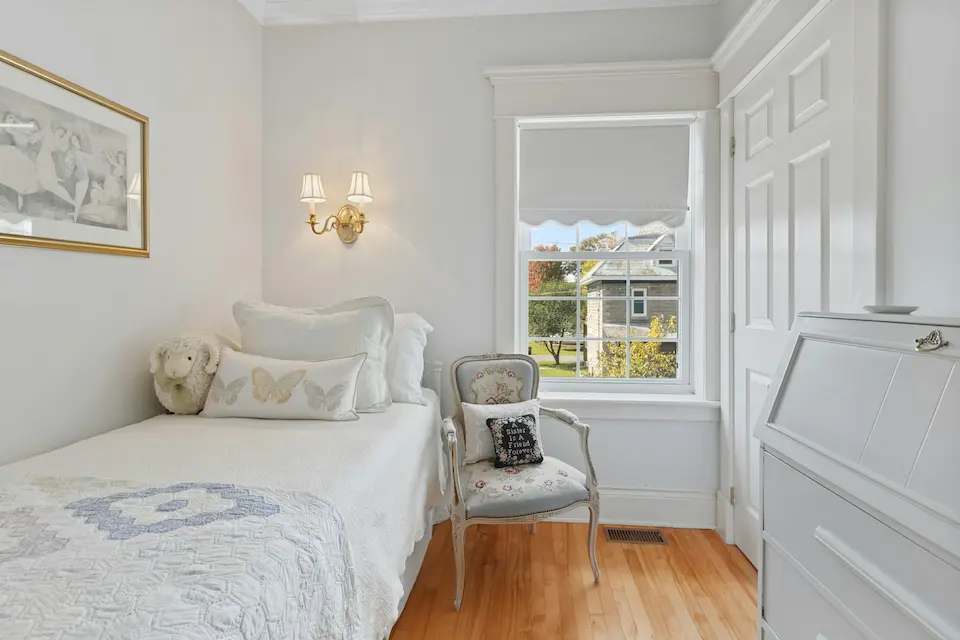
The galley layout treats your small bedroom almost like a compact corridor. The bed sits on the longest wall, with a clear walking strip on one side. This arrangement works particularly well in long, narrow rooms because it keeps the circulation straightforward instead of zigzagging around furniture.
To make this layout work:
- Choose a bed frame with a slim headboard and no bulky footboard.
- Use a single floating shelf or wall-mounted nightstand on the side with the most space.
- Keep dressers and wardrobes against the opposite wall, and run them in a straight line rather than stepping pieces in and out.
Designers often recommend placing the bed on the longest wall or facing the doorway in small rooms because it establishes the bed as the focal point and simplifies flow.
The Corner Anchor
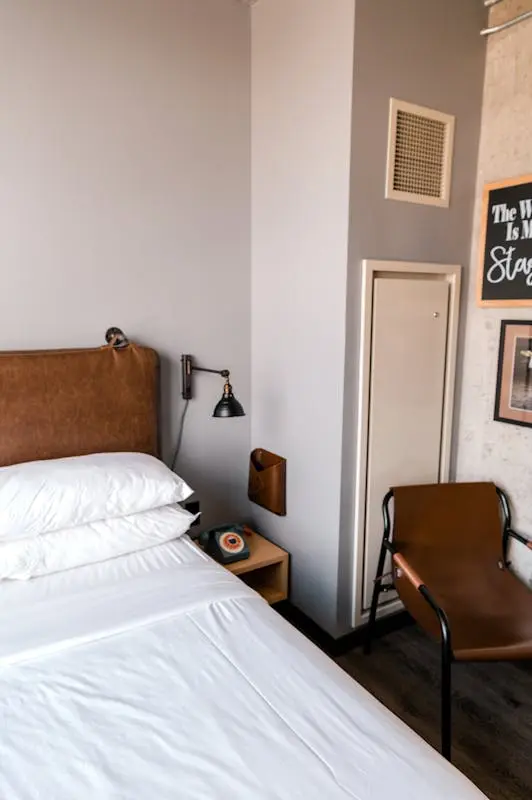
The corner anchor layout goes against the idea that a “grown-up” bedroom must have the bed perfectly centered with two identical nightstands. In a very small bedroom, pushing the bed into a corner or under a window can be the difference between feeling cramped and freeing up enough floor space to actually move.
To make this feel intentional, not like a student room:
- Use a full-height headboard that wraps the corner or runs along both walls, so the bed feels built-in.
- Keep one small nightstand or wall shelf on the open side. On the “closed” side, rely on the headboard for a ledge.
- Center lighting, artwork, or a fabric panel above the bed so the corner still reads as a focal point.
This layout is ideal for 10×10 bedrooms that need a desk, prayer corner, or extra wardrobe space, because it leaves you one larger clear zone rather than slicing the room into narrow strips.
The Loft
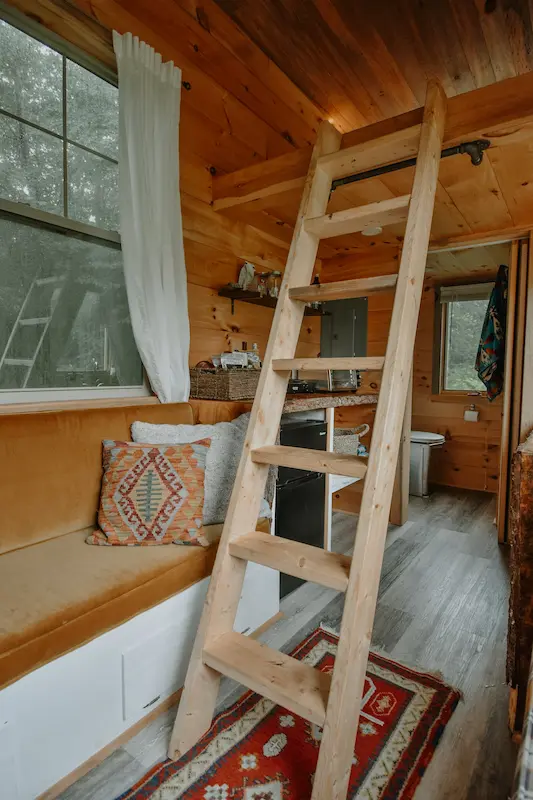
If you’re lucky enough to have generous ceiling height, a loft layout lets you borrow vertical space instead of fighting for floor area. In a small bedroom with a ceiling height above roughly 2.7 m, raising the bed and placing storage, a desk, or a reading nook below can dramatically change how the room functions.
Key details:
- Look for a loft bed with solid side panels or a partial wall to keep the sleeping area feeling secure.
- Keep the zone beneath the bed visually quiet: a compact desk, a built-in wardrobe, or a low seating area works well.
- Use warm, dimmable lighting under the loft so it feels like a cozy alcove, not a dark cave.
This layout is particularly helpful if you need a hybrid bedroom-and-work space but don’t want the desk to dominate the room.
5 “Invisible Storage” Hacks for Small Bedrooms
Storage in a small bedroom doesn’t need to scream “storage.” The best solutions feel like part of the architecture rather than separate furniture pieces squeezed in as an afterthought.
1. The Headboard Bridge
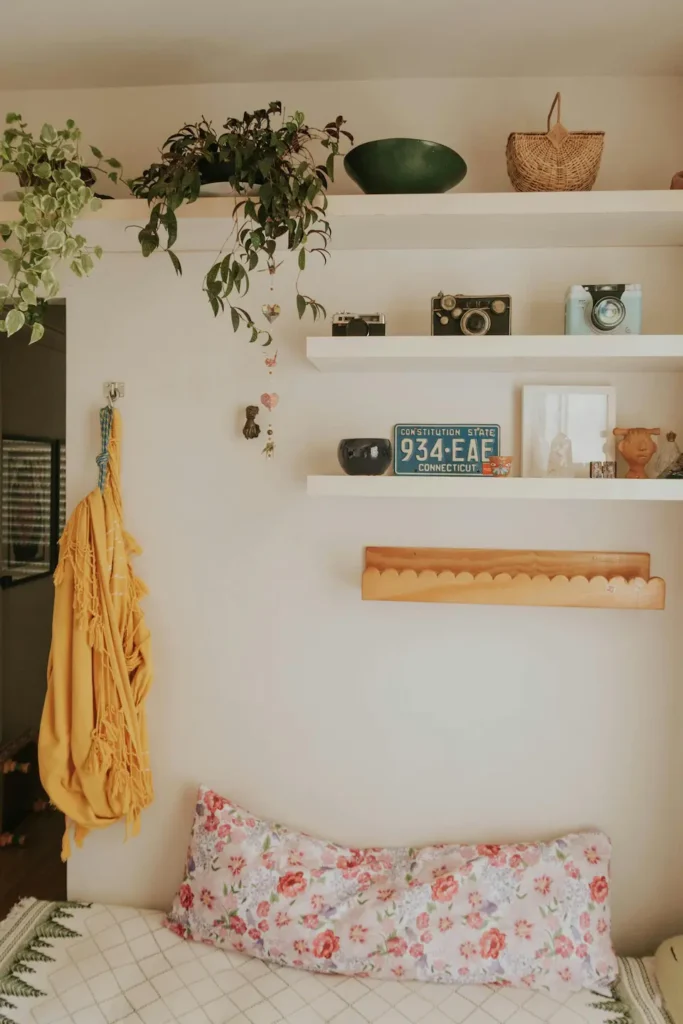
Instead of only using the space directly behind the bed, stretch the headboard wall into a bridge. Think of a slim cabinet or shelf that runs above the bed horizontally, connecting two tall units on either side.
This approach:
- Uses the upper wall zone that often sits empty.
- Keeps the floor clear around the bed.
- Gives you hidden storage for off-season bedding, books, and small items that don’t need to be out every day.
Keep the depth shallow (around 25–30 cm) so it doesn’t loom, and opt for a handle-free front in the same color as the wall if you want it to visually disappear.
2. Platform Living
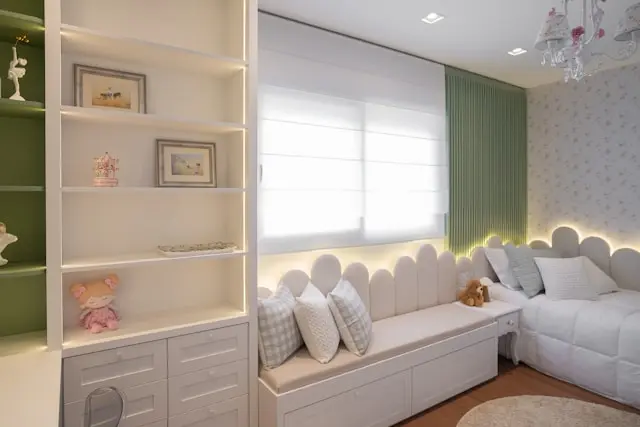
A platform bed with drawers underneath is one of the most efficient ways to reclaim space in a small bedroom, especially if you don’t have room for a separate chest of drawers.
A few guidelines to keep it practical:
- Aim for a total bed height of around 45–55 cm (including mattress) so it’s comfortable to sit on.
- Use full-extension drawers on at least one long side so you can access the entire depth.
- If one side of the bed is too close to a wall for drawers, use lift-up storage on that side or reserve it for rarely used items.
By turning the entire footprint of the bed into storage, you reclaim the equivalent of a small dresser without adding another piece into the room.
3. Sconces Instead of Table Lamps
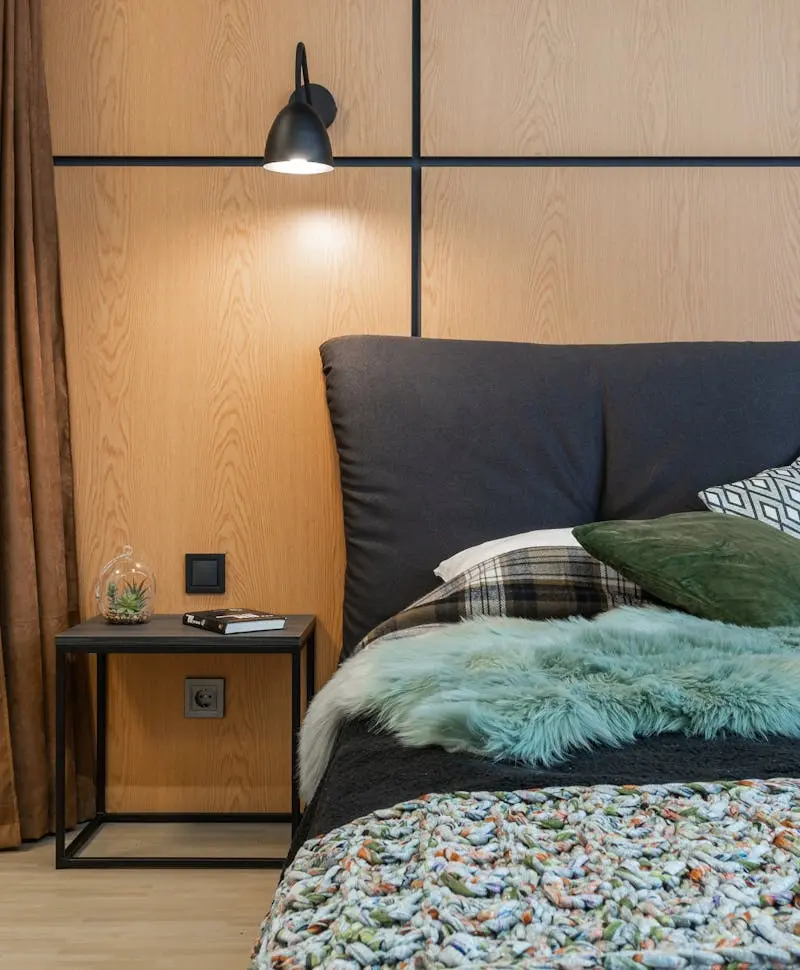
Small bedside tables disappear quickly when you place a large lamp on top of them. Swapping table lamps for wall-mounted sconces clears your nightstand surface, which immediately makes the room feel less cluttered.
For a small bedroom, I like to:
- Mount sconces at roughly 120–130 cm from the floor, depending on your bed height, so light falls comfortably on your book or tablet.
- Choose adjustable or swing-arm designs so the same light works for reading and soft ambient light.
- Use warm bulbs around 2700K so the light is sleep-friendly and flattering.
If hardwiring isn’t an option, look for plug-in or rechargeable sconces that mount like art but still free up the bedside surface.
4. The “Cloffice”
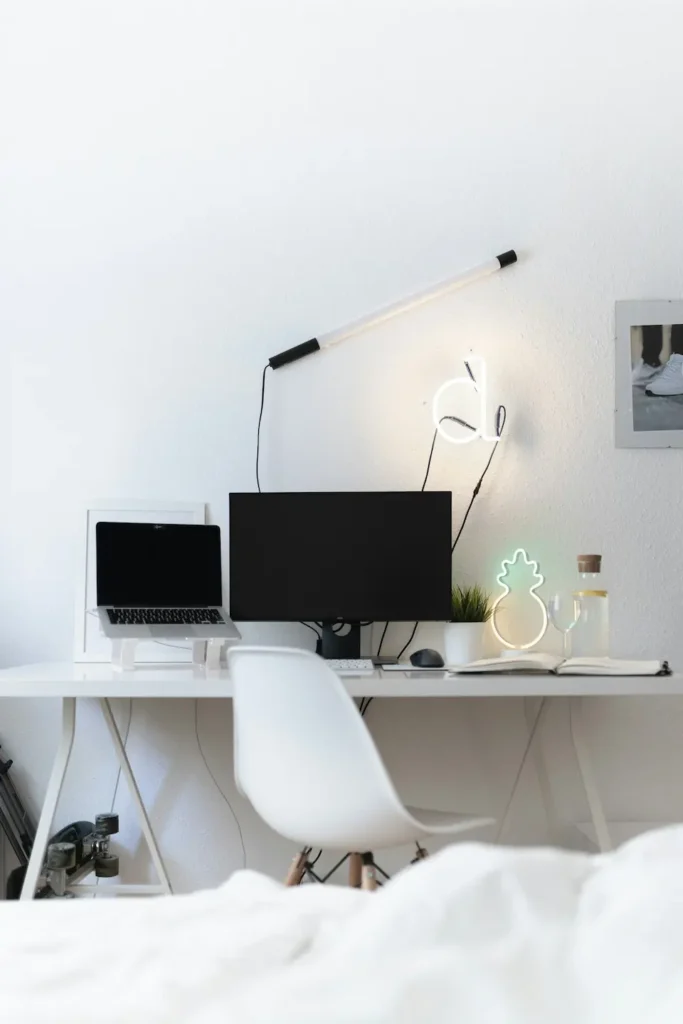
A cloffice (closet office) is simply a built-in or wardrobe unit that hides a compact work zone. For small bedrooms, this is one of the cleanest ways to accommodate hybrid work without feeling like you’re sleeping in an office.
The basic structure:
- A shallow work surface (about 45–50 cm deep) that folds down or slides out.
- Shelving above for files and tech, and a closed base cabinet for visual calm.
- Integrated sockets and a cable channel so wires aren’t snaking across the room.
When the “office” is closed, it reads like a regular wardrobe or cabinet, and your small bedroom goes back to being a bedroom.
5. Pocket Doors and Sliding Fronts
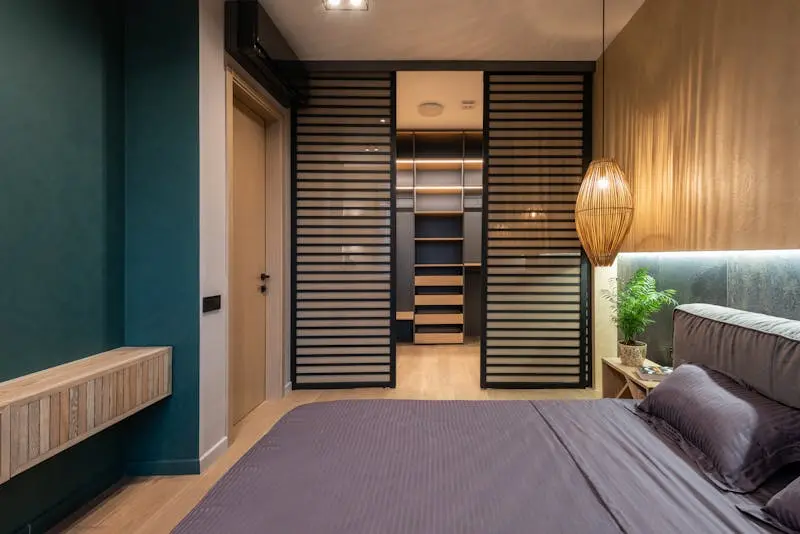
Standard swing doors steal a surprising amount of space in a small bedroom. A pocket door or a simple sliding door panel can give you that area back, both for the main door and for wardrobes.
If a full pocket door is not possible:
- Try a surface-mounted sliding door on a track for wardrobes.
- Use mirrored sliding doors to double up on function (storage plus light bounce).
- Keep the tracks simple and tidy so they feel minimal, not industrial.
Reclaiming that door-swing space often gives you enough breathing room for a small chair, extra hooks, or simply a clearer circulation line from door to bed.
Frequently Asked Questions
What is the best color for a small bedroom in 2026?
White will still reflect the most light, but it’s no longer the only answer. In 2026, small bedrooms are leaning toward warm, mid-tone colors used in a more immersive way, often through color drenching or color capping.
Two palettes that work particularly well:
- Terracotta families: soft, clay-like tones on walls and ceiling with off-white bedding create a cozy, jewelry-box feeling.
- Sage green families: muted greens with a touch of grey feel restful and work beautifully with natural wood and stone.
The key is to stay within a tight tonal range rather than mixing many strong colors. This keeps a small bedroom feeling calm instead of busy.
How do I arrange furniture in a 10×10 bedroom?
Start with the bed, because it dictates everything else. In a 10×10 bedroom, place the bed on the longest uninterrupted wall or opposite the door, so it becomes the visual anchor when you walk in.
From there:
- Use the Corner Anchor layout if you need more open floor space. Push the bed into a corner and keep one small nightstand or floating shelf on the open side.
- Choose a wardrobe that runs from floor to ceiling along one wall instead of multiple shorter pieces.
- Keep at least 75–90 cm of clearance on your main walking path from the door to the bed so the room feels easy to move through.
If you need a desk, tuck it under a window or integrate it into a cloffice so it doesn’t compete with the bed for attention.
How do I make a small bedroom feel bigger without keeping it all white?
You don’t need stark white to visually expand a small bedroom. Instead:
- Use one continuous color on walls, trim, and doors to blur boundaries.
- Keep contrast low between the wall and floor so the eye doesn’t “stop” at a hard line.
- Choose a bed frame in a color close to your walls so it feels integrated, and then add contrast through bedding and cushions instead.
Mirrors still help, but they work best when they’re reflecting something calm: a simple curtain, a tonal wall, or a plant, rather than a busy storage corner.
Can dopamine decor work in a small bedroom without feeling chaotic?
Yes, very much so. Dopamine decor is about creating joy and emotional comfort through color and personal pieces, not about filling every available surface.
In a small room:
- Choose one or two saturated colors you genuinely love and repeat them in textiles, a single wall, or a rug rather than scattering many colors everywhere.
- Keep furniture lines simple and modern so the room doesn’t feel visually noisy.
- Use personal objects that bring you happiness – books, textiles, meaningful photos in simple frames – instead of lots of small decorative items.
You get the mood-boosting effect without sacrificing the calm you need to sleep.
Future-Proofing Your Small Sanctuary
A small bedroom doesn’t need a miracle renovation in 2026. It needs clear decisions. Give the bed a smart, simple layout. Choose a color story that makes you feel genuinely at ease. Let storage disappear into the walls and under the platform instead of taking over the room. Layer your lighting so the space can shift from bright and practical to soft and restful at the end of the day.
If you treat your small bedroom as a space worth designing with the same care as any other room, it will start feeling less like “the tiny room I have to live with” and more like a sanctuary you chose.
If you’d like to turn this into an actual action plan, imagine a one-page 2026 small bedroom cheat sheet pinned inside your wardrobe: your layout choice, color palette, lighting settings, and storage ideas all in one place. Use this guide to start building that, step by step, so your small bedroom feels smarter, calmer, and far more you.