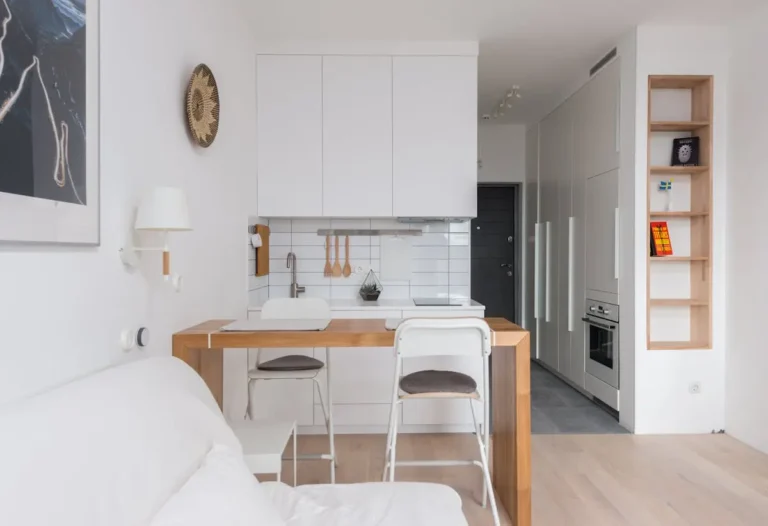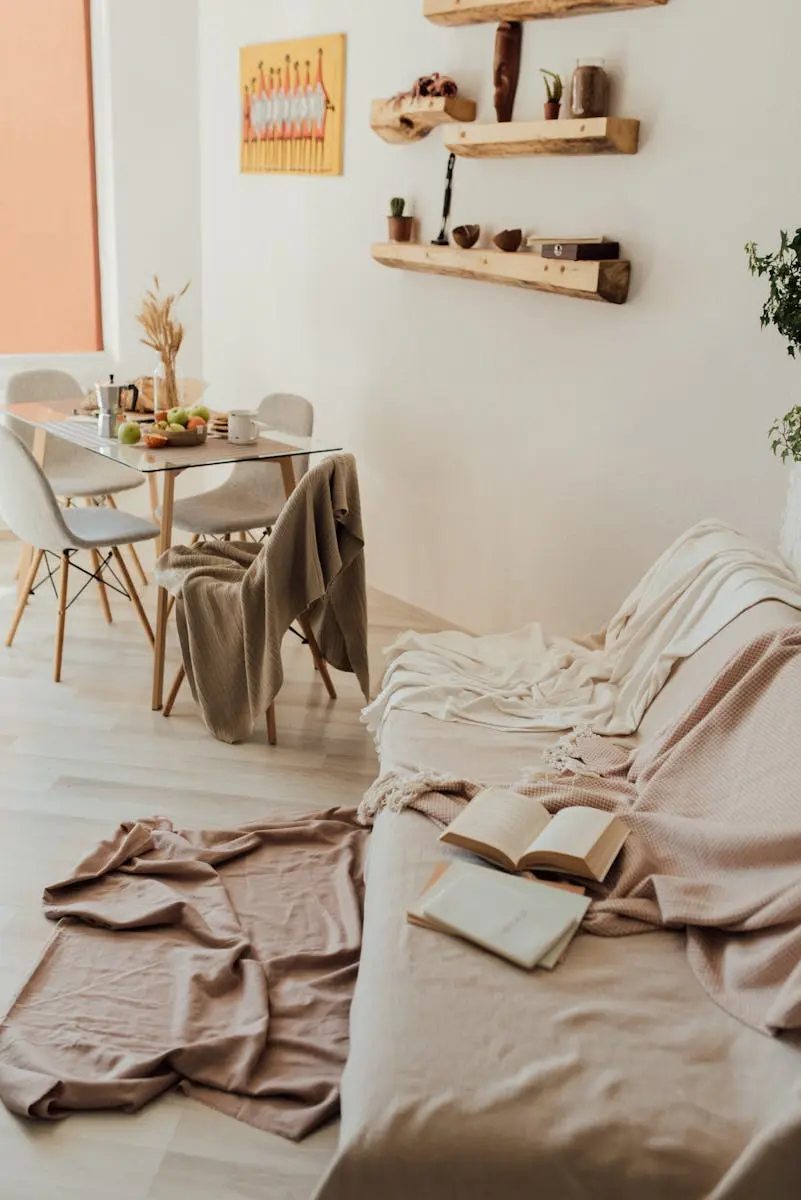
Small Home Storage Solutions: How to Reclaim 40% of Your Space
Living in a small home doesn’t mean you have “no storage.” It usually means you’re only using the floor area, not the full volume of the room.
Think of it this way:
- Area = what you can see and walk on (the floor)
- Volume = everything from floor to ceiling (walls, corners, “air”)
Big homes and small homes both have walls that go up to the ceiling. The difference is how cleverly that vertical volume is used.
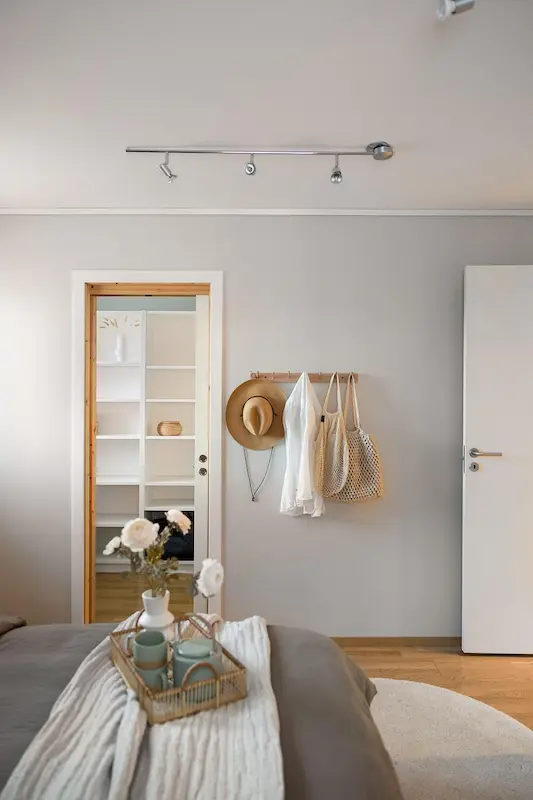
In this guide, I’m not going to tell you to buy more cute baskets. You don’t need more containers; you need smarter small home storage solutions that use height, depth, and furniture in a strategic way.
My promise: if you apply these principles seriously, you can reclaim up to 40% of your room’s volume without making it feel cramped.
The “Air Rights” Strategy (Vertical Solutions)
Most small spaces are only using the bottom half of the room. Everything above eye level is empty air. That’s your first opportunity.
Above the Door Frame
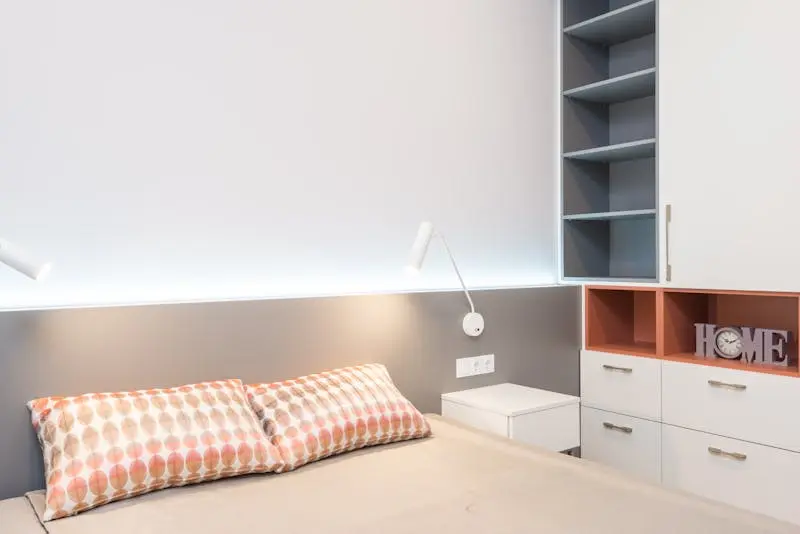
The area above your doors is classic dead space. It feels “off-limits” because we don’t naturally think of it as storage, but the wall doesn’t stop being a wall just because there’s a door there.
The move
- Install a simple shelf about 12 inches (30 cm) below the ceiling.
- Run it along one wall or even around the perimeter of the room if your layout allows.
In a standard 10×10 ft room:
- A single wall shelf can give you around 10–14 linear feet of storage, depending on wall breaks.
- That is enough for:
- Off-season clothes in labeled boxes
- Extra bedding
- Suitcases or travel bags
- Things you don’t need every week, but still want at home
Design tips
- Match the shelf color to the wall to make it visually lighter.
- Use matching boxes or baskets so it reads as a clean band, not a random pile.
- In my experience, this works best for “passive” storage: items you use monthly or seasonally.
If you’re in a small apartment, this counts as one of your best hidden storage solutions for small apartments because guests rarely look up and notice what’s stored there.
Floor-to-Ceiling Shelving Units
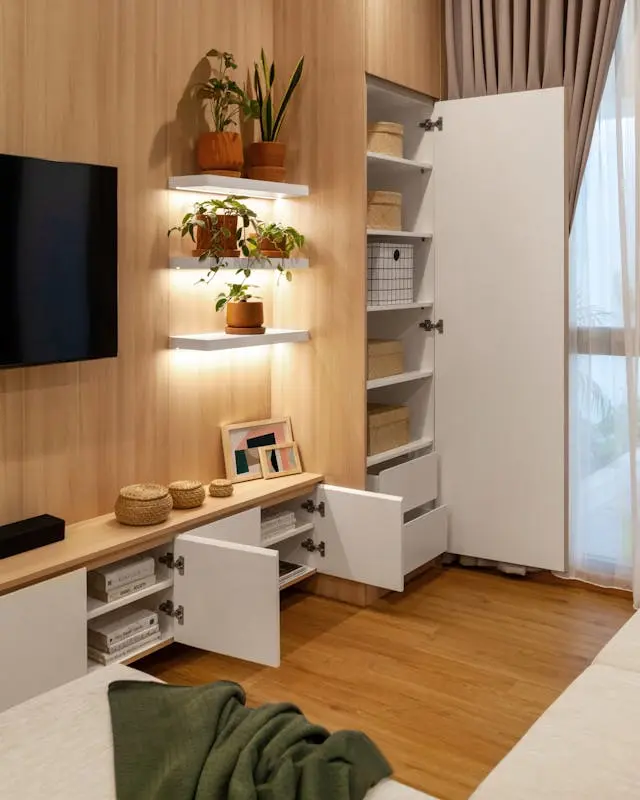
Here’s a mistake I see all the time: buying a standard 7-foot bookcase in a room with 9-foot ceilings, and leaving a big, dusty gap on top.
That gap is pure wasted volume.
Why a 9-foot unit wins over a 7-foot unit
- A 7 ft shelf leaves 2 ft of dead space above it.
- A floor-to-ceiling or custom-height shelf:
- Uses the full height of the wall
- Feels “built-in” and more intentional
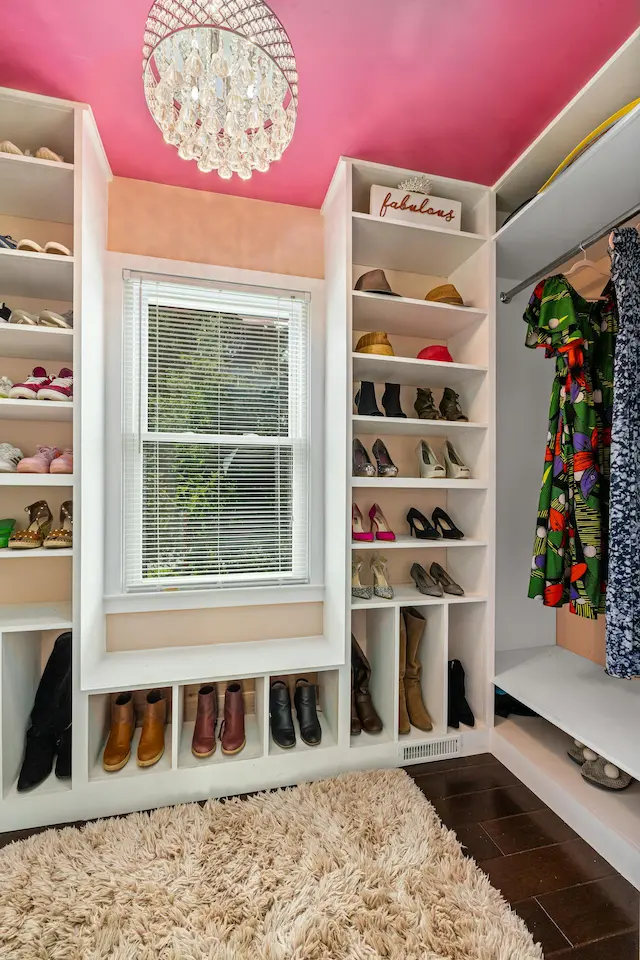
- Gives you extra shelves for baskets, books, or decor you don’t use daily
If custom joinery isn’t in the budget, I recommend:
- Stacking two affordable units (secure them to the wall for safety).
- Adding a simple piece of trim at the top and sides to fake a built-in look.
- Painting the whole unit (shelves and back panel) the same color as the wall so it reads as architecture, not a big piece of furniture.
For small home storage solutions, tall shelving is almost always better than wide, low storage. You occupy less floor, but more air.
Double-Duty Furniture (The “Hard Solutions”)
This is where your multi-functional furniture for small spaces does the heavy lifting for you. When floor area is limited, every major piece should act like a mini storage unit.
The Bed: The Biggest Storage Unit You Own
Beds take up a shocking amount of space. In a small home, a standard bed frame with empty air underneath is a missed opportunity.
The two best options:
- Lift-up hydraulic (ottoman) beds
- Beds with built-in drawers
Hydraulic bed vs. drawer bed
- Hydraulic / Lift-Up Bed
- The entire mattress platform lifts up.
- Large, open compartment underneath.
- Ideal for bulky items like suitcases, duvets, off-season clothes.
- Great as a hidden storage solution for small apartments because everything is completely out of sight.
- Drawer Bed
- Several pull-out drawers on one or both sides.
- Easier access for daily items like sweaters or linens.
- Not ideal in very narrow rooms where you can’t fully open drawers.
Storage Capacity: Bed vs. Dresser (Approximate)
Let’s compare a queen bed to a standard dresser:
| Item | Approx. Storage Volume |
|---|---|
| Lift-Up Queen Bed (60″x80″) | ~ 25–30 cubic feet (depending on height) |
| 6-Drawer Dresser | ~ 10–15 cubic feet |
In simple terms:
One good hydraulic bed can hold as much as two decent dressers.
So if you’re debating between paying for a small storage unit each month or investing in a proper storage bed, I almost always recommend the bed. It’s a one-time cost that frees up an entire wall where those dressers would have lived.
Drop-Leaf & Gateleg Tables
Kitchens, dining corners, and studio apartments all suffer from the same issue: you need a table sometimes, but you don’t have space for it all the time.
This is where drop-leaf and gateleg tables are perfect.
Why they work
- When folded, some models are as slim as 6 inches deep.
- When extended, they comfortably seat 2–4 people.
- You can use them:
- As a console behind a sofa when folded
- As a desk or dining table when open
In my experience, a gateleg table is one of the smartest multi-functional furniture for small spaces you can buy. Don’t waste money on a large fixed table if you only need that size once a month.
“Dead Zone” Activation (Niche Specificity)
After you’ve captured the obvious spaces, it’s time to hunt for dead zones—areas that are physically available but mentally ignored.
The “Back-of-Door” Station
The back of any door is vertical real estate. Most people throw a single hook there and call it a day. You can do more.
Instead of flimsy shoe pockets, look at:
Heavy-duty utility racks designed for:
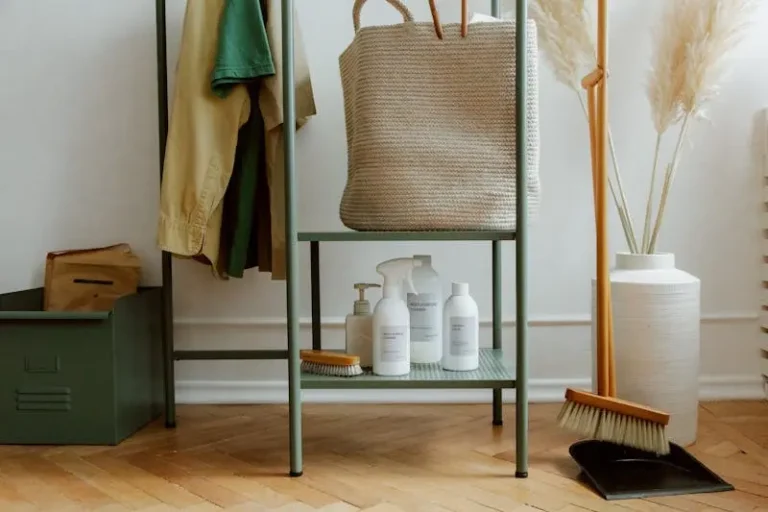
- Cleaning tools (mops, brooms, vacuum accessories)
- Pantry items (canned goods, jars, bottles)
- Bathroom products (towels, refills, paper products)
I prefer sturdy metal frames with adjustable shelves over fabric organizers. They:
- Hold more weight
- Look more intentional
- Last longer
For a studio apartment, a back-of-door system can become your:
- Entire cleaning cupboard
- Mini pantry
- Linen “closet”
All behind a door that’s usually ignored.
Radiator Covers & Window Sills
If you have radiators or deep windows, they can become built-in furniture.
Radiator covers
- A well-designed cover with a perforated front gives you:
- A safe surface for decor or storage
- An instant console table
- Add baskets below (if open) or drawers in front of non-hot zones.
Extended window sills
- Extend a shallow sill into a 30–40 cm deep ledge and suddenly you have:
- A compact desk
- A makeup/vanity station
- A reading nook with storage drawers below
In small homes, I like turning any bright window wall into a multi-use station: seating plus storage plus a surface.
Visual Tricks to Hide Storage (The Aesthetic Angle)
Good small home storage doesn’t have to scream “storage.” The best setups visually disappear.
Color-Blocking Storage
Big wardrobes and shelves can feel heavy in small rooms. You can soften them without losing capacity.
Simple trick
- Paint your shelves and cabinets the same color as your walls.
Why it works:
- Matching color reduces contrast, so the storage blends in.
- Your eye reads the wall as one continuous plane instead of separate blocks.
I prefer this especially in:
- Narrow hallways with full-height closets
- Small bedrooms with a whole wall of wardrobes
- Tiny living rooms where you’re adding a tall storage unit
You still get complete functionality, but without the visual “weight” that makes the room feel smaller.
Mirror Fronts
Mirrors are classic, but they’re not just for checking your outfit.
Where to use mirrored fronts
- Wardrobe doors
- Sideboard fronts in narrow living rooms
- Slim cabinets in hallways
Benefits:
- They reflect light, making the space feel bigger and brighter.
- They double the sense of depth in the room.
- They hide a lot of clutter.
If your home is extra small, mirrored wardrobe doors are one of my favorite hidden storage solutions for small apartments. You get full storage and the illusion of a much larger room.
Conclusion & FAQ
You don’t need a bigger home; you need smarter ways to use the one you have.
If you:
- Claim your air rights (walls, above doors, full-height shelving)
- Upgrade to double-duty furniture (especially the bed and table)
- Activate dead zones (backs of doors, radiators, windows)
- Use visual tricks (color-matching and mirrors)
You’ll unlock storage you didn’t even know you had—without filling your space with random baskets and bins.
Let’s finish with two questions I get all the time.
FAQ: How do I store a vacuum in a studio?
Studios rarely have a dedicated cleaning cupboard, so you have to get creative.
One of my favorite tricks:
- Lean a large floor mirror in a corner, slightly away from the wall.
- Tuck a slim stick vacuum behind the mirror.
- From the room side, you only see a beautiful mirror.
Other options:
- Hang the vacuum on a wall-mounted bracket behind a door.
- Use a tall wardrobe with one narrow section reserved for cleaning tools.
The key is to store it vertically, in a “shadow” zone where your eye doesn’t naturally linger.
FAQ: Is renting a storage unit worth it?
Short answer: usually not, unless you’re between homes or running a business.
Let’s look at it logically:
- A storage unit might cost you every single month.
- A proper lift-up storage bed, a high wardrobe, or a wall of shelving is a one-time investment that adds daily convenience and can move with you.
In my experience, if you’re tempted to rent a storage unit, it’s better to:
- Declutter ruthlessly.
- Invest in multi-functional furniture for small spaces (bed, ottoman, sideboard).
- Use your vertical volume properly.
The only time I think a storage unit makes sense long-term is if you’re storing genuinely valuable items you can’t keep at home and you’ve already optimized every inch of your space.
Otherwise, let your furniture work harder for you and keep your money in your pocket.