Small Living Room Decor Ideas: How to Make One Room Feel Twice the Size
Decorating a small living room isn’t just about miniaturizing furniture; it’s about visual trickery.
The most effective small living room decor strategies involve vertical storage, multi-functional furniture, and “receding” color palettes that trick the eye into seeing more depth.
When clients tell me, “My living room is tiny, nothing will ever make it feel bigger,” I usually find the same three culprits: heavy colors, bulky furniture, and a layout that hugs the walls like a waiting room. The good news is that none of those are permanent problems.
In this guide, we’ll walk through color, furniture, layout and styling tricks step by step. I’ll show you why your paint undertone matters more than the brand, which pieces of space-saving living room furniture are actually worth buying, and a simple rug rule that instantly makes the room feel more expensive and more spacious.
The “Space-Expanding” Color Palette (Beating Dulux)
Color is your most powerful optical illusion.
If you get this part right, your small living room will already feel calmer and larger before you buy a single new piece of decor.
Why Cool Undertones Work
Warm colors (yellows, reds, some beiges) tend to advance visually, while cooler tones (soft greys, blue-greens) recede. That is why a pale blue wall can feel further away than a warm cream in the same room.
In a small living room, that “receding” effect is your friend. Cool undertones help the walls visually push back, giving the impression of more depth and air.
What this means in practice:
- If your room is south-facing and already warm, I prefer soft, blue-based greys or blue-green greiges so the space doesn’t feel overheated.
- If your room is north-facing and the light is naturally cool, I like a barely-there greige with a subtle green undertone. It still feels cozy, but it doesn’t close in like a yellowed cream.
You do not need to memorize paint names. Focus on undertone:
- Ask for cool or neutral undertones, not “pure white.”
- Always test samples on multiple walls; a color that feels airy on one wall can look muddy in a dark corner.
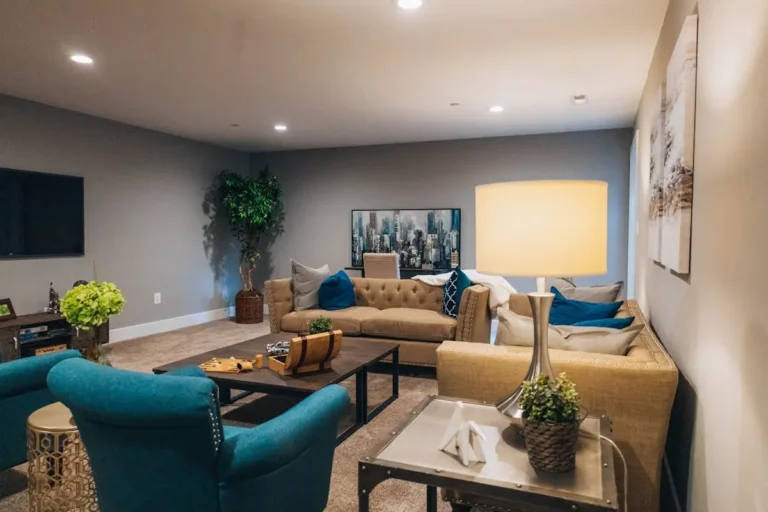
If you already have a beige sofa, don’t panic. Pair it with a cooler wall color and cool-toned accents (stone, grey linen, muted blue cushions) so the room feels balanced, not orange.
The “Color Drenching” Technique
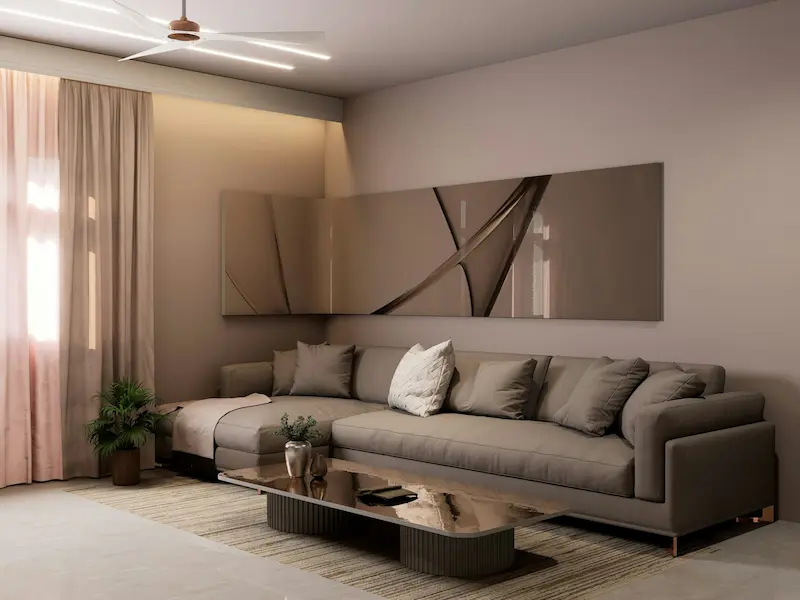
Color drenching means painting walls, trim, and sometimes the ceiling in the same color (usually in different sheens). It sounds dramatic, but in a small space it can be magic.
Here is why it works:
- When the walls, skirting, and sometimes doors are all one color, your eye stops “reading” the borders.
- Fewer visual breaks = the room feels like a single envelope, not a patchwork of shapes.
- Corners blur slightly, which makes the living room feel deeper and less boxy.
In my experience, color drenching works best when:
- You choose a mid-tone or light shade, not a heavy charcoal in a tiny room (unless you really understand your light).
- You keep furniture and textiles slightly lighter or darker than the walls, so they don’t disappear completely.
- You bring in texture (bouclé, linen, natural wood, sisal) so the room feels layered, not flat.
If fully drenching feels too bold, start by painting walls and trim the same color, and keep the ceiling a half-step lighter. You’ll still get a softer, more expansive effect than high-contrast white trim.
Furniture That Doubles Your Space (Beating DIY.com)
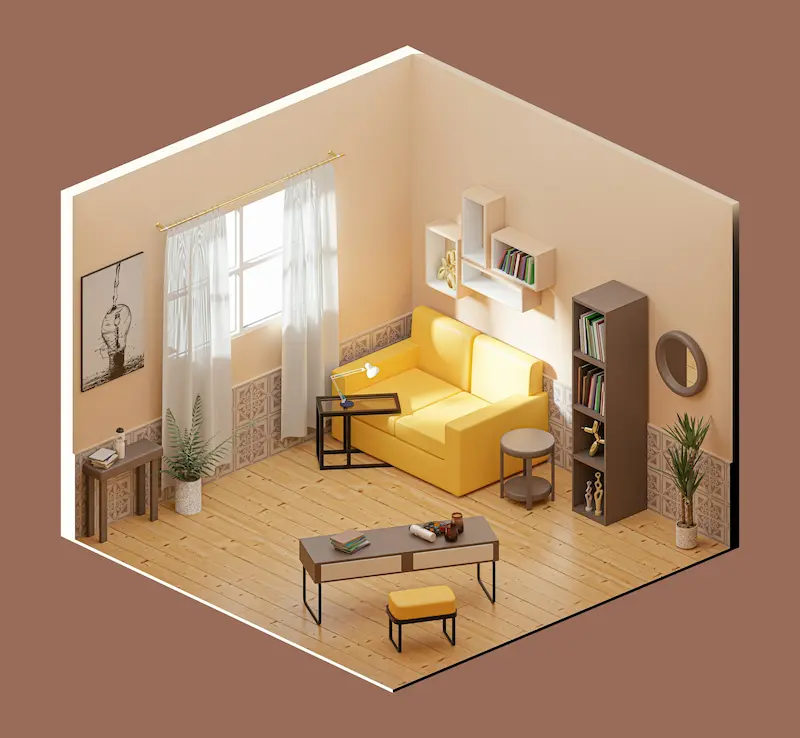
In a small living room, the wrong sofa can undo everything the paint just fixed.
Your furniture should work harder and look lighter at the same time. That is where smart, space-saving living room furniture comes in.
Here are the four pieces I reach for most often.
- Nesting Tables
Nesting tables are one of the easiest upgrades if you live small.
- Pulled apart, they work as side tables for guests.
- Nested together, they take up less visual and physical space than one bulky coffee table.
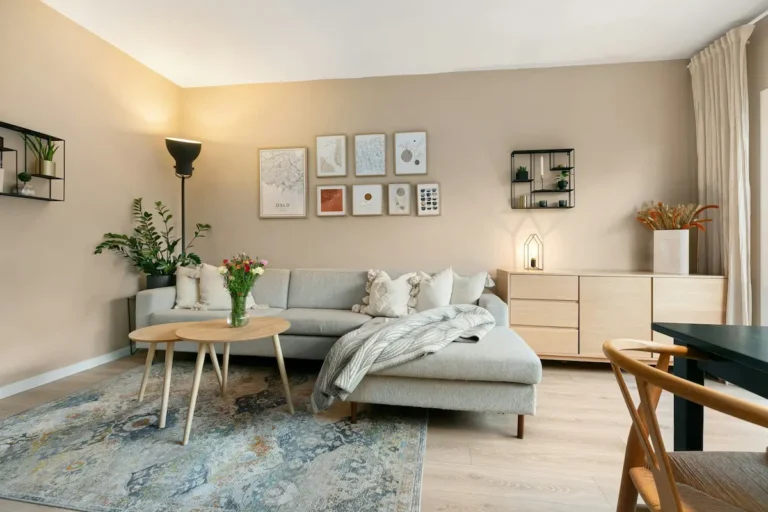
- You can choose a set with slim legs and rounded corners so circulation is easier.
I prefer nesting tables with:
- Open metal or wood bases (no heavy plinths).
- Rounded edges, which feel softer in tight walkways.
- A light or glass top if the room is very compact.
- Sofa Beds & Daybeds
If your living room doubles as a guest room, a sofa bed or daybed is essential, but not all are equal.
In a small space:
- Look for slim arms and raised legs so you can see under the sofa.
- Avoid chunky pillow-top models that dominate the room.
- If you host often, I recommend a pull-out mechanism with a separate mattress, not a click-clack futon. Your guests (and your back) will thank you.
Daybeds can be even better in a narrow living room. They read more like a bench or lounger than a full sofa, especially if you style them with fewer back cushions and a simple throw.
- “Leggy” Furniture
This is one of those rules that sounds too simple to matter, but it changes everything.
When your furniture has visible legs and you can see the floor underneath, the brain reads more floor area, and the room feels bigger.
In practice:
- Choose sofas and chairs on legs, not floor-skimming slipcovers.
- Opt for open-legged TV consoles, not solid floor-to-ceiling units, unless you desperately need storage.
- Even a narrow open-leg bench used as a coffee table can make a small living room feel lighter than a big, boxy trunk.
- Acrylic / Ghost Chairs
Acrylic or “ghost” chairs are not for everyone aesthetically, but they are one of the strongest visual tricks in a small living room.
Because they are transparent:
- They provide functional seating without adding bulk.
- They work well near windows where you don’t want to block light.
- They act almost like a shadow rather than a solid object.
I like to use a single acrylic chair as a desk chair in a small living-dining combo, or as an occasional chair that can be pulled into the seating circle when guests are over.
Layout Hacks: The Triangle Rule & Floating Zones (Beating HGTV)
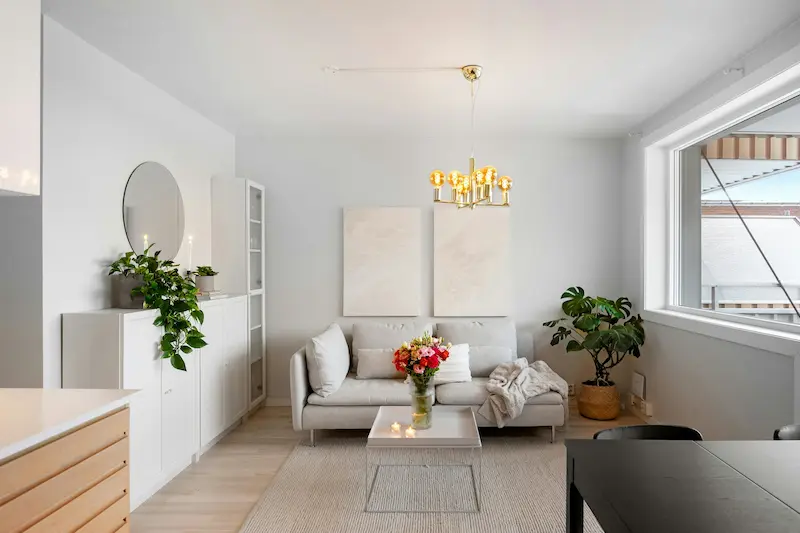
You can have the perfect colors and furniture and still feel cramped if the layout is off.
Think of your layout as choreography: you’re designing paths for people, not just placing objects.
The Floating Layout
Most people shove every piece of furniture against the walls in a small living room because they think it “creates space.”
In reality, it usually creates:
- A big, awkward hole in the middle.
- A waiting-room vibe where all seating is lined up around the edges.
- No real sense of a conversation zone.
Instead, try “floating” your main pieces just a little.
- Pull the sofa 3–6 inches off the wall.
- Float a rug so that at least the front legs of the sofa and chairs sit on it.
- Use a narrow console or bench behind the sofa if there is circulation behind it.
Those small shadows behind furniture give the room depth. It feels designed, not pushed together in a panic.
The Vertical Eye Draw
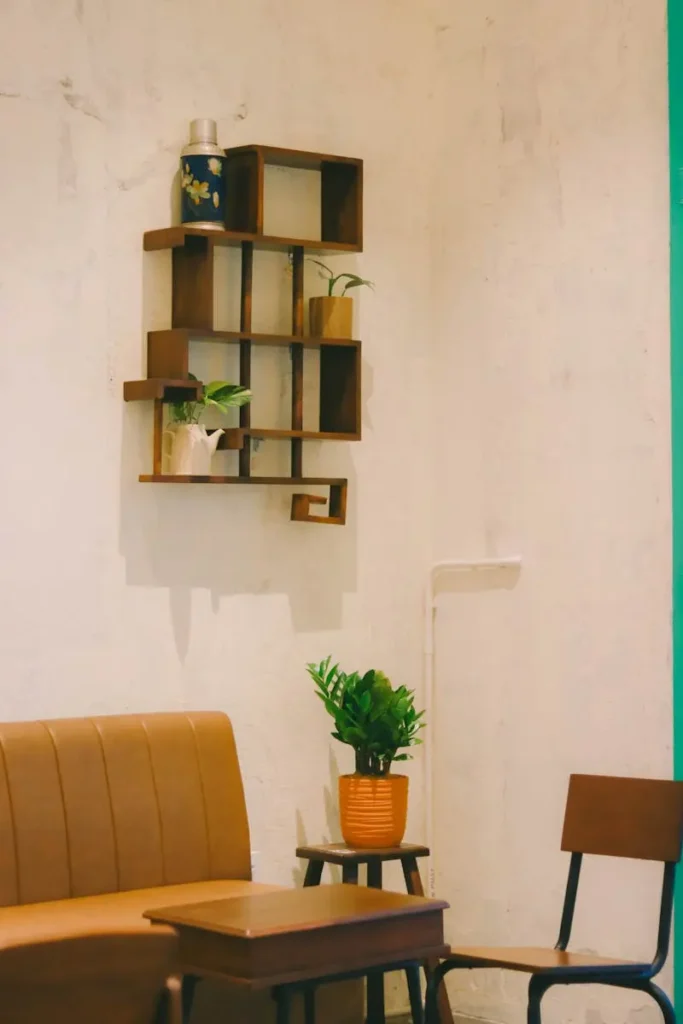
When floor space is tight, the only direction you can expand is up.
You want to deliberately pull the eye vertically so the room feels taller and more generous.
Simple ways to do that:
- Hang curtains as close to the ceiling as possible and let them just kiss the floor.
- Choose a tall bookcase or narrow shelving unit instead of multiple low pieces scattered around.
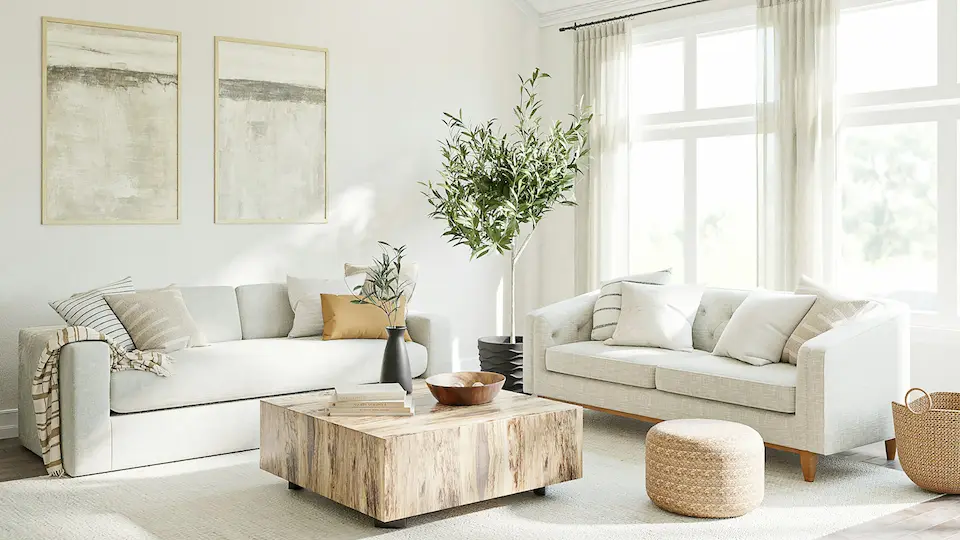
- Use a vertical art arrangement (two or three frames stacked) on at least one wall.
If your small living room has a low ceiling, I recommend tonal curtains (similar color to the walls) in a simple, textured fabric. High contrast is dramatic, but it can also chop the room visually.
The Triangle Rule (for Seating & Sightlines)
The “triangle rule” is about how pieces relate to each other, not about buying triangular furniture.
Imagine a triangle connecting:
- The main sofa.
- The secondary seat (chair, loveseat, or daybed).
- The focal point (TV, fireplace, or large artwork).
You want those three points to:
- All be visible from each seat.
- Sit within comfortable talking distance (about 180–240 cm between seats).
- Share a common element in the center (a coffee table or nested tables).
When you sketch that triangle on paper, you’ll quickly see if one piece is too far away, or if your only focal point is a TV shoved into a corner. Adjust until the triangle feels balanced, and the room will feel more intentional instantly.
5 Decor Tricks That Cost $0 (The High-Value/Low-Effort Hook)
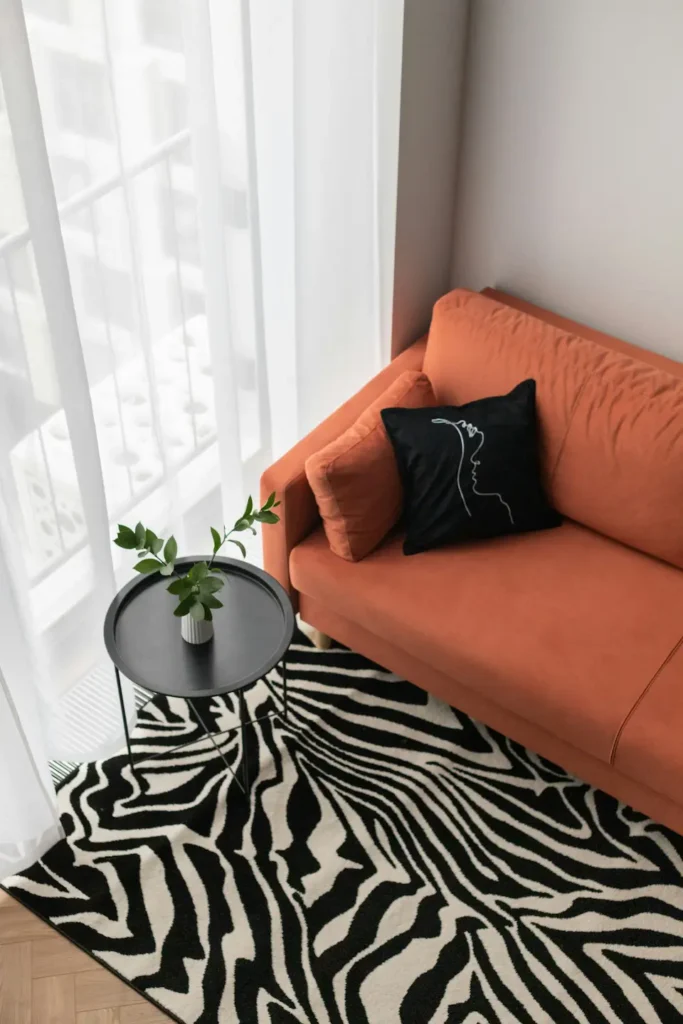
If you do nothing else from this guide, do these. They are completely free and make a visible difference.
- Remove Heavy Drapes
Thick, dark curtains eat small rooms for breakfast.
- If privacy allows, remove them and live with bare windows for a week.
- If you need coverage, switch to sheer panels or plain cotton/linen in a light, neutral color.
- Avoid fussy pelmets, layers of valances, or heavily patterned treatments in tiny living rooms.
- Declutter Surface Tops (The “One-Third” Rule)
A simple rule I use at styling stage:
- No more than one-third of any visible surface should be covered.
- Coffee table? Aim for a tray + one object + maybe a book stack.
- TV console? One stack + one low object + one plant is plenty.
In my experience, most “small living room problems” are actually “too many tiny objects with nowhere to belong.”
- Edit Wall Decor
Multiple small frames scattered randomly make the room feel busier and smaller.
Instead:
- Create one strong moment (a single larger artwork or a tight gallery group).
- Leave some walls intentionally blank to give your eye a place to rest.
- Rehome or store extra frames until you can group them properly.
- Rehome Oversized or Dark Accessories
Before buying anything new, take a hard look at what is already there.
- Remove the dark, oversized vase that blocks the window light.
- Swap a heavy dark throw for something lighter in both color and weight.
- Put away seasonal or themed items that don’t serve the room right now.
Often, simply editing down to your favorite 20% of decor makes the room feel bigger and more expensive overnight.
- Re-Aim Lamps for Better Light
Lighting is frequently ignored in small living rooms, but it is one of the easiest fixes.
Without buying anything:
- Move a floor lamp from the corner it’s crammed into and place it behind or beside the main seating.
- Angle lamp shades so light reflects off walls and ceiling, not just downwards.
- If bulbs are very cool (stark blue-white), swap them for a warmer tone (around 2700–3000K) to soften shadows and make the space feel more inviting.
Comparison: Rug Size vs. Room Perception
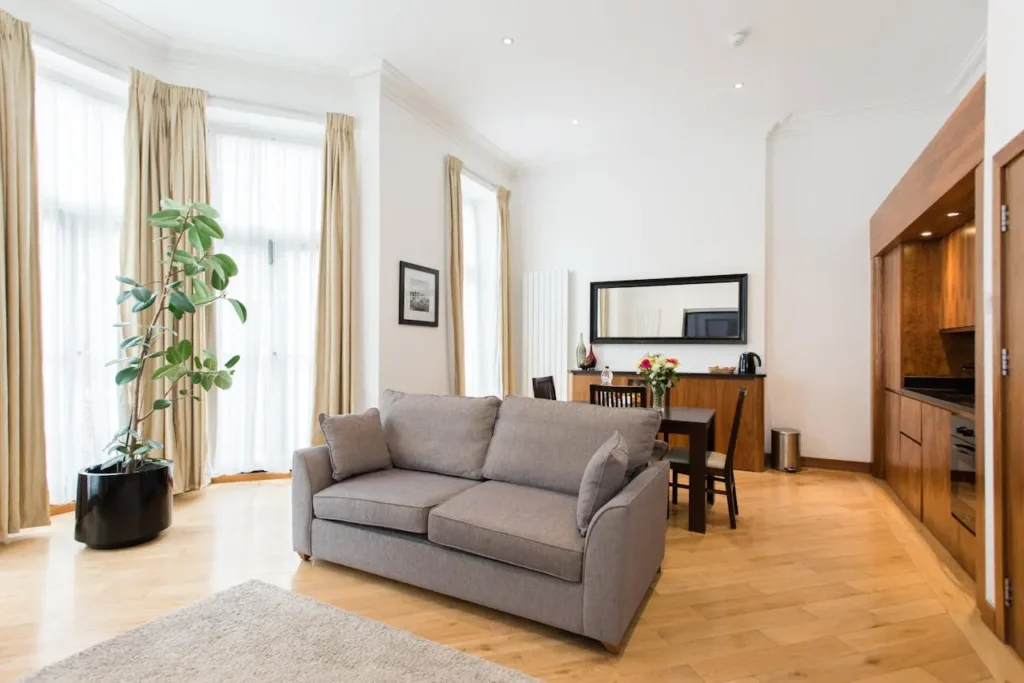
Rug size is where a lot of small living room decor ideas fail.
A rug that is too small chops the room into floating furniture islands and makes everything feel cramped. A rug that is correctly sized anchors the whole layout and actually makes the space feel larger.
Here is a simple guide:
| Rug Size Choice | Visual Effect | Verdict |
|---|---|---|
| Small (e.g. 4×6 or 5×7) in a medium room | Choppy, cluttered; furniture looks like it’s “falling off” the rug | Avoid. Too small rugs make the room feel smaller and cheaper. |
| Medium (e.g. 6×9) with only coffee table on it | Slight improvement but still disjointed | Only use if the room is genuinely tiny and budget is tight. |
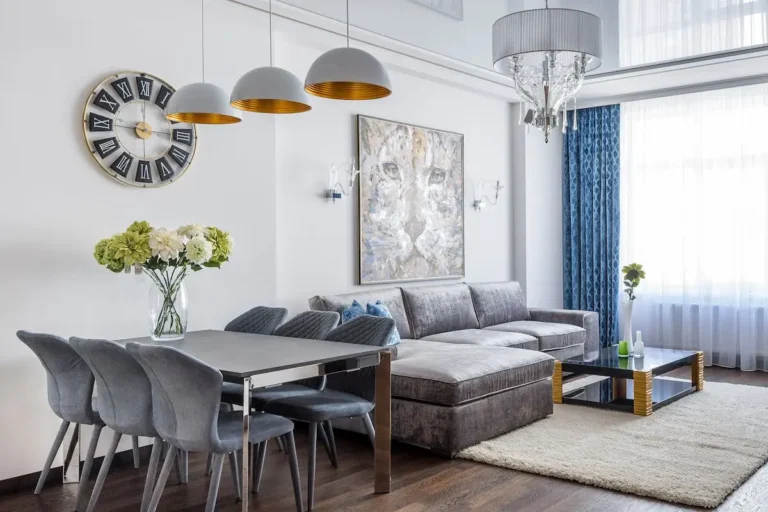
| Large (e.g. 8×10 or larger, scaled to room) | Expansive and unified; seating group feels intentional | Ideal. Aim for a rug big enough that front legs of all main seating sit on it. |
As a rough rule, in a typical small living room:
- If your sofa is around 180–210 cm wide, an 8×10 rug is usually safer than a 5×7.
- If you truly cannot fit that, choose the largest rug that allows front legs of the sofa and at least one chair to sit on the rug.
I rarely recommend the tiny “accent rug under the coffee table only” look. It nearly always shortens the room visually.
Conclusion & Checklist
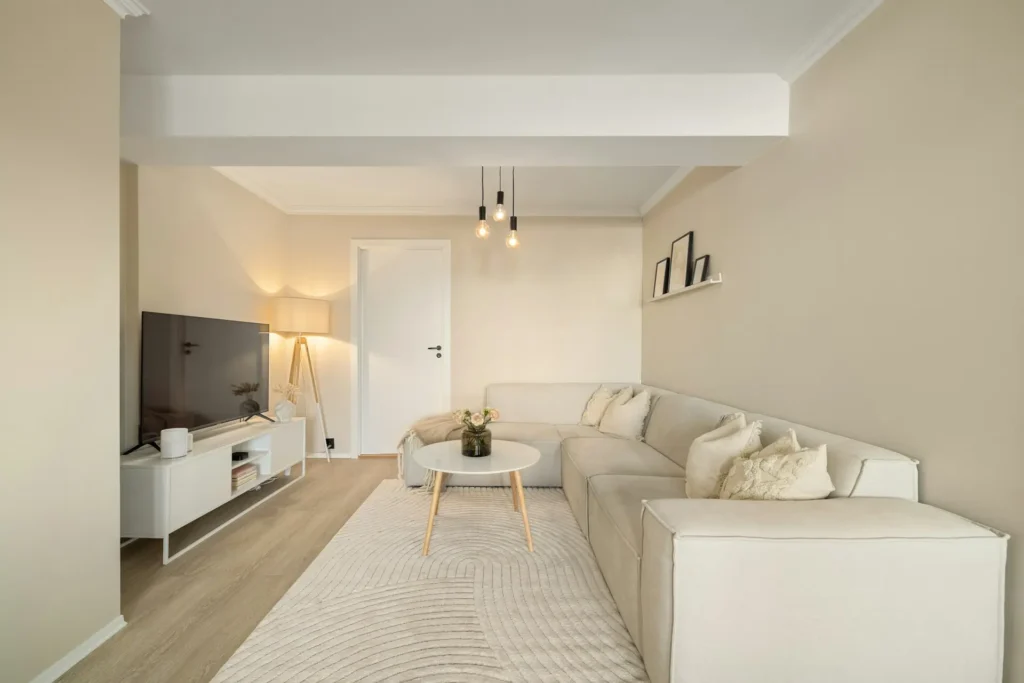
You don’t need a bigger living room. You need a more strategic one.
If you focus on smart color choices, space-saving living room furniture, and a layout that respects both function and sightlines, you can absolutely make a small space feel like a deliberate design choice rather than a compromise.
Use this quick checklist as you plan:
- Choose a cool or neutral undertone wall color that recedes and consider color drenching for a softer envelope.
- Edit furniture to leggy, low-profile pieces and add at least one multi-functional item (nesting tables, sofa bed, or storage ottoman).
- Float your layout slightly and check your seating triangle for balanced distances and a clear focal point.
- Implement at least two free decor tricks (curtain edit, surface declutter, mirror placement, accessory edit, lamp repositioning).
- Upgrade to a properly sized rug that connects your seating instead of chopping it up.
- Use vertical elements (curtains, tall shelving, stacked art) to pull the eye upward.
If you’d like to go deeper, your next step should be choosing the right paint. Start with a focused palette for small spaces, then build the rest of your decor around that foundation so every decision supports the illusion of more space, not less.