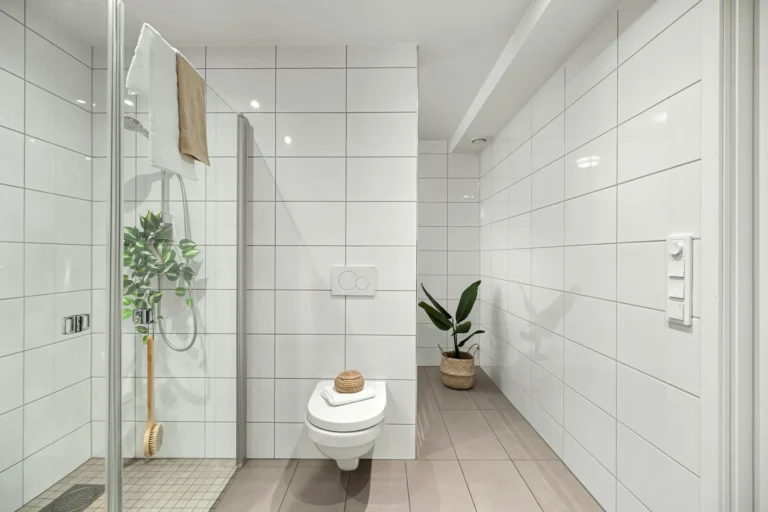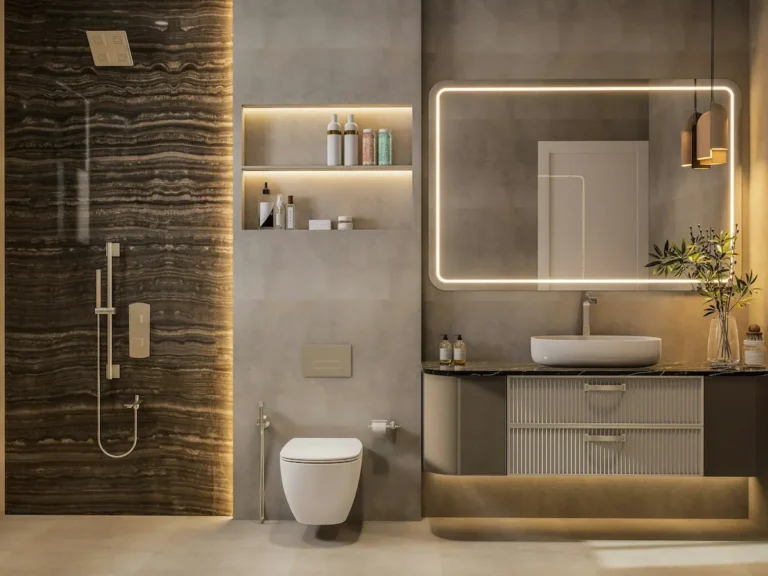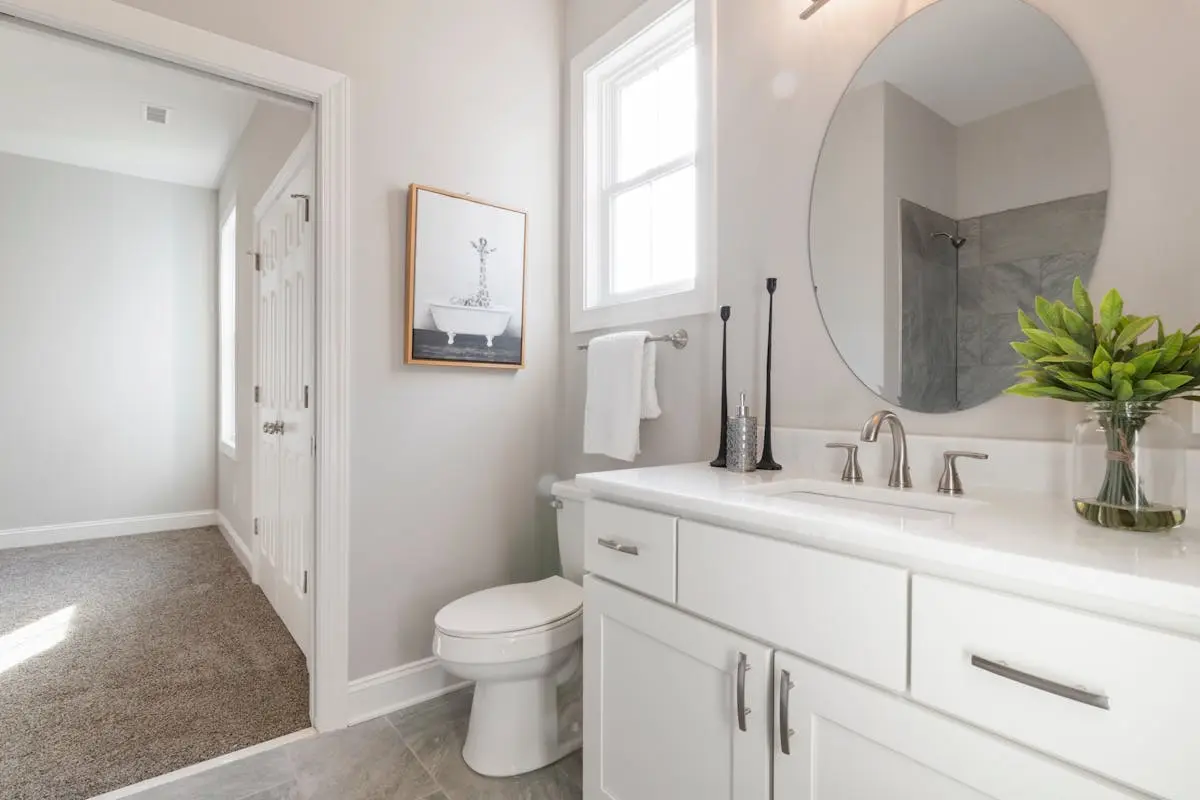
White Scandinavian Bathroom Ideas: How to Keep It Minimal, Not Clinical
Most people try an “all white” bathroom once and never again.
The tiles look cold, the grout goes yellow, and the whole thing feels more medical than Nordic spa.
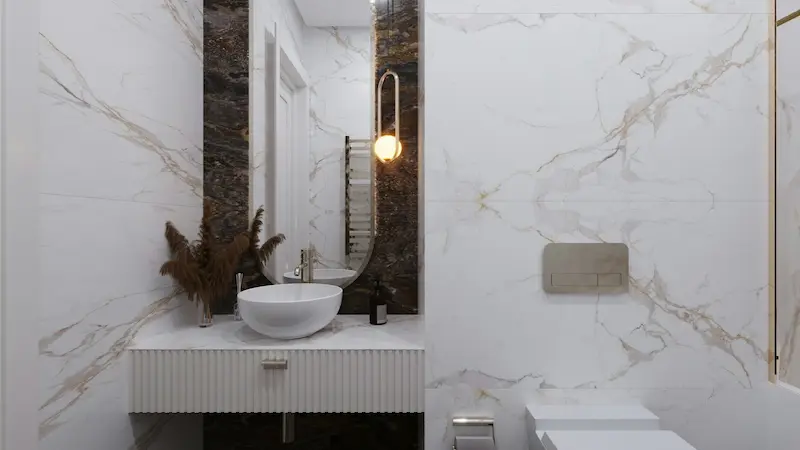
A genuinely beautiful white Scandinavian bathroom is different. It’s still bright and minimal, but it’s built on texture, warm light and a few carefully chosen accents like a white oak vanity in classic Scandinavian style. Get those elements right and white becomes calming and soft instead of harsh.
The “Temperature” Trap – Warm vs Cool White
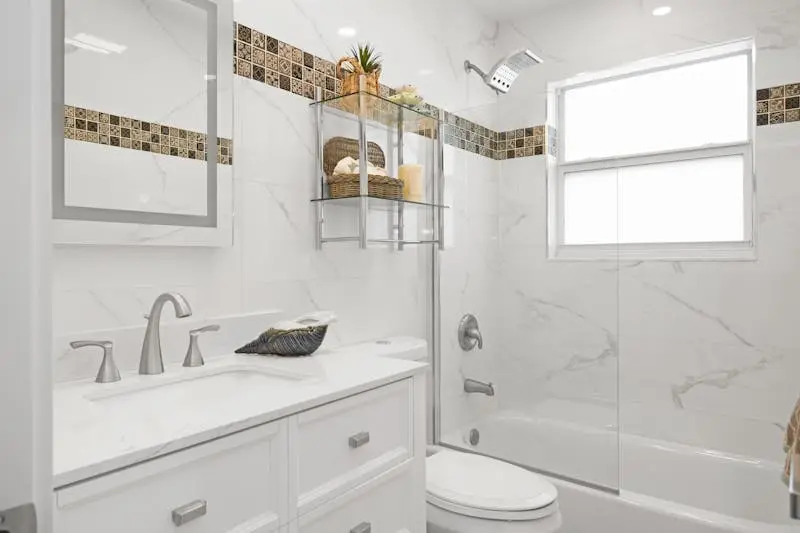
The biggest mistake I see in white Scandinavian bathrooms is mixing undertones blindly and then trying to “fix it with decor.” It rarely works.
Most sanitaryware (toilet, tub, sink) is a cool white with a slight blue or gray cast. Your favorite creamy wall color probably leans warm (yellow/red). When you put them together under strong lighting, the tub starts to look dull or dirty next to the walls.
In my experience, solving this is a three-part job: sanitaryware, paint, and lighting.
Sanitaryware: Assume “cool”
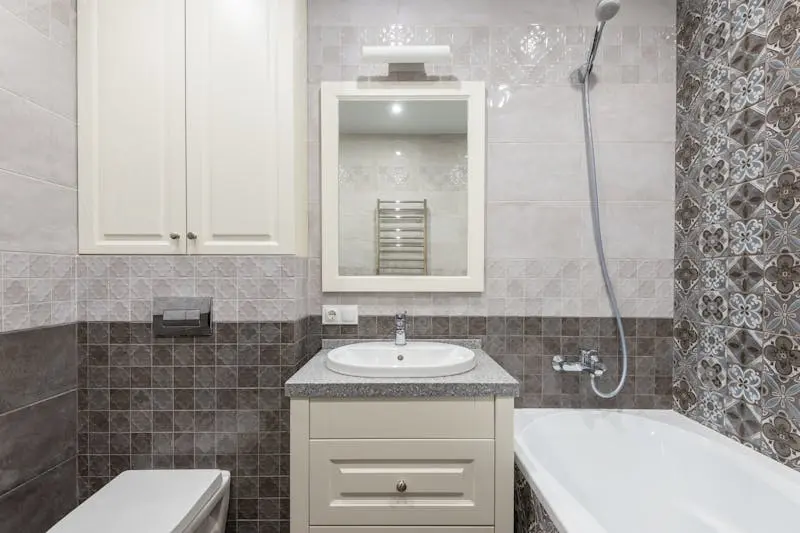
Unless you’re doing custom colored fixtures, treat all your white ceramics as cool/blue-based. That’s your baseline.
This means you have two safe options:
- Match them with a “true” or slightly cool white.
- Bridge them with a very soft gray-based white.
Designers lean on classics like Benjamin Moore Chantilly Lace (very clean, bright white) and Decorator’s White (soft gray undertone) for exactly this reason: they sit comfortably next to standard white tubs and toilets without making them look cream or beige.
Paint: Choose one white, then test it hard
I always recommend doing a paint board test, not just a tiny swatch on the wall.
- Paint an A3/A4 board with two coats of your chosen white.
- Hold it against the tub, vanity top and tiles.
- Look at it in morning light, evening light, and with the artificial lights on.
If the tub suddenly looks “dirty” next to the board, your wall color is probably too warm. Swap to a cooler or more neutral white instead of forcing it.
Grey-based whites are your best friend here. They sit in the middle, so they’re forgiving with both warm wood and cool sanitaryware.
Lighting: The ultimate undertone fixer
Even if you accidentally mix a slightly warm wall with a cooler tub, lighting can rescue the room.
- 2700K–3000K is that soft “warm white” range most people find flattering for skin and relaxing for bathrooms.
- 4000K+ pushes into “cool white” and will exaggerate any mismatch between your whites, as well as making the room feel clinical.
If your “white Scandinavian bathroom ideas” mood board looks rich and cozy but your real room feels dead, swap your bulbs before you repaint. You’ll be surprised how much that alone fixes.
Texture Is the New Color (Tile Selection)
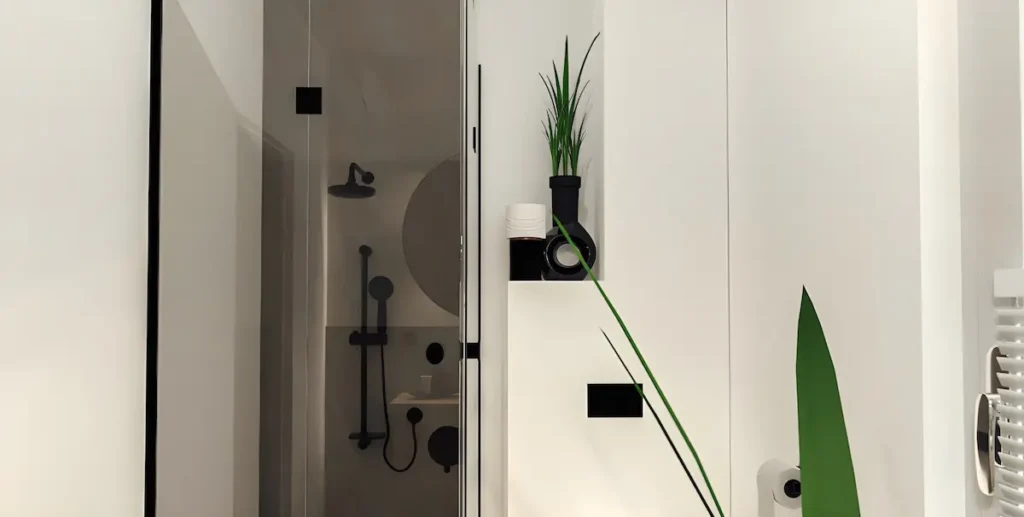
Because you’re not using much color, the texture of your surfaces becomes the real design language.
If you choose flat white tiles, flat white walls and a flat white floor, the result will nearly always feel cheap and one-dimensional, no matter how expensive the products were.
Zellige: Imperfect on purpose
Handmade-style Zellige tiles (or their more affordable lookalikes) have an uneven glaze and surface that catch light differently on every piece.
In a white Scandinavian bathroom, I love using:
- White or off-white Zellige in the shower niche or one feature wall behind the vanity.
- A slightly warmer grout (soft gray or “linen”) so the tile pattern quietly shows instead of disappearing.
The result is still calm and minimal, but it feels tactile and layered rather than flat.
Kit Kat (finger) tiles for quiet pattern
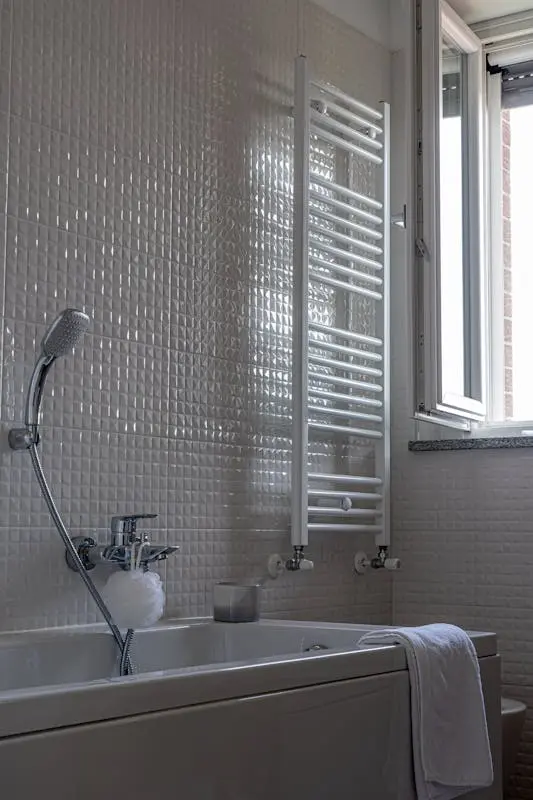
Kit Kat / finger tiles give you thin vertical or horizontal lines without shouting for attention.
Used vertically, they make low ceilings feel higher. Used horizontally, they elongate the room.
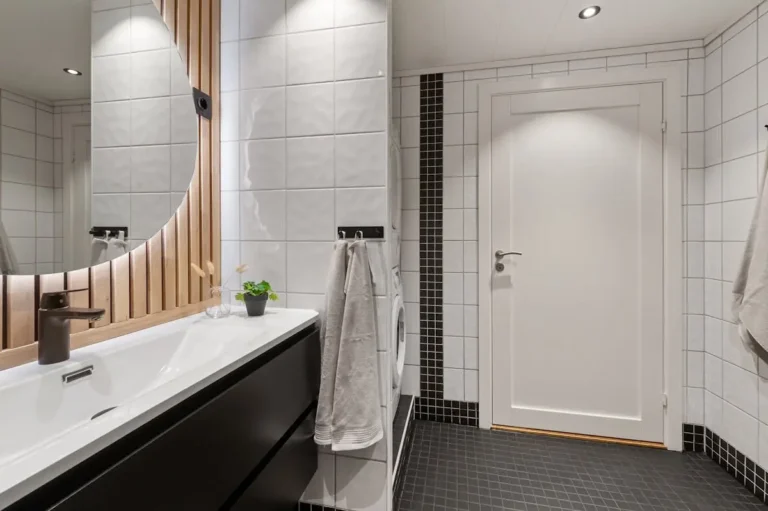
They’re ideal for a monochrome Scandi bathroom (black and white) where you want interest, but you don’t want to introduce lots of extra colors.
The grout secret
Grout is where “expensive” versus “rental-basic” often gets decided.
- Avoid pure white grout. It stains quickly and will undermine the whole Scandinavian cleanliness fantasy by year two.
- Choose a soft gray or warm stone grout. It hides stains better and outlines each tile, creating a subtle graphic pattern on the walls.
If you’re unsure, a mid-light “silver gray” tone works with most whites and looks good with both brushed brass and matte black fixtures.
Breaking the “White Box” (Contrast Materials)
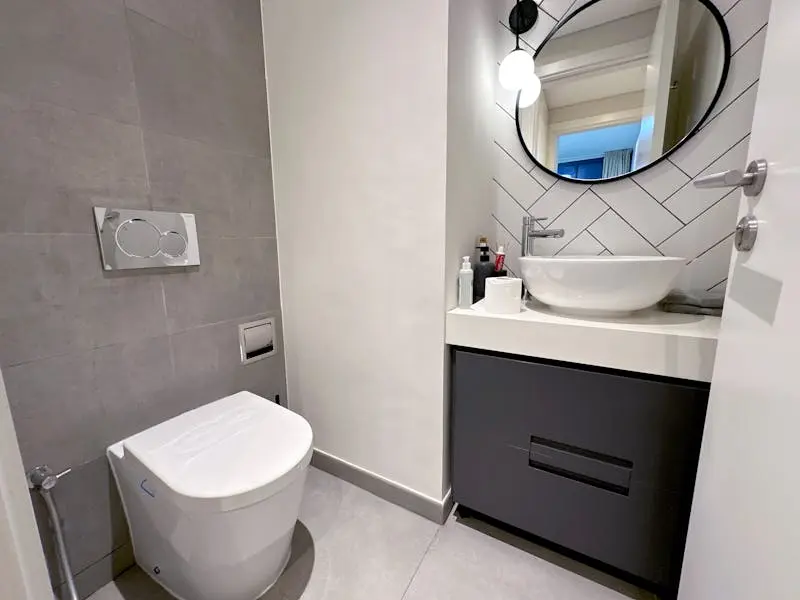
Even the best white tiles need a partner. That’s where wood and metal come in.
Think of them as the room’s “eyeliner and jewelry” – they give structure and personality to all that white.
Wood accents: White oak vanity and friends
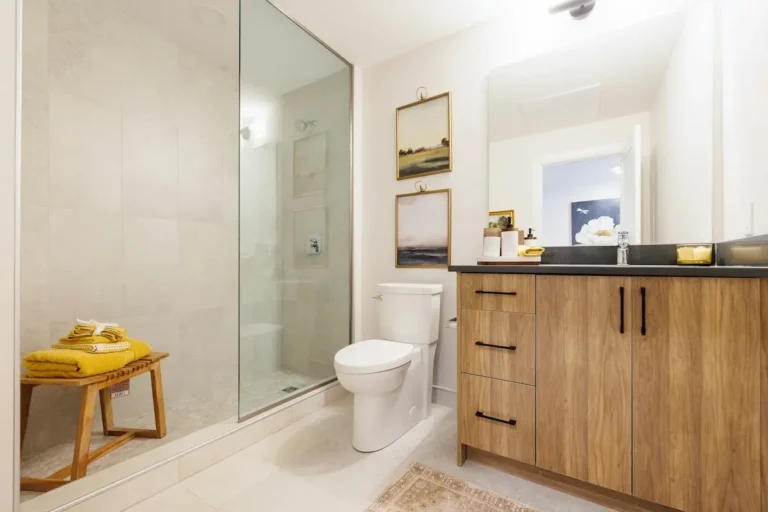
A white oak vanity in Scandinavian style is one of the easiest upgrades you can make. The pale grain instantly softens the room and signals “Nordic” without introducing strong color.
- For a very classic Scandi look, go for pale ash or birch with a matte clear finish.
- For a warmer, slightly Japandi version, pick white oak or teak, with simple slab fronts and no heavy moulding.
If you already have a white vanity, consider swapping just the handles to a light wood or adding a slim wood frame around your mirror to break up the white.
Metals: Brass vs black
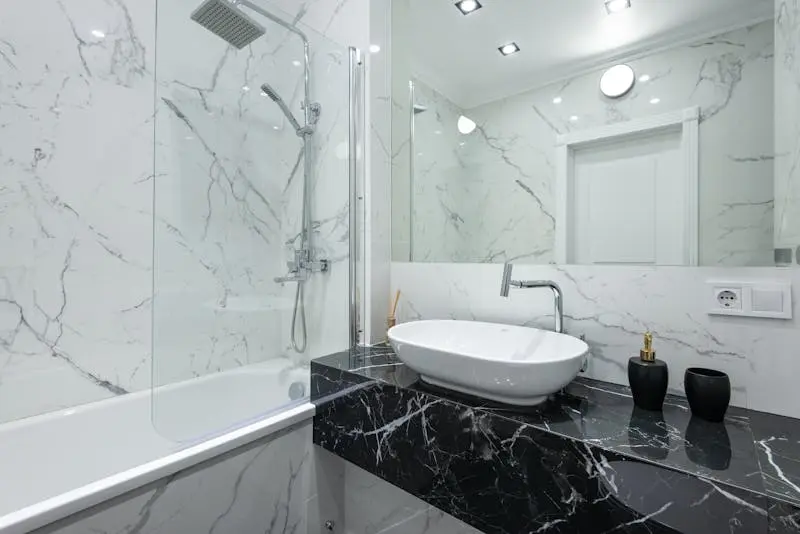
Metals decide whether your white Scandinavian bathroom feels soft or graphic.
- Brushed brass or muted gold reads warm and luxurious. It pairs beautifully with white tiles and white oak, especially if you’re leaning into a spa-like vibe.
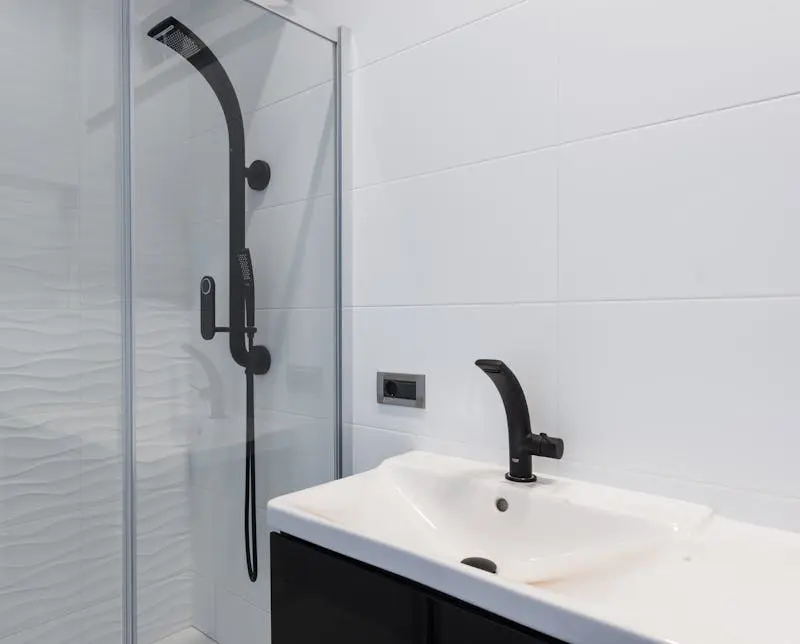
- Matte black is sharper and more architectural. It’s perfect if you love a monochrome Scandi bathroom (black and white) with clear lines and a bit of attitude.
Personally, I prefer brass for windowless bathrooms because it bounces warm light around. Matte black works best when you have at least one good light source and a few softer elements (wood, linen) to stop it feeling harsh.
Don’t overdo the contrast
If you add black taps, black shower frame, black grout and a black radiator, the room can start to feel sliced up instead of calm.
I’d choose one or two black elements – for example: a slim black shower frame and matching mirror frame – and keep everything else white and wood.
2026 Trend – Limewash and Microcement
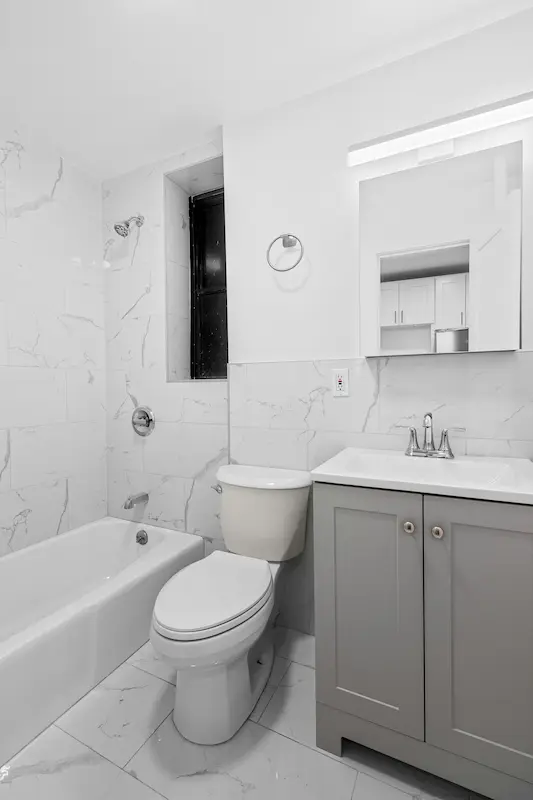
Paint and plaster are doing as much work as tile in modern Scandinavian bathrooms.
The big shift: instead of flat emulsion paint, designers are reaching for limewash and microcement to create soft, continuous surfaces that still read as white.
Limewash: Soft, cloudy walls
Limewash paint has a natural, slightly cloudy look that adds depth and movement to plain walls. It’s been growing in popularity in recent years for its soft, plaster-like finish and subtle color variation.
I like it in:
- Powder rooms or half-tiled bathrooms where the upper wall needs something more interesting than basic matte paint.
- White-on-white schemes where you want the walls to feel like fabric rather than plastic.
Just be aware: limewash doesn’t behave like normal paint. It’s slightly more delicate and usually needs a breathable substrate and specialist primer.
Microcement: The modern spa shell
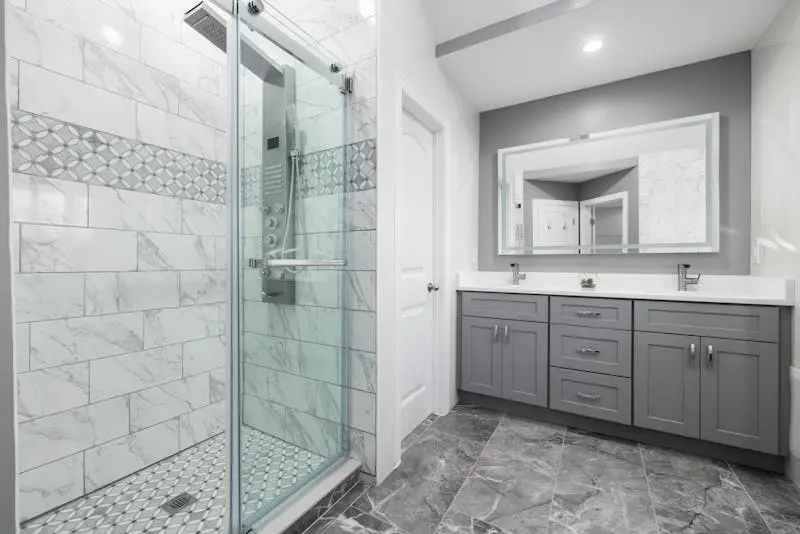
Microcement is a thin, seamless coating used on walls and floors to create a grout-free, continuous surface. It’s waterproof once sealed, which makes it perfect for full bathrooms and wet rooms.
In a white Scandinavian bathroom, microcement:
- Eliminates grout lines, so the room feels larger and calmer.
- Works beautifully with brass or black fixtures for a very high-end, spa-like look.
- Can be tinted to warm off-whites, so you still get that “white” feel without the sterility.
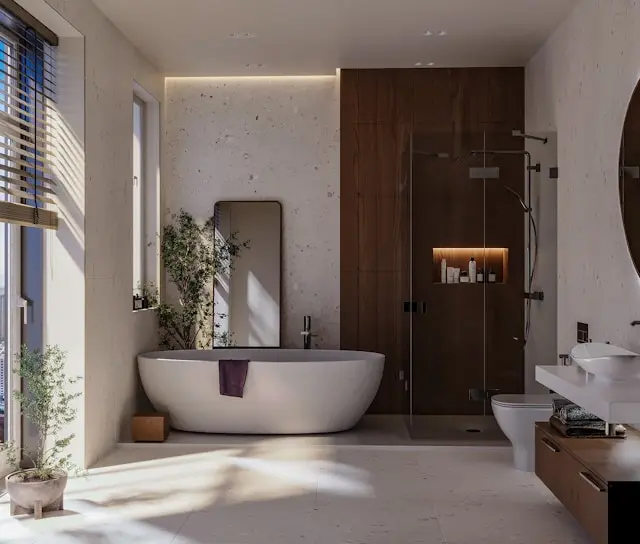
If you’re renovating from scratch and want something very 2026 that will still age well, a white microcement shell + white oak vanity + simple black or brass fixtures is a strong, timeless combination.
Styling – The “Soft” Layer
Once the hard finishes are sorted, the textiles and storage decide whether your bathroom feels cozy or cold.
White shows everything, so you need to be intentional.
Textiles: Off-white beats pure white
Brilliant white towels look fantastic in photos, but in real life they tend to make your wall paint look dull or dirty.
I prefer:
- Unbleached linen or waffle-weave towels in soft “stone” or “oatmeal”.
- A simple flat-woven runner on the floor in beige, greige or warm gray.
- A linen shower curtain instead of shiny plastic if your layout allows.
These still sit firmly in the “white Scandinavian bathroom ideas” camp, but they bring warmth and texture without clutter.
Storage: Hide the noise
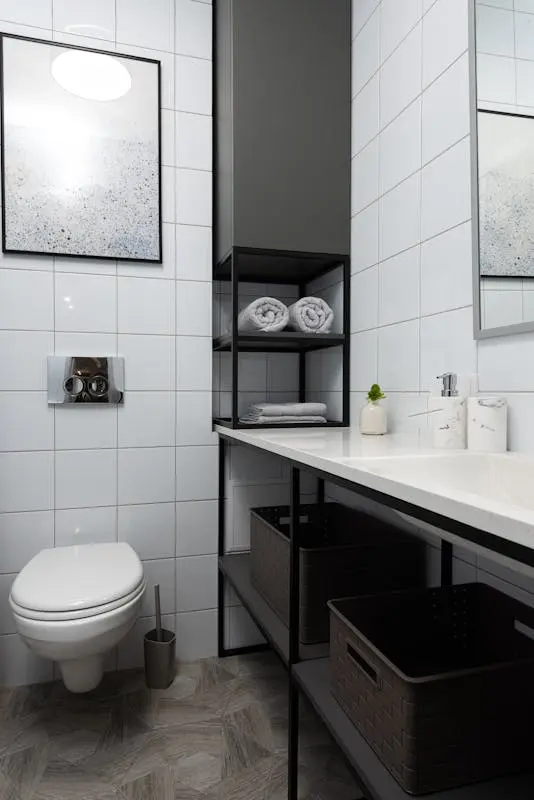
Scandi design is all about visual calm. That means hiding labels and random colors.
A few easy wins:
- Use opaque white or wooden boxes inside niches and on shelves. Keep the mismatched bottles inside, display only the nice ones.
- Decant soap and shampoo into simple, matching dispensers if you have open storage. The repetition looks intentional instead of messy.
- Keep your “everyday tray” minimal: a hand soap, a small plant, and maybe one candle or stone dish for jewelry.
If you feel like your bathroom doesn’t look “Scandi” even after new tiles, it’s often not the finishes – it’s visual noise from packaging.
H3: FAQ
Is an all-white bathroom hard to clean?
Yes and no.
White walls are surprisingly forgiving, but pure white floors show every hair and speck of dust. If you want the look without the constant sweeping, I recommend a pale gray or terrazzo-effect floor with white walls. The tiny flecks in terrazzo hide everyday mess brilliantly, while still feeling bright and Scandinavian.
How do I make my white bathroom feel cozy?
Think in layers:
- Swap 4000K bulbs for 2700K–3000K warm white LEDs.
- Add wood elements – a white oak vanity, a wooden stool, or even just a framed mirror.
- Bring in soft textiles – a runner, waffle towels, maybe a linen curtain.
You’re not fighting the white; you’re wrapping it in warmth.
What is the most popular Scandi white paint?
Designers often reach for clean but not icy whites like Benjamin Moore Chantilly Lace or more neutral whites like Farrow & Ball All White and Decorator’s White when working with standard white tiles and fixtures.
The real key is to test at home. Paint two or three options on boards, look at them next to your tub and vanity under your actual lighting, and choose the one that feels soft rather than stark.
If you keep texture high, lighting warm, and wood + metal balanced, your white Scandinavian bathroom will feel like a calm retreat, not a clinical box.